What is the typical gestation period in months or days for the viviparous *C. atrox* female before giving birth in the late summer?
Answer
About six to seven months, approximately 165 days
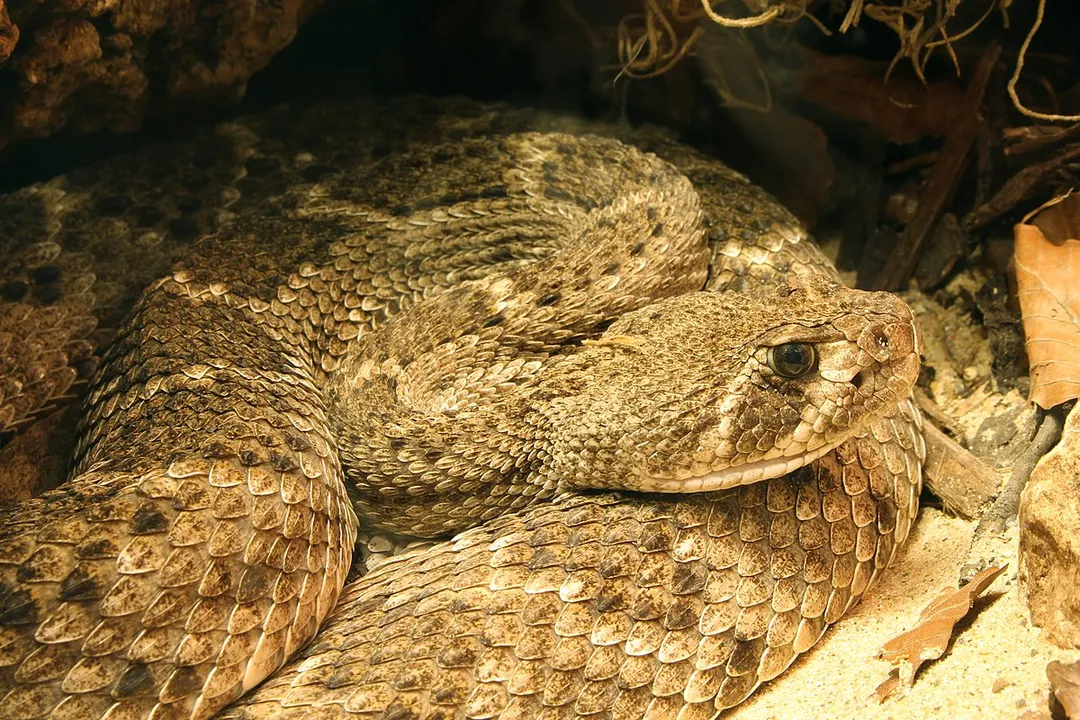
The reproductive cycle of the Western Diamondback is characterized by internal fertilization and the subsequent development of embryos within the mother, a process defined as viviparity, culminating in the birth of live young. Mating takes place during the autumn season. Following this, the female carries the developing young for a defined period before delivering them when environmental conditions are suitable, typically in the late summer or monsoon season. The text specifies this required developmental time frame as lasting roughly six to seven months, providing a more precise measurement of around 165 days.
#Videos
The Western Diamondback Rattlesnake: Everything You Need To ...
Related Questions
Which species of rattlesnake ranks as the largest in North America, surpassing the size of the *Crotalus atrox*?What characteristic tail pattern earns the *Crotalus atrox* the nickname "coon tail"?How does the activity cycle of the *Crotalus atrox* shift during the intense heat of the summer months?What specialized organs do *Crotalus atrox* use, located between the nostrils and eyes, to detect warm-blooded prey?What percentage of the *Crotalus atrox*'s intake by weight was shown to be small mammals in a comprehensive Texas study?What is the primary mechanism of tissue damage caused by the complex venom of the *Crotalus atrox*, driven largely by hemorrhagic toxins?What is the typical gestation period in months or days for the viviparous *C. atrox* female before giving birth in the late summer?What classification did the IUCN assign to the *Crotalus atrox* as of 2007, reflecting its population stability and distribution?How long can a *Crotalus atrox* survive without any caloric intake due to its slow metabolism?What defensive action does the *Crotalus atrox* frequently choose when confronted, contributing to its high incidence of human bites in the U.S.?