Western Diamondback Rattlesnake Facts
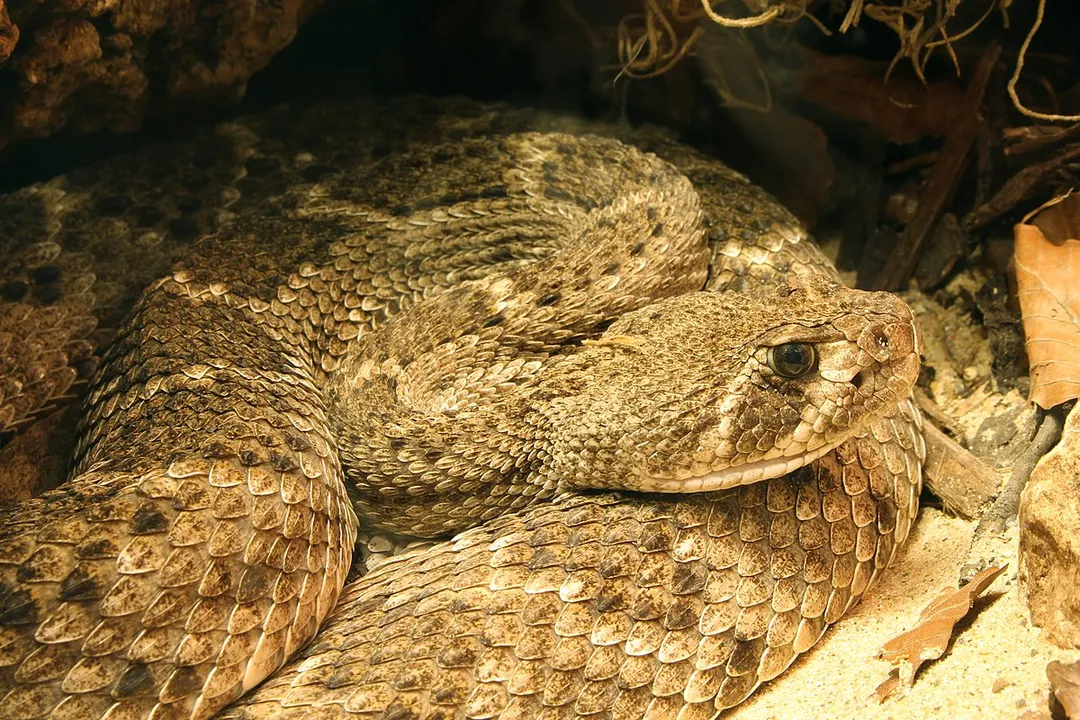
The Western Diamondback Rattlesnake (Crotalus atrox) holds a powerful, often feared, place in the iconography of the American Southwest. While recognized for its venom and distinctive rattle, understanding this pit viper requires looking past the myths to its specific biological adaptations and ecological role. As one of the most frequently encountered venomous snakes across its range, knowledge about its physical traits, behavior, and habitat preferences is crucial for residents and visitors alike. Arizona, for instance, hosts more rattlesnake species than any other state in the U.S., but the Western Diamondback is arguably the most prominent.
# Look and Size
The Crotalus atrox is a heavy-bodied snake and ranks as the second-largest species of rattlesnake in North America, second only to its cousin, the Eastern Diamondback. Adult lengths commonly place them between 4 and 6 feet long, though exceptional individuals reaching 7 feet (213 cm) have been reliably reported. Males generally surpass females in size once they achieve sexual maturity. While size varies, their mass usually falls between 3 to 6 pounds, though very large specimens might approach 15 pounds.
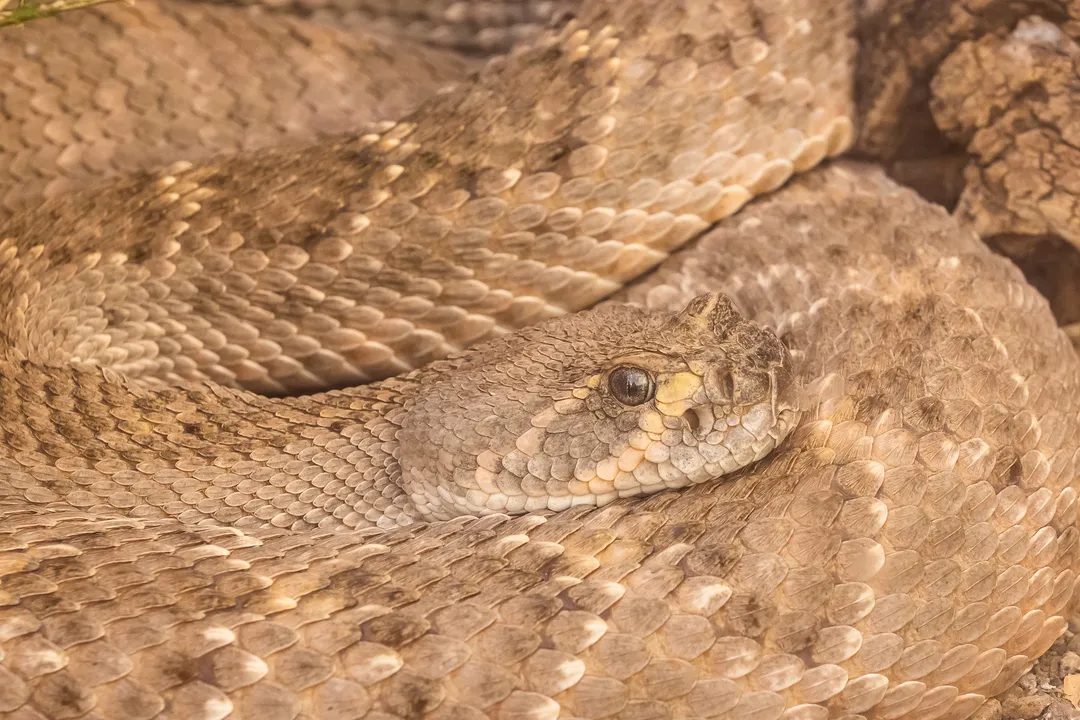
Distinguishing features are key for identification across their overlapping range with other species. The namesake pattern consists of a series of dark brown or umber dorsal blotches overlaying a ground color that can range widely—from khaki or gray to pinkish, brick red, or even yellowish blonde, depending on the local environment. These blotches often start somewhat rectangular near the neck before merging into the characteristic, sharply defined diamond shapes further down the back. Small specks can sometimes blur the clarity of these markings.
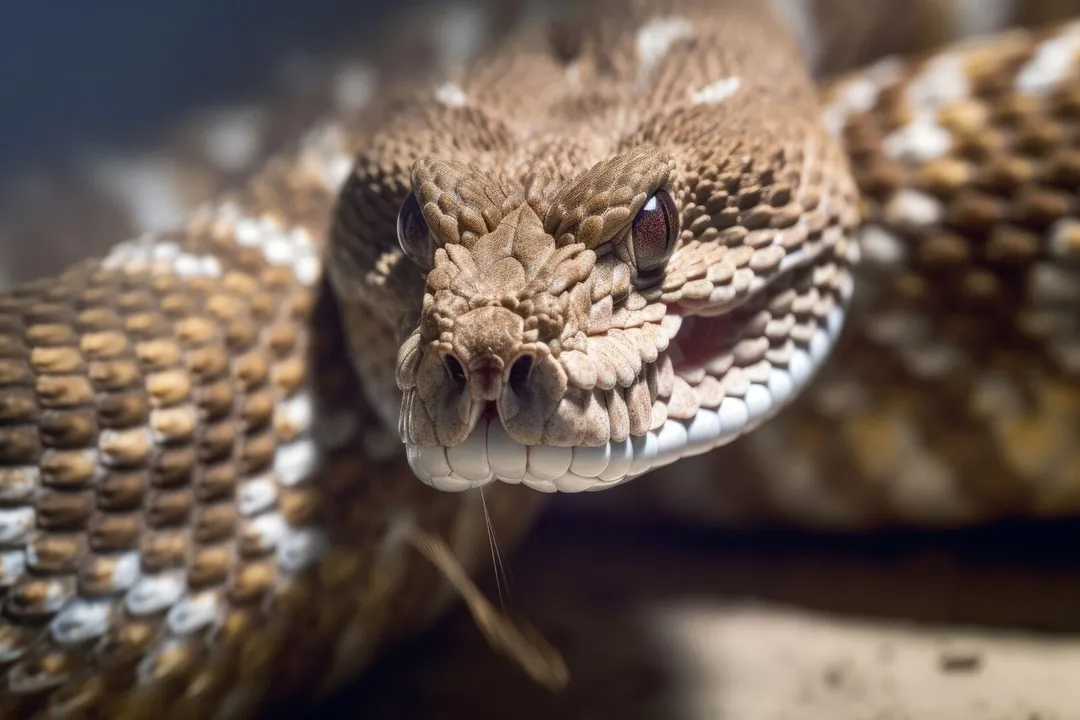
Further identification points include the head structure and the tail. The head is characteristically triangular and spade-shaped, often appearing wide—about twice the width of the neck. Two dark, slanted lines, sometimes compared to a baseball player’s eye black or Zorro’s mask, extend diagonally below each eye across the side of the face. The tail pattern is perhaps the most immediately recognizable feature for many: alternating black and white or gray bands precede the rattle, earning it the nickname "coon tail". Unlike some other species, the Black-tailed Rattlesnake has a uniform black tail, and the Timber Rattlesnake lacks any tail rings at all.
# Range Habitat

Western Diamondbacks are widely distributed across the arid and semi-arid regions of North America. Their geographic reach extends throughout the Southwestern United States—covering central/western Arkansas, Oklahoma (excluding the northeast), Texas, southern and central New Mexico, Arizona, southeastern California, and even having isolated records in southern Kansas. South of the border, they inhabit the northern half of Mexico, reaching as far as northern Sinaloa, Hidalgo, and Veracruz. Some populations are even found on islands in the Gulf of California.
This species demonstrates remarkable adaptability in terms of elevation and landscape. They can be found in environments spanning from below sea level to elevations reaching 6,500 or even 7,000 feet. This habitat generalist status means they thrive in deserts, sandy creosote areas, grassy plains, mesquite grasslands, scrub, and even pine-oak forests. A notable aspect of their adaptability is their presence in urbanizing areas; they are frequently encountered in developed metro regions like Phoenix and Tucson, often utilizing cover near human structures. When ambient temperatures drop, they are often seen on heat-retaining surfaces like blacktop roads.

# Activity Diet
Western Diamondbacks are ectotherms, meaning they rely on external sources to regulate body temperature. Their activity cycles shift seasonally. During the cooler months of spring and fall, they are often active during the day (diurnal) and twilight (crepuscular) as they move to forage after winter brumation. In the intense heat of summer, however, they primarily become active at night (nocturnal) or during twilight hours to avoid overheating. During the coldest parts of the year, typically from late October through early March, they retreat into communal dens—often caves or abandoned burrows—to hibernate, sometimes sharing space with numerous other snake species.
Their hunting strategy is characterized by patience; they are known as "sit-and-wait" or ambush predators. They employ their camouflage as the first defense, lying in wait near the well-traveled paths of rodents or outside their burrows. They locate prey using their keen sense of smell and taste, but critically, they also employ specialized heat-sensing organs located in the loreal pits between their nostrils and eyes, allowing them to detect warm-blooded animals even in total darkness.
Mammals form the overwhelming majority of their diet; one comprehensive Texas study showed small mammals accounted for nearly 95% of their intake by weight. Prey includes prairie dogs, various species of mice, kangaroo rats, pocket gophers, woodrats, squirrels, and rabbits, with larger snakes capable of consuming adult cottontails or even jackrabbits. While the diet is mainly mammals, they consume lizards and birds as well, with lizards being a more common food source for the younger snakes. They have even been documented attempting to eat insects, although this might be incidental if the insects were consumed by the primary prey first. Because their metabolism is slow—a result of being cold-blooded—they digest slowly and may only need to eat once every two or three weeks. In fact, studies have shown they can survive for up to two years without any caloric intake by drastically reducing their energy expenditure.
It is interesting to consider how their slow metabolism and reliance on large, infrequent meals contrast with the sheer defensive capability they maintain; an animal that needs to conserve energy so effectively must ensure any strike, whether for hunting or defense, is worthwhile. Furthermore, they play a major role in rodent control, with estimates suggesting one rattlesnake might consume the equivalent of 21 rodents annually, a significant service to the ecosystem.
# Venom Defense
As members of the viper family, Western Diamondbacks use venom, injected via sharp, hollow, retractable fangs, to disable and begin digesting their prey. Their venom profile is complex, containing proteolytic enzymes that break down tissues, as well as cytotoxins and myotoxins that destroy cells and muscle. The primary mechanism of damage is hemotoxic, attacking blood cells, vessels, and the heart, driven largely by hemorrhagic toxins called zinc metalloproteinases. These components lead to severe local effects like pain, extensive swelling, blistering, and necrosis, as well as systemic issues like nausea and dizziness.
While the venom is dangerous, it is important to note a crucial comparative detail: the Western Diamondback’s venom is less toxic on a per-milligram basis (lower LD50 values) than many other rattlesnake species. However, the danger shifts from potency to sheer delivery capacity. Because of their large venom glands and substantial fangs, an average bite delivers between 250 to 350 mg of venom, with recorded maximums reaching nearly 800 mg. This large-volume injection capability means that while the venom itself may not be the most potent in the world, a significant envenomation can still be lethal, with untreated bites having a mortality rate estimated between 10 and 20 percent.
When threatened, their first response is not always to strike. They prefer to remain unnoticed. If detection occurs, the primary warning mechanism is the rattle. The snake coils its tail, and specialized keratin segments click against each other, producing a sound that the snake can generate at a rate of up to 60 times per second. This warning is a defensive measure used against predators or perceived threats like humans, but the snake will often remain silent if it believes it has not been seen. If the warning fails or the animal is cornered, the snake is known to stand its ground and strike.
# Life Cycle
The reproductive strategy of C. atrox involves giving birth to live young, meaning they are viviparous rather than egg-layers. Mating typically occurs in the fall. Following a gestation period of about six to seven months (around 165 days), the female gives birth in the late summer or monsoon season. Litter sizes vary, commonly ranging from 10 to 25 babies, with an average litter size around 12 young.
The young are independent immediately upon delivery. A crucial fact for safety awareness is that these neonates are born fully equipped with venom and functional fangs, making them dangerous from the moment they emerge. Despite this armament, mortality rates for the young are very high, as they are heavily preyed upon by various animals in their first year. The maternal bond is extremely brief; young snakes typically stay with the mother for only a few hours or until they complete their first skin shed before setting off alone to hunt and find shelter. Sexual maturity is generally reached around three years of age.
# Status Behavior
The Western Diamondback Rattlesnake is currently classified by the IUCN as a species of Least Concern, reflecting its wide distribution and stable population trend as of 2007. However, this classification does not mean they are without pressures. Habitat destruction, driven by human development in the Southwest, remains a significant threat, just as it is for many widespread species. Furthermore, they are still collected from the wild for activities like rattlesnake roundups, which can dramatically reduce local predator populations.
Behaviorally, the C. atrox is often described as more defensive or "feistier" than some of its relatives. When confronted by a perceived threat, unlike many other wildlife species that flee, this snake frequently chooses to coil up and issue a loud warning rattle. This tendency to stand its ground, combined with its high frequency of occurrence in populated areas, contributes to it accounting for the greatest number of human snakebites in the U.S.. Nevertheless, professional biologists note that they are fundamentally reclusive and actively avoid humans when possible. If an encounter happens, the safest course of action is to retreat slowly and deliberately, ensuring you provide the snake ample space to depart on its own terms.
Understanding the environmental context behind encounters is essential when assessing risk. For example, because the snake relies on cover to ambush prey, managing vegetation near homes becomes a practical defense strategy. Where human development encroaches on prime habitat, clearing dense brush, trimming shrubs low to the ground, and eliminating piles of debris can reduce attractive cover for the rodents that form the bulk of the snake’s diet, thereby reducing the overall incentive for the rattlesnake to remain near human activity centers. It is a calculated trade-off: minimizing rodent attractants reduces one pathway for human-snake interaction.
#Videos
The Western Diamondback Rattlesnake: Everything You Need To ...
Related Questions
#Citations
Sonoran Desert Fact Sheet - Western Diamondback Rattlesnake
Western diamondback rattlesnake - Wikipedia
Western Diamondback Rattlesnake Facts for Kids - NatureMapping
10 facts to know about the western diamondback rattlesnake
Western diamondback rattlesnake Facts for Kids
The Western Diamondback Rattlesnake: Everything You Need To ...
Western Diamondback Rattlesnake | Oklahoma Department of ...
Western Diamondback Rattlesnake Animal Facts - Crotalus atrox
[PDF] STAY ALERT! BE SNAKE-AWARE! - Dyess AFB