What characteristic tail pattern earns the *Crotalus atrox* the nickname "coon tail"?
Answer
Alternating black and white or gray bands preceding the rattle
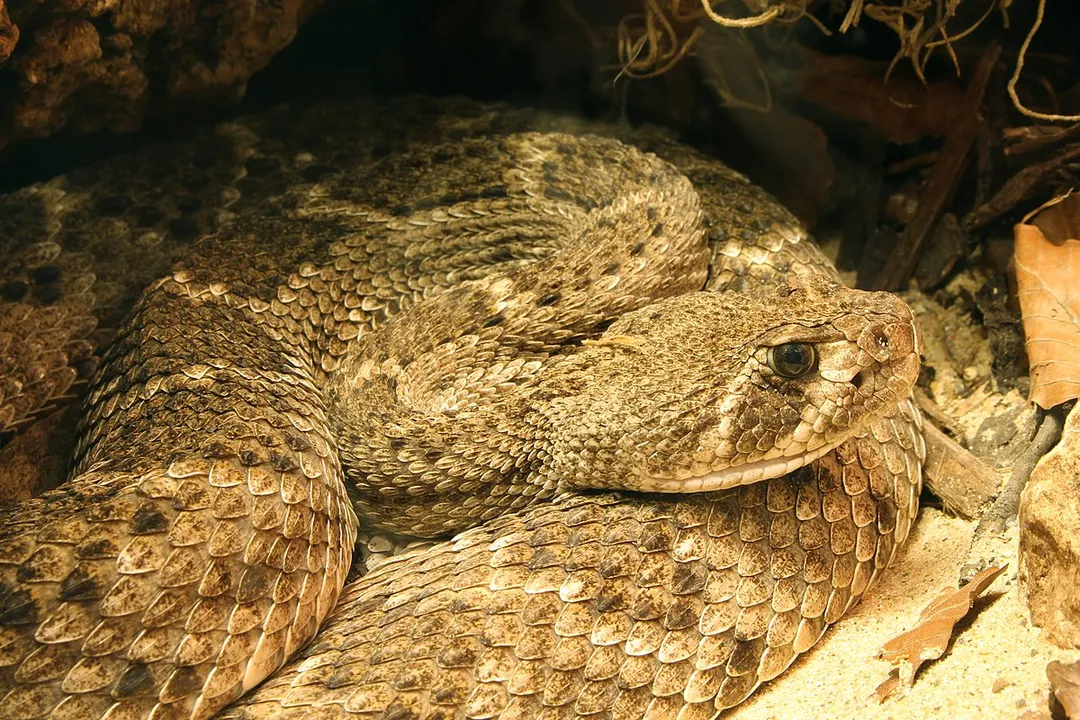
The tail structure is described as a highly recognizable feature of the Western Diamondback. The specific pattern involves a sequence of bands that alternate in color directly before the actual rattle mechanism begins. These bands are specifically described as being black and white, or black and gray, alternating along the tail section. This pattern is directly contrasted with other species mentioned; for example, the Black-tailed Rattlesnake is noted for having a completely uniform black tail, emphasizing the importance of this alternating band structure for proper identification of *Crotalus atrox*.
#Videos
The Western Diamondback Rattlesnake: Everything You Need To ...
Related Questions
Which species of rattlesnake ranks as the largest in North America, surpassing the size of the *Crotalus atrox*?What characteristic tail pattern earns the *Crotalus atrox* the nickname "coon tail"?How does the activity cycle of the *Crotalus atrox* shift during the intense heat of the summer months?What specialized organs do *Crotalus atrox* use, located between the nostrils and eyes, to detect warm-blooded prey?What percentage of the *Crotalus atrox*'s intake by weight was shown to be small mammals in a comprehensive Texas study?What is the primary mechanism of tissue damage caused by the complex venom of the *Crotalus atrox*, driven largely by hemorrhagic toxins?What is the typical gestation period in months or days for the viviparous *C. atrox* female before giving birth in the late summer?What classification did the IUCN assign to the *Crotalus atrox* as of 2007, reflecting its population stability and distribution?How long can a *Crotalus atrox* survive without any caloric intake due to its slow metabolism?What defensive action does the *Crotalus atrox* frequently choose when confronted, contributing to its high incidence of human bites in the U.S.?