Which massive South American wetland system is the primary habitat for *Eunectes notaeus*?
Answer
The Pantanal
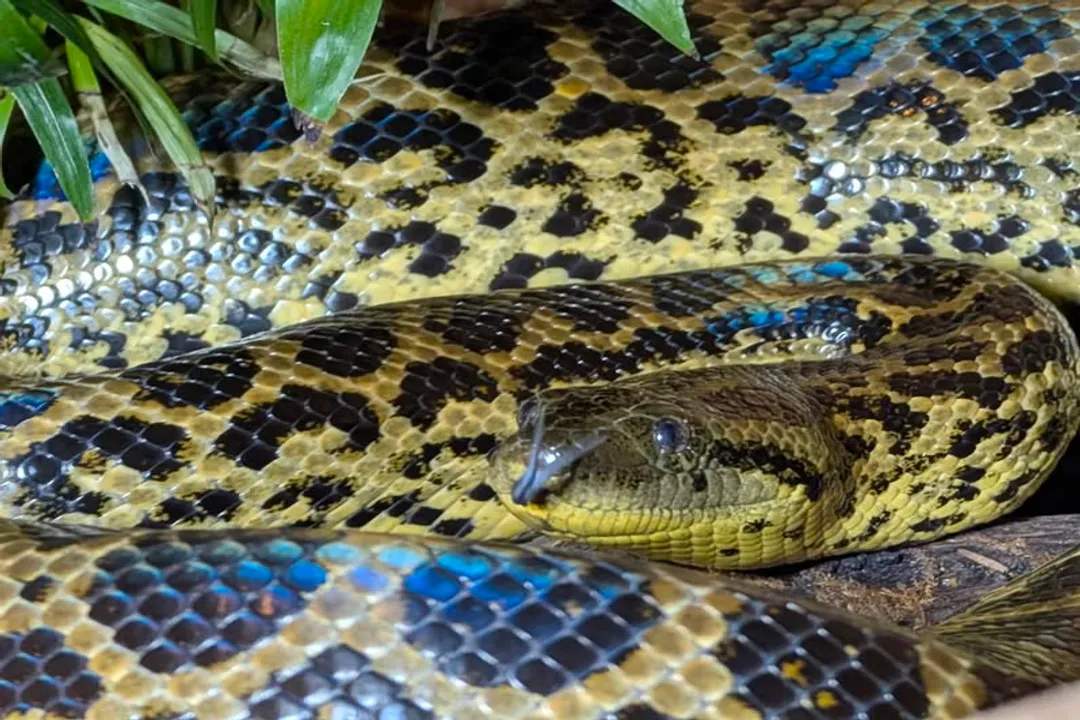
The yellow anaconda's current distribution is intrinsically linked to specific hydrological systems in South America, most notably the Pantanal. This massive area, characterized by seasonally flooded grasslands spanning parts of Brazil, Bolivia, and Paraguay, provides the ideal environment for *E. notaeus*. The snake's survival is tied closely to the stability and fluctuations of this wetland system, particularly the tributaries and wetlands associated with the Paraguay River system. The ability to thrive here requires adaptation to both fully aquatic conditions during floods and surviving periods of reduced water availability, possibly through burrowing or seeking refuge in deeper pools.
Related Questions
Approximately how long ago did the Eunectes genus split from pythons and other boas?What is the characteristic base coloration of the yellow anaconda, *Eunectes notaeus*?Which massive South American wetland system is the primary habitat for *Eunectes notaeus*?Where are the eyes and nostrils of *E. notaeus* positioned for an aquatic lifestyle?Compared to *Eunectes murinus*, what is generally true about the maximum size of *E. notaeus*?What specific locomotion pattern do newborn yellow anacondas exhibit when escaping immediate threats?How recent is the divergence among the four recognized species within the *Eunectes* genus?The presence of *E. notaeus* is strongly tied to the drainage basins of which two major South American rivers?Despite local pressures, what is the current global conservation listing for *Eunectes notaeus*?What characteristic defines the biomechanics of the S-start escape motion in neonates?