Yellow Anaconda Facts

The yellow anaconda, Eunectes notaeus, presents a striking figure in the swampy habitats of southern South America. Often overshadowed by its massive relative, the green anaconda, this species is nevertheless one of the largest snakes globally, commanding respect through its sheer size and powerful, non-venomous constriction. Its common name comes directly from its distinctive base coloration, which serves as excellent camouflage in its preferred murky aquatic environments.
# Appearance Distinguished
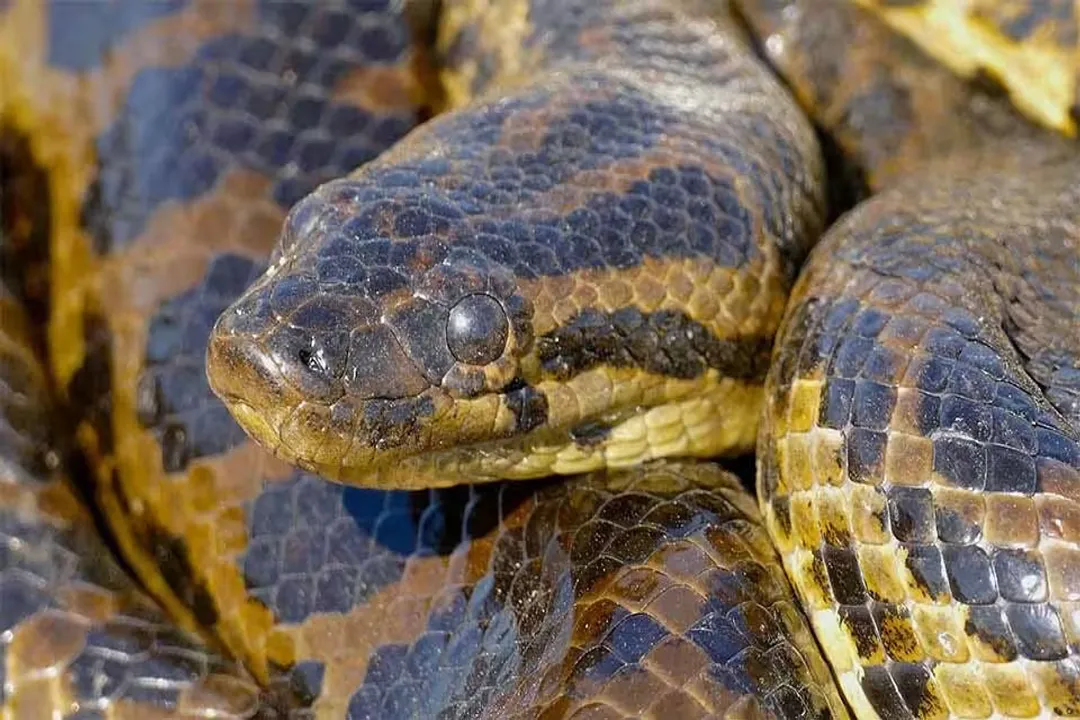
The physical description of the yellow anaconda is marked by its unique color scheme and noticeable sexual dimorphism. Its ground color ranges from a greenish-yellow to a more golden-tan, overlaid with dark brown or black markings described as saddles, spots, or streaks that wrap around the body. Edward Drinker Cope, who first distinguished this species, noted that its dorsal scales are larger and arranged in fewer rows compared to Eunectes murinus, leading to the specific name notaeus, meaning 'dorsal'.
A key characteristic across the Eunectes genus is the positioning of the sensory organs. Both the eyes and nostrils are located on the top of the head. This adaptation is perfectly suited for a semi-aquatic ambush predator, allowing the snake to remain almost entirely submerged, breathing and surveying its surroundings. Furthermore, the eyes provide stereoscopic vision, which is vital for judging distances during an attack. While the body is stout and muscular, the head is relatively small.
Size comparison reveals clear differences between the sexes. Females are consistently larger and heavier than males. While males might reach about 10 feet in length and weigh around 50 pounds, females can stretch to an average of 3.7 meters (12 feet) and sometimes up to 4.6 meters (15 feet). Reported weights vary; some sources list adults between 25 to 35 kilograms (55 to 77 pounds), while others suggest females can reach 80 pounds or even up to 110 pounds. It is interesting to note the discrepancy in reported averages for females; the upper figures for mass and length suggest that some records might blur the line between the second-largest anaconda and the absolute largest, the green anaconda, which is documented to weigh up to 250 kilograms. Despite its size, the yellow anaconda is considerably less massive than its green cousin.
# Range and Shelter
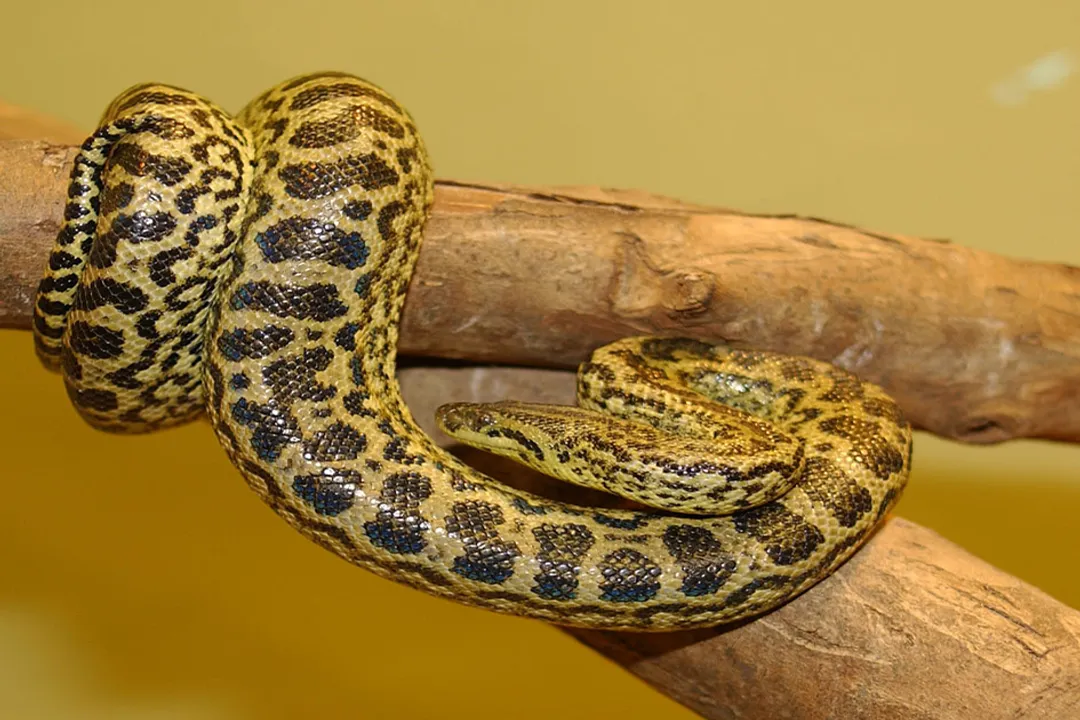
The yellow anaconda is endemic to the Neotropical region of South America. Its core range encompasses the drainage area of the Paraguay River, spanning across Bolivia, Paraguay, western Brazil, northeastern Argentina, and possibly northern Uruguay. This habitat is characterized by wetlands, swamps, marshes, and the brush-covered banks of slow-moving rivers and streams. During the rainy season, the anaconda often moves into the open, treeless flooded prairies and fields.
When the dry periods set in, the snakes retreat from drying pools to find shelter. They utilize small burrows or caves for protection, and also hide along riverbanks in holes that retain sufficient water. A recent taxonomic suggestion, if confirmed, would broaden their known distribution to include western Bolivia, northern Brazil, and coastal French Guiana. Outside its native range, there are reports of introduced populations in South Florida, presumed to be escaped pets, though it remains unclear if these groups are successfully breeding. The introduction of nonnative reptiles, especially large constrictors, into suitable subtropical environments like Florida poses a significant ecological concern, as these areas mirror their native wetlands.
# Sensory World
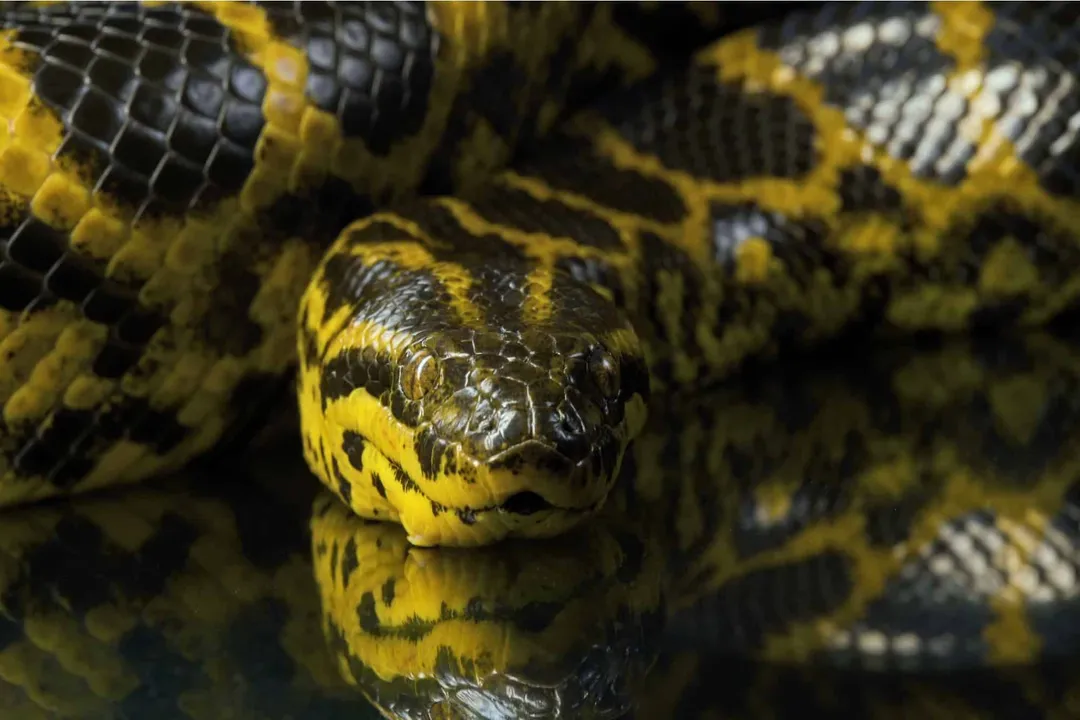
The yellow anaconda navigates its environment using an advanced suite of non-visual senses, making it a master of stealth in low-visibility conditions. Like all snakes, its forked tongue constantly samples the air, transferring chemical cues to the Jacobson's organ (or vomeronasal organ) on the roof of its mouth to ascertain the direction and identity of prey. This chemical perception allows the snake to track a trail, even one left by the still-warm urine of a small rodent.
Beyond chemical sensing, the yellow anaconda possesses specialized heat-sensing pits along the edge of its upper jaw, between the nostrils and eyes. These pits are highly sensitive to infrared radiation, allowing the snake to perceive the thermal signature of warm-blooded prey in complete darkness. While their hearing is considered rather mediocre, they compensate by detecting vibrations through their jaws, which can alert them to movements, such as a mouse walking on a log near the water.
Given this heavy reliance on thermal and chemical signatures in the murky water, an insightful consideration is how easily their hunting success could be compromised by subtle environmental changes. If a wetland system suffers from thermal pollution or chemical contamination, the very tools an anaconda uses to locate a capybara or a wading bird could become unreliable, potentially starving the snake even if prey remains plentiful nearby. The snake's sensory analysis—integrating sight, smell/taste, heat detection, and vibration—is what enables its typically sedentary, highly effective hunting style.
# Predation and Diet
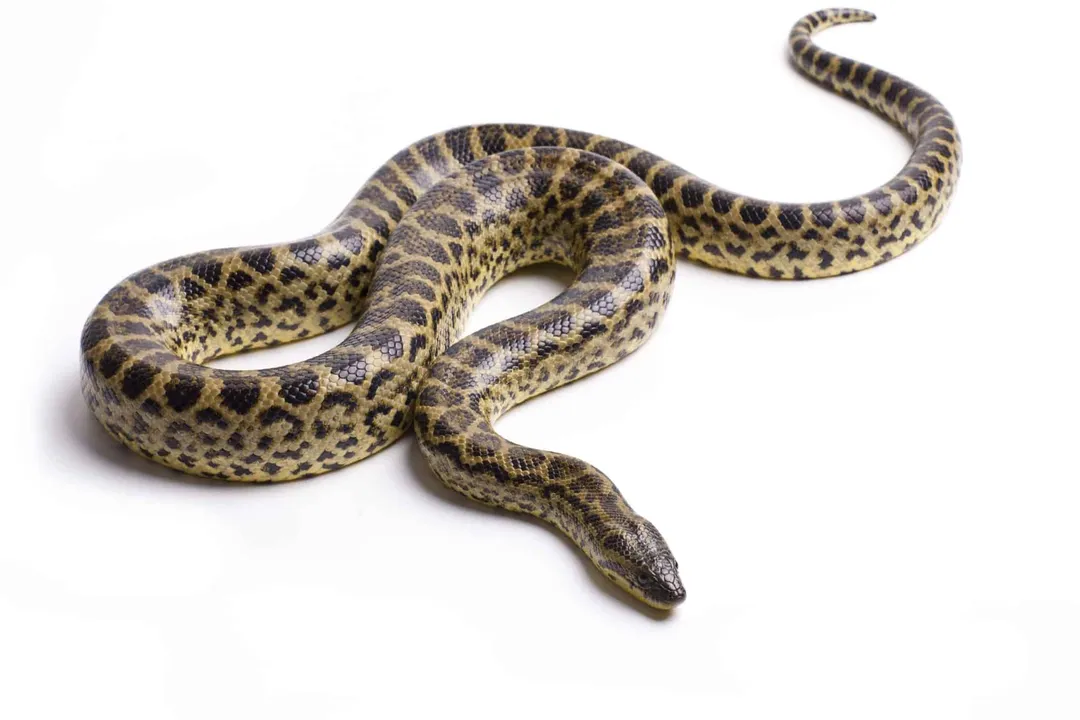
Yellow anacondas are defined as generalist carnivores, preying on nearly any vertebrate they can overpower. Their lifestyle is intrinsically linked to the water, where they spend most of their time, often lying in wait. Their hunting strategy is primarily one of ambush, though they will also actively forage. When an unsuspecting creature approaches, the anaconda strikes, gripping it with its numerous, inwardly curved, razor-sharp teeth.
Once the prey is secured, the powerful, muscular body coils around the victim, initiating constriction until asphyxiation occurs. If hunting underwater, they may drag the prey to the bottom to drown it. Their diet shifts with age and opportunity. Juveniles focus on smaller fare like amphibians, fish, and bird eggs. Adults target larger animals prevalent in their riparian and wetland zones. This includes wading birds—which become a more common target following the annual flood subsidence—mammals like peccaries and brocket deer, and even reptiles such as young caimans. Anacondas are capable of swallowing prey significantly larger than themselves, a feat made possible by the extreme flexibility of their jaws, which can dislocate, and the fact that the two parts of the lower jaw are not fused, allowing them to spread apart. The world's largest rodent, the capybara, is within their capacity, though swallowing such a large meal can take over six hours and result in weeks of lethargy while digestion occurs.
# Growth and Offspring
Yellow anacondas exhibit indeterminate growth, meaning they continue to grow throughout their lives. Reproduction usually takes place annually between April and May. The process begins when the female emits pheromones into the air, which males follow, leading to courtship, often occurring in the water. This competition can result in the formation of a breeding ball, a tangle of one female surrounded by multiple vying males, which can last for up to a month. The largest male typically wins mating access.
Females are ovoviviparous, incubating eggs inside their bodies for about six months. Births typically happen in flooded areas after the rainy season. A litter can range widely, from as few as 4 up to 82 young, with an average closer to 40. The newborns are immediately independent, already possessing the camouflaging coloration they need to survive, and measure around 60 centimeters long. They are considered precocial, receiving no further parental investment after birth. Sexual maturity is generally reached between three and four years of age.
# Defense and Threats
In their natural setting, yellow anacondas are described as generally timid, preferring to escape rather than confront a perceived threat, though they will defend themselves vigorously if cornered. Their coloration provides excellent cryptic camouflage against predators.
Juveniles face threats from various carnivores, including caimans, jaguars, tegu lizards, and crab-eating foxes. Adults have fewer natural enemies, primarily facing predation from large caimans, jaguars, and cougars. However, the most significant predator across all age classes is undoubtedly human beings. These snakes are heavily hunted for their skin, which is used for items like purses, shoes, and belts, and are also removed for the pet and zoo trades.
It is important to consider the conservation standing, as reports are somewhat mixed. While some sources list the species as Least Concern based on stable populations in core areas, others indicate it is Near Threatened due to poaching pressure. Regulations have been enacted, notably in Argentina, where trade was prohibited between the 1940s and 1980s, with a sustainable use plan established around 2001 that significantly curbed poaching awareness. In the United States, restrictions were placed in 2012 to prevent interstate commerce, aiming to stop them from becoming invasive in vulnerable ecosystems like the Everglades. For private landowners in Florida, yellow anacondas are classified as a Prohibited species, though they can be humanely killed on private property with the owner's permission.
# Agility and Temperament
While predominantly sedentary and aquatic, the yellow anaconda does move onto land to mate, shift between water sources, or occasionally hunt terrestrial prey, though their movement on land is often a straight-line crawl rather than undulation. The species is generally solitary outside of the breeding season.
A recent scientific observation adds nuance to their terrestrial capabilities. Researchers identified a rapid, escape movement called the "S-start" performed by some individuals, especially younger, more muscular ones. This maneuver involves contorting the body into an S-shape and quickly sliding sideways, keeping the middle segment flat on the ground. Computer simulations suggest that this high-agility movement is dependent on a specific ratio of muscle strength to weight, leading to the conclusion that older, heavier anacondas may lose the ability to perform this quick escape, suggesting a trade-off between bulk and agility as they age.
In terms of temperament, while they are shy in the wild, captive specimens—particularly those captured from the wild—have a reputation for being aggressive, fierce, and difficult to tame. When disturbed, they can release a foul, repugnant musk. Those considering keeping such large constrictors in captivity must meet stringent environmental requirements, including high humidity and precise temperature gradients (e.g., a warm end of 31–33° Celsius), as failure to meet these needs can lead to stress, parasites, and shedding issues. Responsible husbandry also notes that these snakes grow rapidly, quickly outgrowing standard enclosures, which elevates the risk they pose to humans and other pets.
Related Questions
#Citations
Yellow anaconda - Wikipedia
Yellow Anaconda - Facts, Diet, Habitat & Pictures on Animalia.bio
Eunectes notaeus (Yellow Anaconda) - Animal Diversity Web
Yellow Anaconda Animal Facts - E. notaeus
The Yellow Anaconda Can Form Days-long 'Breeding Balls'
Yellow anaconda Facts for Kids
Yellow Anaconda - FWC
Yellow anaconda | Space for life - Espace pour la vie
Yellow anaconda facts, distribution & population - BioDB