Yellow Bass Evolution
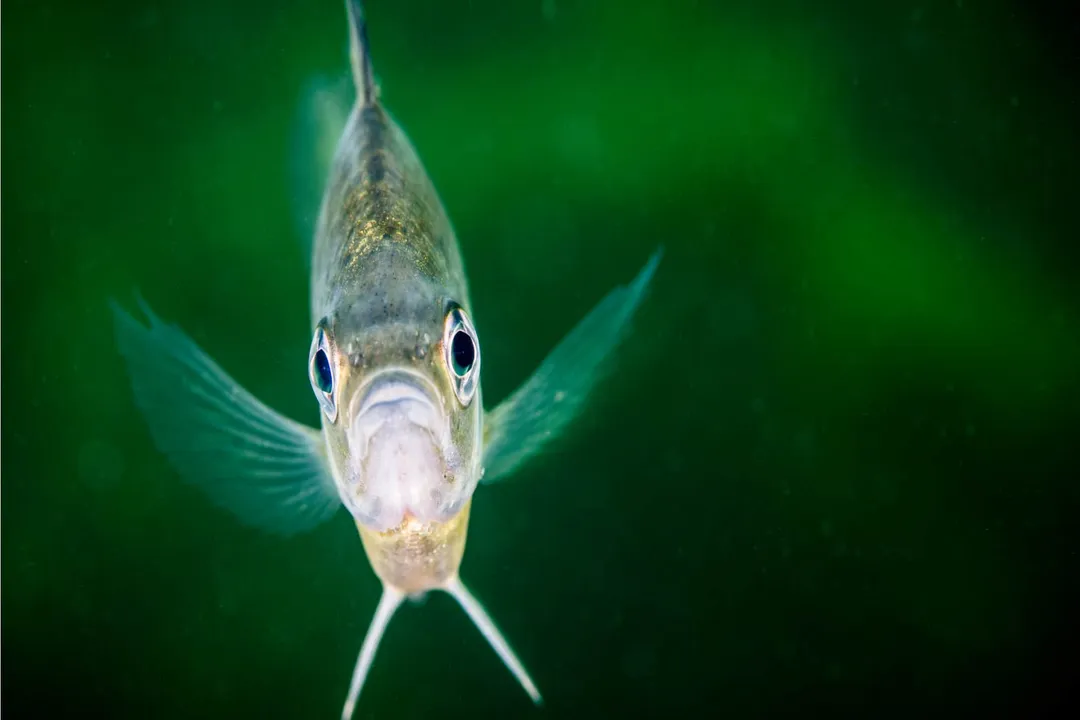
The Yellow Bass, scientifically cataloged as Morone mississippiensis, occupies a fascinating, often overshadowed, position within its family, the temperate basses. [1][5] While its more famous cousins, the Striped Bass (M. saxatilis) and the White Bass (M. chrysops), frequently capture the attention of anglers and fisheries scientists, tracing the Yellow Bass's lineage reveals a story of adaptation to specific, often turbid, freshwater environments. [1][3] Its evolutionary narrative is less about dramatic transformation and more about successful specialization within a narrow, though widespread, geographic zone within North America. [2] Understanding its evolution requires first mapping out its immediate family structure, as the distinctions between these species are what drive the research into their separate paths of development. [4]
# Morone Relatives
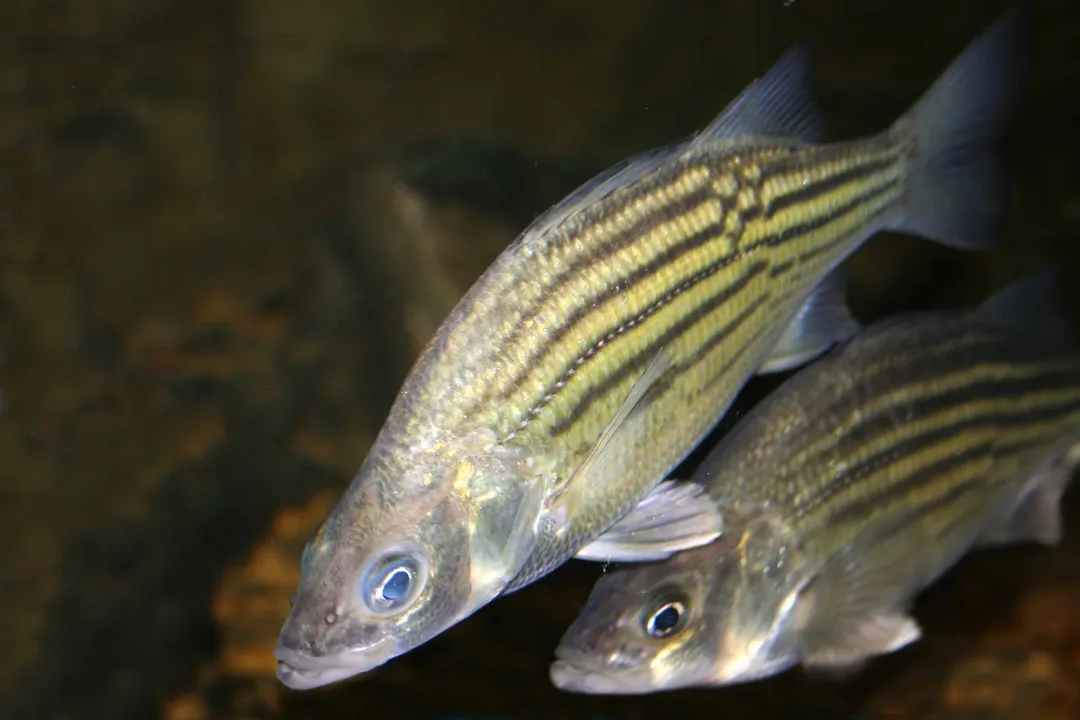
The genus Morone contains several well-recognized species, including the White Bass, the Striped Bass, and the Yellow Bass. [1] While they share a common ancestry, their divergence has led to distinct physical characteristics and ecological preferences. [5] The Striped Bass is renowned for its powerful migrations and ability to thrive in saltwater environments (being anadromous), although landlocked populations also exist. [1] In contrast, the White Bass generally favors large, cooler bodies of fresh water. [1] The Yellow Bass fills a niche often associated with the slow-moving, warmer waters prevalent in the vast drainage systems of the central United States. [2][3]
One key area of study when considering the evolution of these species is the potential for hybridization, which suggests incomplete genetic separation or recent divergence. [4] When analyzing the genetic makeup, researchers look for clear molecular markers that distinguish one species from another, defining the points where their evolutionary lines definitively separated. [8] While all three share a general body plan—laterally compressed, silvery, with dark stripes—the specifics of these markings provide the clearest visual clues to their relative evolutionary standing. [1]
# Taxonomic Identity
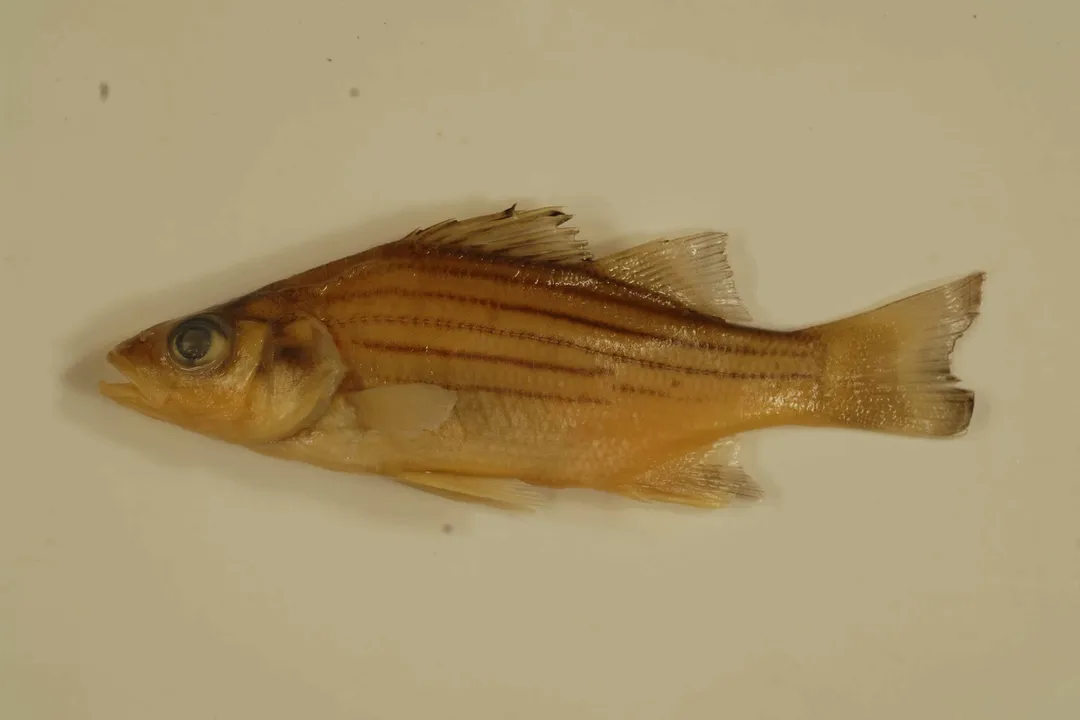
The scientific designation Morone mississippiensis directly points to its primary evolutionary cradle: the Mississippi River system. [2] The fish was formally described by David Starr Jordan and Charles H. Gilbert in 1887. [1] Prior to clear scientific differentiation, local populations might have been grouped confusingly with the White Bass, given their similar coloration when immature or their shared preference for freshwater habitats. [5] In the world of fish taxonomy, establishing a species as distinct often involves demonstrating a consistent, non-overlapping suite of morphological traits coupled with genetic isolation. [4] The Yellow Bass meets these criteria, securing its place as a separate entity within the genus, distinct from its namesake, the White Bass (M. chrysops). [1]

# Body Markings
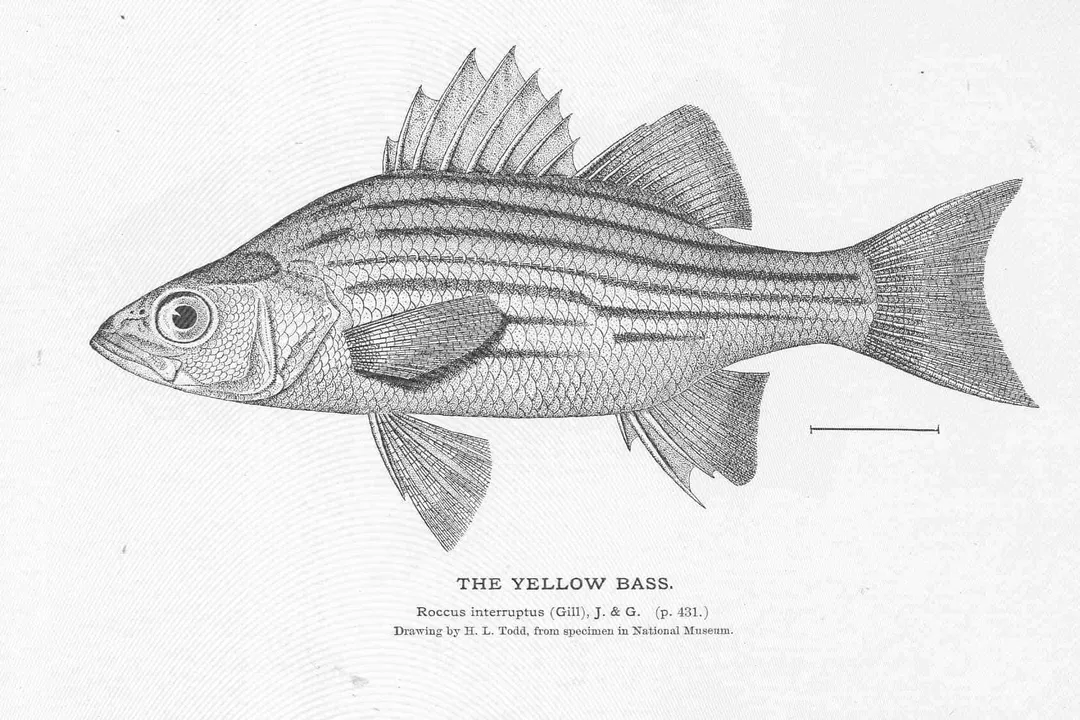
The most immediate physical difference, reflecting evolutionary divergence through visual selection or adaptation, lies in the stripe patterns on the flanks of the fish. [1] Both White and Yellow Bass exhibit dark horizontal stripes. [5] However, the Yellow Bass typically has stripes that are often broken or less distinctly defined than those on the White Bass, sometimes appearing more like rows of dark spots. [1] Furthermore, the Yellow Bass has a more pronounced yellowish or brassy hue to its coloration, especially on its lower sides and belly, which gives the species its common name and aids in camouflage within its specific aquatic environments. [1][10]
A subtle, yet telling, morphological difference relates to the species' structure. For instance, the dorsal fins are separate, and the lower portion of the body often shows a deeper golden or brassy tone compared to the silvery-white of the White Bass. [1] If we consider the evolutionary pressure of water clarity, Yellow Bass inhabiting often silt-laden or tannic waters might benefit from less stark, broken markings, providing better camouflage than the sharply defined lines seen on fish adapted to clearer lakes. [3] This difference in pigment expression across the genus hints at environmental selection acting differently on each lineage over time. [4]
| Feature | Yellow Bass (M. mississippiensis) | White Bass (M. chrysops) |
|---|---|---|
| Primary Color Tone | Yellowish/Brassy | Silvery-White |
| Dorsal Stripes | Often broken or spot-like | Usually distinct and solid |
| Typical Habitat | Warmer, slower rivers/lakes (MS Drainage) | Cooler, large lakes |
| Maximum Size (General) | Smaller on average | Larger on average |
| Record Weight (IGFA) | ~3 lbs [7] | ~6.4 lbs [7] |
A comparison of key external characteristics across two closely related Morone species [1][7].
# Habitat Range
The distribution of the Yellow Bass is a direct clue to its evolutionary history. [2] It is predominantly found in the Mississippi River drainage basin, extending into the Gulf Coast states. [1][2] This geographic confinement has likely acted as a barrier to gene flow with other Morone species, solidifying its status as a distinct entity. [4] While White Bass are widely distributed across the Great Lakes and upper Mississippi River areas, the Yellow Bass tends to thrive further south and within the main channel systems, suggesting an adaptation to warmer summer temperatures and perhaps higher sediment loads. [3]
It is interesting to consider that environments with high turbidity—often characteristic of large river systems where Yellow Bass are dominant—can exert different selective pressures than the clearer, deeper lake environments often favored by the White Bass. [9] This environmental divergence could have driven genetic drift and the fixation of traits suited for the riverine environment, distinguishing the Yellow Bass lineage from its relatives that colonized lake habitats. [8] The success of the Yellow Bass in these specific basins over millions of years is the ultimate proof of its evolutionary fitness in that niche. [5]

# Lineage Splits
The academic investigation into Morone evolution often centers on understanding the timing and mechanism of species separation, particularly between the Yellow and White Bass, as they inhabit overlapping, yet distinct, areas. [4] Genetic analyses, using markers like mitochondrial DNA, are essential for constructing a reliable phylogenetic tree showing when the common ancestor split into the current species. [8] While hybridization can occur where ranges meet, the continued distinctness of M. mississippiensis suggests that reproductive isolation mechanisms—whether behavioral, ecological, or genetic—have been effective enough to maintain separate evolutionary paths. [4]
If we look at the genetic data published on Morone species, the Yellow Bass often forms a clade (a branch on the evolutionary tree) that is distinct from the clade containing the Striped Bass and White Bass, indicating a deep evolutionary separation from the anadromous lineage, or perhaps a different pattern of ancient divergence within the freshwater forms. [4] A key analytical point here is that M. mississippiensis appears to have evolved under strong constraints related to its riverine habitat, potentially leading to less overall genetic variability compared to species that colonized broader ecological zones, such as the anadromous Striped Bass. [6] The stability of its morphological characteristics over decades, despite environmental changes, also implies that the traits defining the species are evolutionarily fixed and highly beneficial in its native range. [3]
# Current Ecology
For those who fish for them, Yellow Bass are known for being fast, aggressive feeders, often schooling tightly, especially during feeding frenzies or in the fall. [3][10] This schooling behavior, shared with White Bass, is an evolutionary trait that likely enhances feeding efficiency and predator avoidance in open water. [10] From a management perspective, tracking the health and relative abundance of Yellow Bass populations provides insight into the ecological balance of the river systems they inhabit. [3] If a system shows a sudden decline in Yellow Bass but stable White Bass numbers, it might point toward a localized environmental shift (like increased water temperature or pollution levels) that specifically pressures the Yellow Bass's specialized physiological adaptations. [9]
Thinking about their successful persistence, it's clear that the Yellow Bass didn't "lose" the evolutionary race to become the Striped Bass; instead, it successfully adapted to inhabit the deep, warm, turbid waters that the Striped Bass largely avoided in favor of larger, clearer bodies of water or the ocean. [1] This partitioning of available niches is a classic evolutionary outcome. If we were to map out a hypothetical evolutionary pressure index, we might see that White Bass face pressure from deeper, clearer water specialization, while Yellow Bass face pressure from main-stem river dynamics like scouring and fluctuating flows, driving the retention of its current form. [2][6] The fact that individuals commonly top out around three pounds suggests that reaching the massive sizes of the Striped Bass was either never an evolutionary goal or was actively selected against in favor of rapid maturation in its smaller habitat range. [7] Their entire life history strategy appears optimized for the abundance and conditions found within the Mississippi drainage structure.
Related Questions
#Citations
Yellow bass - Wikipedia
Yellow Bass (Morone mississippiensis) - Species Profile
Morone mississippiensis : Yellow Bass | Rare Species Guide
Abundance, Growth, and Condition of Yellow Bass, Morone ...
Morone mississippiensis (Bass) - Animal Diversity Web
[PDF] Age, Reproduction, Growth, Condition and Diet of the Introduced ...
Bass, yellow - IGFA Member Services
Full article: Population dynamics of non-native Yellow Bass in Iowa's ...
[PDF] "Contributions to the life history of the yellow bass, Roccus ...
Yellow Bass Fish Facts - Morone mississippiensis - A-Z Animals