What reproductive difference separates Family Boidae (E. notaeus) from Pythonidae?
Answer
Boas are viviparous, giving birth to live, developed young
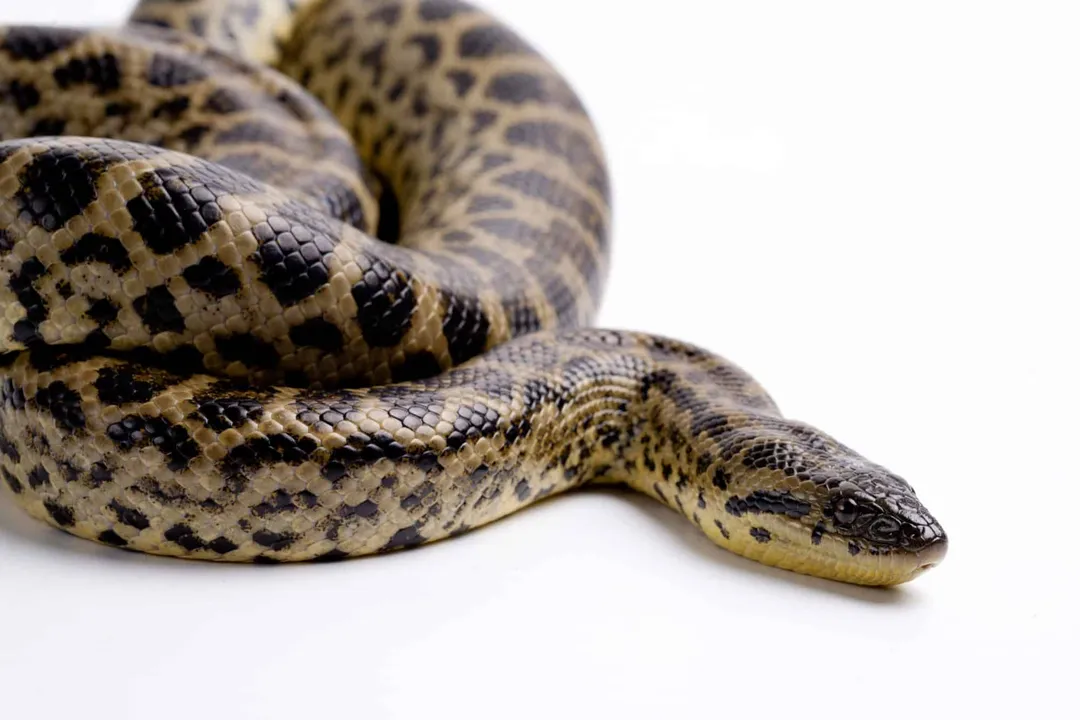
A significant evolutionary divergence within the large constrictors is observed at the family level when comparing Boidae (boas, including anacondas) and Pythonidae (pythons). The defining difference relates to how offspring are produced. Boas are classified as viviparous, meaning the female retains the eggs internally until they hatch, resulting in the live birth of developed young. In contrast, pythons are oviparous, meaning they lay eggs, which the female often guards and incubates until hatching.
Related Questions
What characteristic defines Eunectes notaeus within Kingdom Animalia?What traits primarily distinguish members of Order Squamata, including Eunectes notaeus?What reproductive difference separates Family Boidae (E. notaeus) from Pythonidae?What shared ecological trait characterizes the Eunectes genus, including E. notaeus?How does Eunectes notaeus generally compare in size to Eunectes murinus?What morphological feature characterizes the Suborder Serpentes, separating it from Lacertilia?How does the Boidae family classification define Eunectes notaeus's method of subduing prey?Possession of which structure places Eunectes notaeus in Phylum Chordata?What general characteristic applies to Class Reptilia, despite exceptions in anaconda birth?Which specific region implies Eunectes notaeus, the Southern Anaconda, is the likely species?