Which three specific species constitute the Sphyrapicus superspecies complex?
Answer
Yellow-bellied Sapsucker, Red-naped Sapsucker, and Red-breasted Sapsucker.
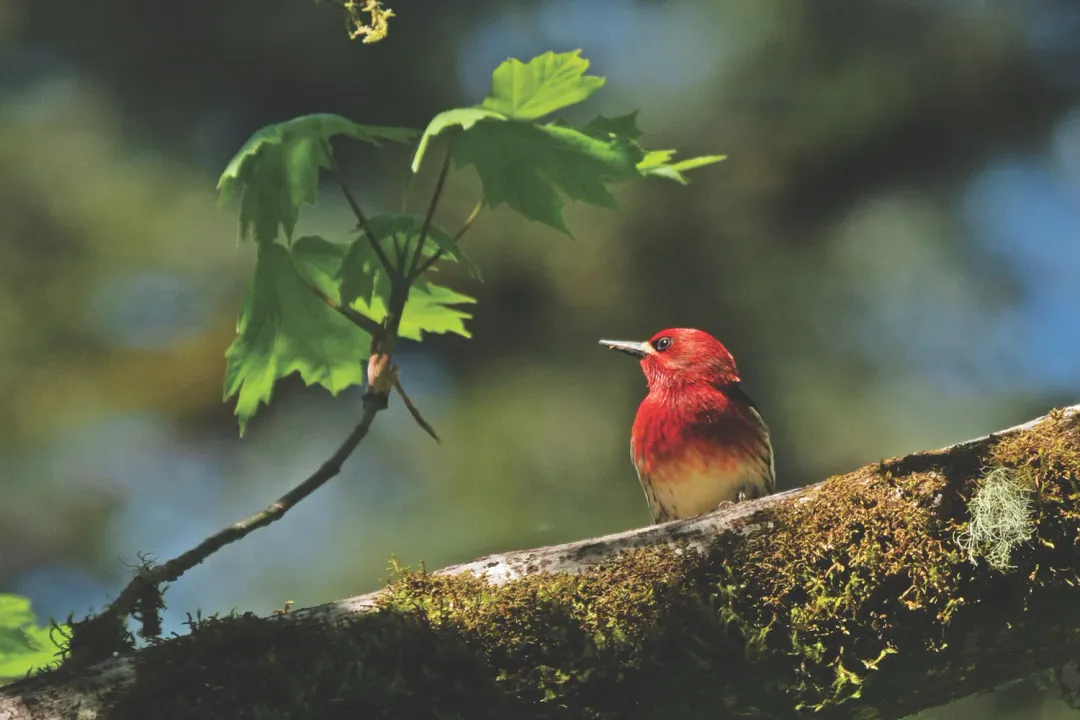
The evolutionary relationship among the Yellow-bellied Sapsucker (*S. varius*), the Red-naped Sapsucker (*S. nuchalis*), and the Red-breasted Sapsucker (*S. ruber*) is recognized by ornithologists as a 'superspecies complex.' This classification implies that these three forms share a relatively recent common ancestor and exhibit incomplete speciation processes. This status is supported by observable evidence of hybridization, where their geographic ranges overlap, demonstrating incomplete reproductive isolation between the lineages.
Related Questions
How do Yellow-bellied Sapsuckers consume the sap from their carefully bored wells?Which three specific species constitute the Sphyrapicus superspecies complex?What term describes the intermediate birds formed where sapsucker species ranges overlap?What is the primary geographic distinction for the Red-breasted Sapsucker (*S. ruber*) range?What critical element in the forest habitat directly impacts the reproductive success of the Yellow-bellied Sapsucker?What specific feature characterizes the plumage of the Red-naped Sapsucker (*S. nuchalis*)?What energetic resource, crucial in colder northern forests, does sap flow provide before insects are widely available?What sophisticated spatial ability do Yellow-bellied Sapsuckers exhibit regarding their feeding sites?How does the Yellow-bellied Sapsucker's plumage differ from the Red-breasted Sapsucker's heavy barring?What ecological implication arises from resident vs. migratory morphs of Yellow-bellied Sapsuckers regarding climate change?