Yellow Anaconda Physical Characteristics
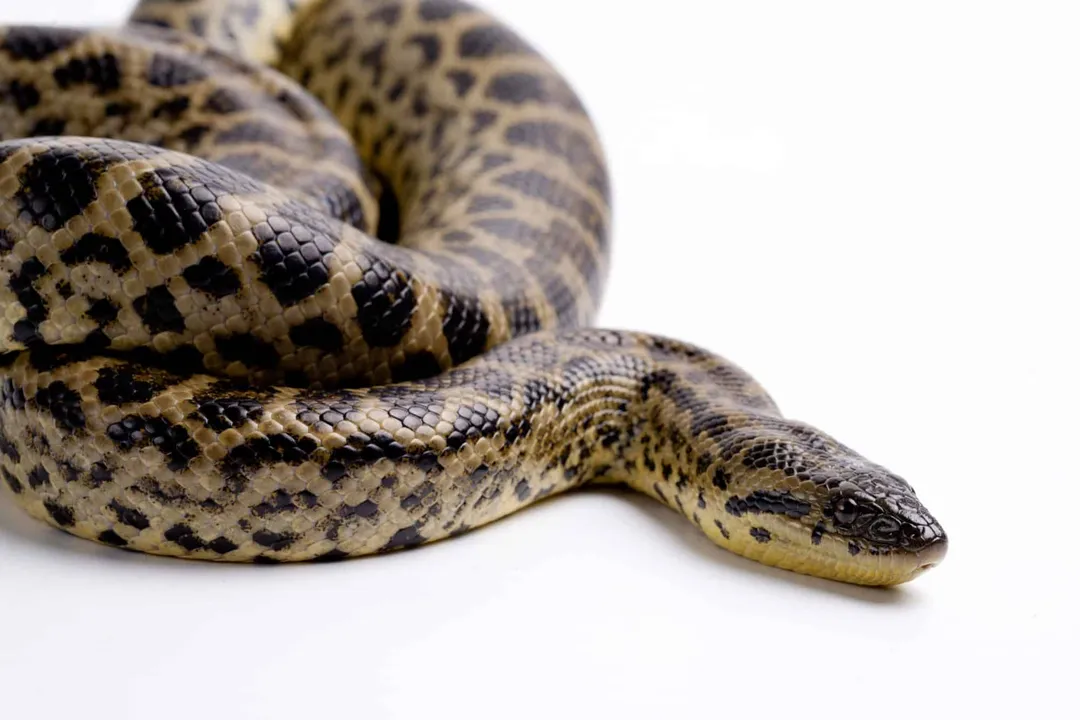
The yellow anaconda, Eunectes notaeus, commands attention not just for its impressive size, but for its distinct appearance when compared to its famously massive relative, the green anaconda. [1][4] While both belong to the Eunectes genus, the physical characteristics of the yellow anaconda allow it to be distinguished, even from a distance, primarily through its coloration and slightly reduced overall dimensions. [2] It is a South American species, found in the warm, swampy regions of the continent, and its physical makeup is perfectly suited for an ambush predatory lifestyle centered around aquatic environments. [3][5]
# Size Range
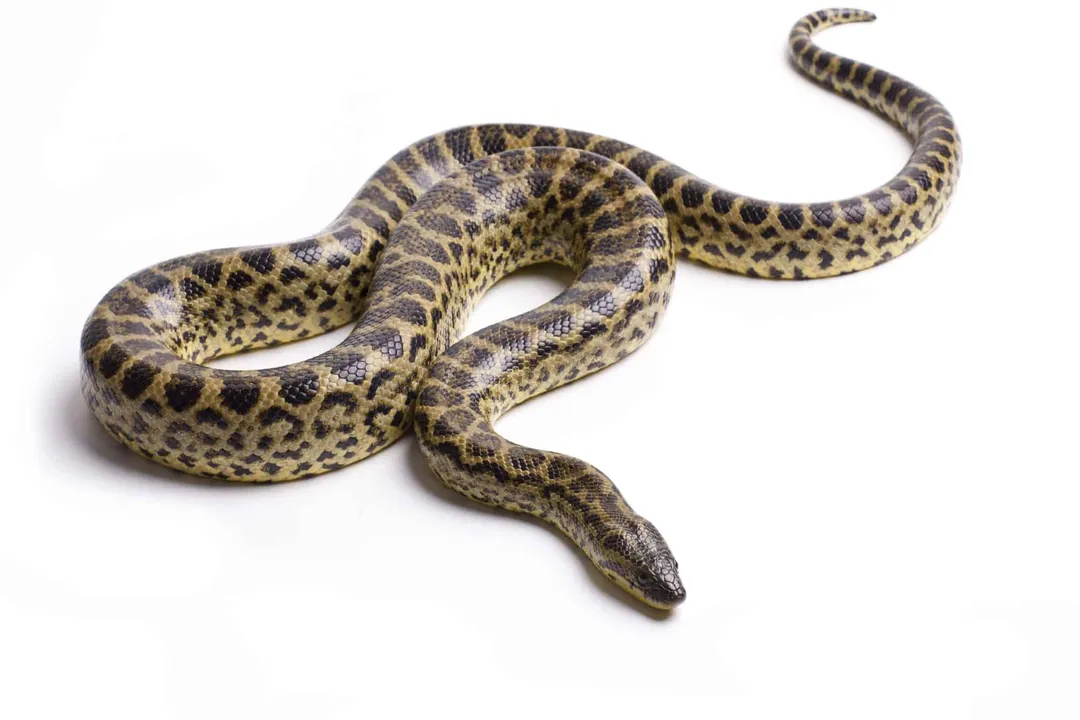
When discussing the dimensions of the yellow anaconda, it is essential to place it in context within the world of giant snakes. [4] It holds the rank of the second-largest snake globally, superseded only by the green anaconda, Eunectes murinus. [1][4] Although massive, typical specimens of the yellow anaconda are generally shorter and lighter than their larger cousins. [4]
Mature yellow anacondas commonly reach lengths of about 13 feet, though some individuals have been documented growing longer. [1][4] Reports suggest lengths approaching 15 feet are possible, but these are exceptional finds. [1] In terms of mass, these snakes are extraordinarily heavy for their length, frequently weighing around 150 pounds or more when fully grown. [2] While a 15-foot green anaconda might significantly outweigh its 15-foot yellow counterpart, the yellow species still possesses an intimidating girth and power, possessing the necessary musculature for quickly subduing large prey. [5] Considering that many mature males of the species may only reach around 10 feet, the disparity between the sexes in terms of maximum size is quite noticeable. [1]
# Coloration Patterns
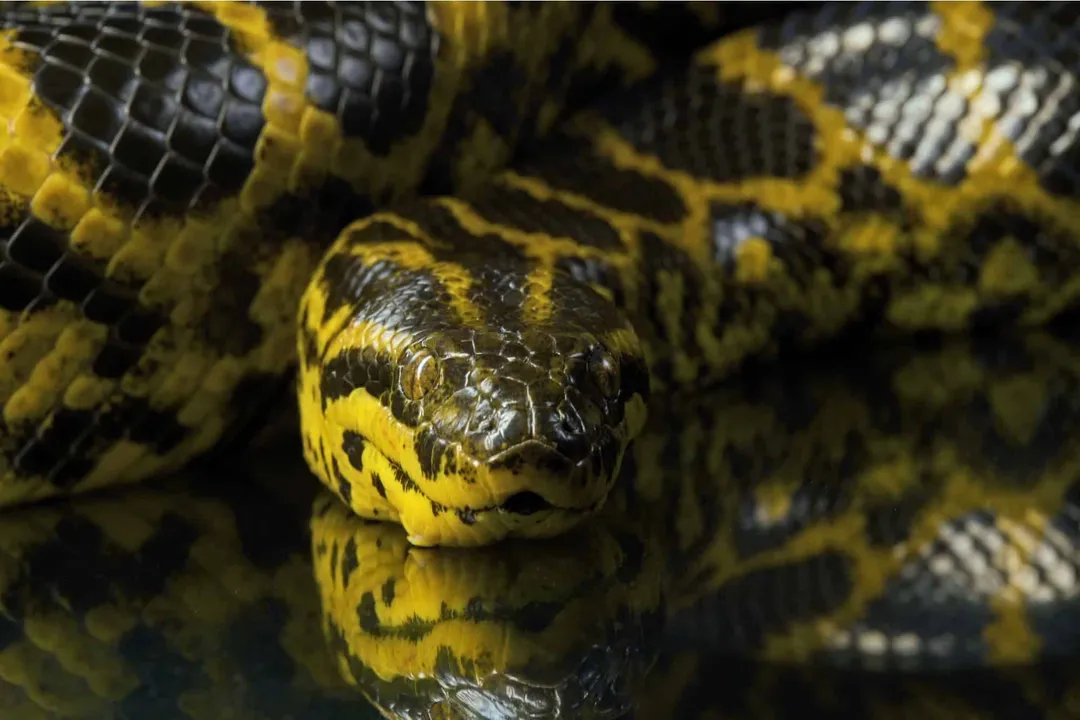
The most obvious physical trait, and the source of its common name, is the animal's distinctive color palette. [4] The base coloration ranges from a bright, almost vibrant yellow to a more muted olive or greenish-yellow shade. [1][4] This base tone is then overlaid with a pattern of dark markings that are crucial for identification. [7]
These markings typically appear as dark brown or black spots, blotches, or small, irregular ovals distributed along the snake’s flanks and back. [1][7] In many individuals, these dark markings create a series of interconnected rings or a more chain-like pattern down the length of the body. [1] The underside, or ventral surface, is often paler, sometimes appearing whitish or yellowish, contrasting with the darker dorsal patterning. [2] The intensity of the yellow can vary significantly depending on the specific environment the snake inhabits; those found in heavily vegetated, sun-dappled marshes often exhibit a brighter coloration than those from deeper, murkier waters. [3] This variation in hue, from bright yellow to brownish-green, suggests an ecological factor influencing the visible pigmentation, perhaps offering superior camouflage in the varied substrates of the Pantanal wetlands where they frequently reside. [1]
# Head Features
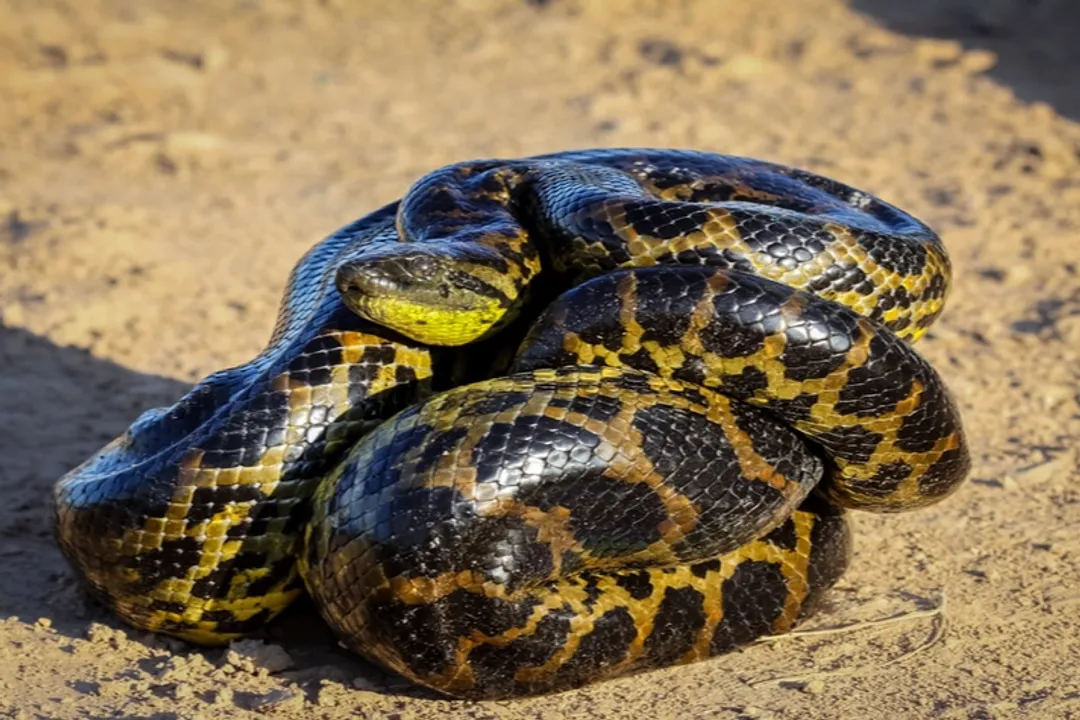
Like other aquatic snakes, the yellow anaconda exhibits cranial adaptations that facilitate its underwater hunting style. [5] A key feature is the placement of its eyes and nostrils, which are situated on the top of the head, or dorsally. [5] This positioning allows the snake to remain almost entirely submerged beneath the water's surface, with only these sensory organs breaking the water line, enabling it to observe or breathe while remaining concealed from potential prey swimming nearby. [5]
While general descriptions often lump the head features of all anacondas together, the yellow anaconda's head structure is notably different from the green anaconda's. [2] It is often described as having a more elongated or slightly flatter head shape in proportion to its body size compared to the massive, broad head typically associated with the green anaconda. [2]
# Sexual Differences
A pronounced pattern of sexual dimorphism is present within the yellow anaconda population. [1] This means that males and females exhibit measurable physical differences beyond their reproductive organs, most notably in size. [1] Female yellow anacondas consistently grow larger and heavier than their male counterparts. [1][9]
If a 10-foot specimen is captured, there is a high probability that it is a male, as females only reach this length or smaller sizes less frequently. [1] The maximum recorded sizes for females significantly exceed those achieved by males, a common trait among large constrictors where females must possess greater mass to successfully carry and birth large litters of live young. [1] This physiological difference influences their hunting niches and general movements within their territories, as larger females can tackle proportionally bigger prey items. [5]
# Musculature and Girth
Despite being smaller than the green anaconda, the yellow anaconda is characterized by exceptional thickness and muscular density. [4] Their bodies are not slender; rather, they are heavy-set, reflecting their lifestyle as powerful ambush predators that rely on sheer crushing force rather than venom. [5] The musculature is layered and extremely dense, contributing significantly to their weight relative to their length. [4]
When observing a healthy adult, the girth can be astonishing, wrapping around the body in a thick coil that speaks to its constricting capability. [5] This powerful build is crucial for an animal that must quickly secure, restrain, and crush prey such as capybaras, caimans, or large birds found near the water's edge. [5] The pattern of their scales, while related to coloration, also provides the texture and friction necessary for maintaining a tight grip during the struggle following the initial strike. [9]
# Sensory Apparatus
The physical characteristics extending to their sensory equipment are refined for a low-light, aquatic existence. [5] Beyond the strategically placed nostrils and eyes, the yellow anaconda possesses heat-sensing pits located around the jaws. [5] These pits are small depressions in the scales that contain nerve endings highly sensitive to infrared radiation—essentially, detecting the body heat emitted by warm-blooded prey. [5]
This thermal sense works in conjunction with excellent chemoreception (smell/taste via the tongue flicking). [5] Physically, the head structure supports these pits, allowing the snake to accurately pinpoint the location of a warm target even in complete darkness or murky water, making the snake a terrifyingly efficient night hunter. [5] The tongue, a forked organ that constantly samples airborne and waterborne chemicals, relays this information to the Jacobson's organ in the roof of the mouth, supplementing the visual and thermal data gathered by the rest of the head structure. [5]
Related Questions
#Citations
Yellow anaconda - Wikipedia
Yellow Anaconda - Facts, Diet, Habitat & Pictures on Animalia.bio
Yellow Anaconda - FWC
Yellow anaconda | snake - Britannica
The Yellow Anaconda Can Form Days-long 'Breeding Balls'
Yellow anaconda | Space for life - Espace pour la vie
Yellow Anaconda Animal Facts - E. notaeus
Yellow Anaconda (Eunectes notaeus) - Species Profile
Yellow Anaconda Care Sheet - Reptiles Magazine