Compared to *Eunectes murinus*, what is generally true about the maximum size of *E. notaeus*?
Answer
*E. notaeus* is generally smaller, often reaching 13 to 15 feet
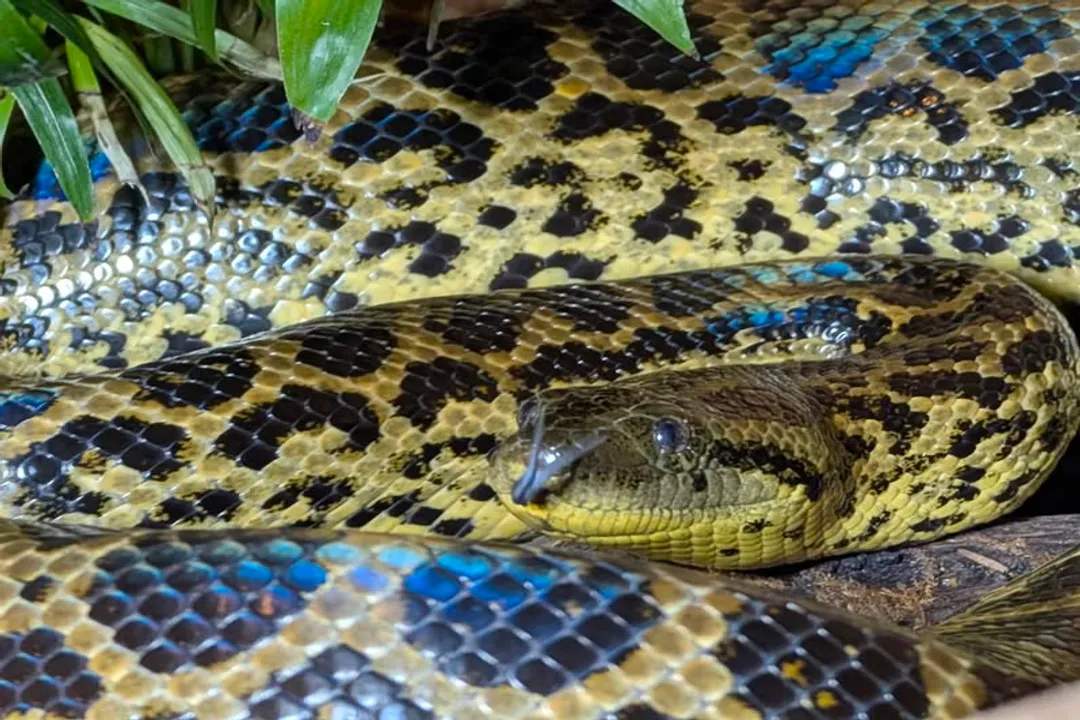
A notable difference between the yellow anaconda (*E. notaeus*) and its famous relative, the green anaconda (*E. murinus*), is the disparity in maximum achievable size. While both are categorized as giant constrictors, *E. notaeus* typically reaches lengths in the range of 13 to 15 feet. In contrast, *E. murinus* has the potential to grow substantially larger, often capable of exceeding 20 feet. This difference in maximum body mass suggests that the specific ecological niches occupied by the yellow anaconda, possibly involving different prey bases or vegetation densities within the Paraguay basin, favor a less massive build for optimal hunting success and maneuvering.
Related Questions
Approximately how long ago did the Eunectes genus split from pythons and other boas?What is the characteristic base coloration of the yellow anaconda, *Eunectes notaeus*?Which massive South American wetland system is the primary habitat for *Eunectes notaeus*?Where are the eyes and nostrils of *E. notaeus* positioned for an aquatic lifestyle?Compared to *Eunectes murinus*, what is generally true about the maximum size of *E. notaeus*?What specific locomotion pattern do newborn yellow anacondas exhibit when escaping immediate threats?How recent is the divergence among the four recognized species within the *Eunectes* genus?The presence of *E. notaeus* is strongly tied to the drainage basins of which two major South American rivers?Despite local pressures, what is the current global conservation listing for *Eunectes notaeus*?What characteristic defines the biomechanics of the S-start escape motion in neonates?