What specific locomotion pattern do newborn yellow anacondas exhibit when escaping immediate threats?
Answer
S-start motion
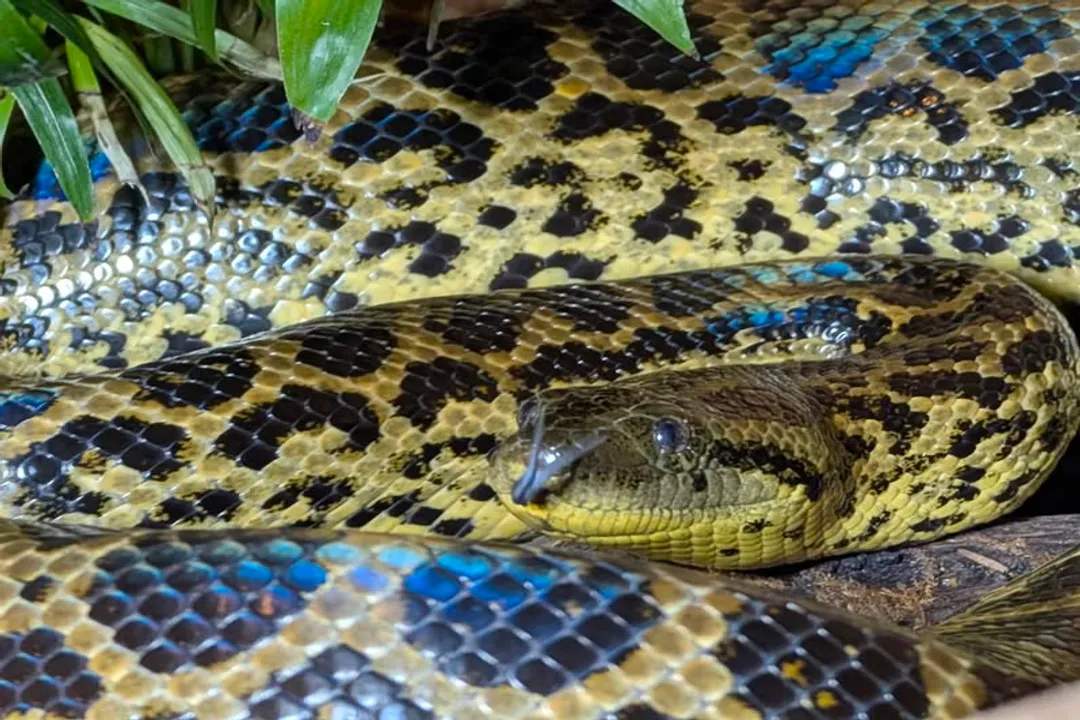
Newborn yellow anacondas possess a highly specialized mechanical strategy for immediate evasion when sensing a threat, known as the "S-start" motion. This maneuver is distinct from the typical serpentine motion used for general swimming or crawling. The S-start involves an explosive, rapid, non-reciprocal bending of the snake's body immediately upon initial contact with the substrate or water. This biomechanically unique burst allows for maximal initial acceleration, providing a vital, life-saving escape mechanism for neonates who are significantly more vulnerable to predation than mature adults.
Related Questions
Approximately how long ago did the Eunectes genus split from pythons and other boas?What is the characteristic base coloration of the yellow anaconda, *Eunectes notaeus*?Which massive South American wetland system is the primary habitat for *Eunectes notaeus*?Where are the eyes and nostrils of *E. notaeus* positioned for an aquatic lifestyle?Compared to *Eunectes murinus*, what is generally true about the maximum size of *E. notaeus*?What specific locomotion pattern do newborn yellow anacondas exhibit when escaping immediate threats?How recent is the divergence among the four recognized species within the *Eunectes* genus?The presence of *E. notaeus* is strongly tied to the drainage basins of which two major South American rivers?Despite local pressures, what is the current global conservation listing for *Eunectes notaeus*?What characteristic defines the biomechanics of the S-start escape motion in neonates?