Yellow Belly Ball Python Evolution
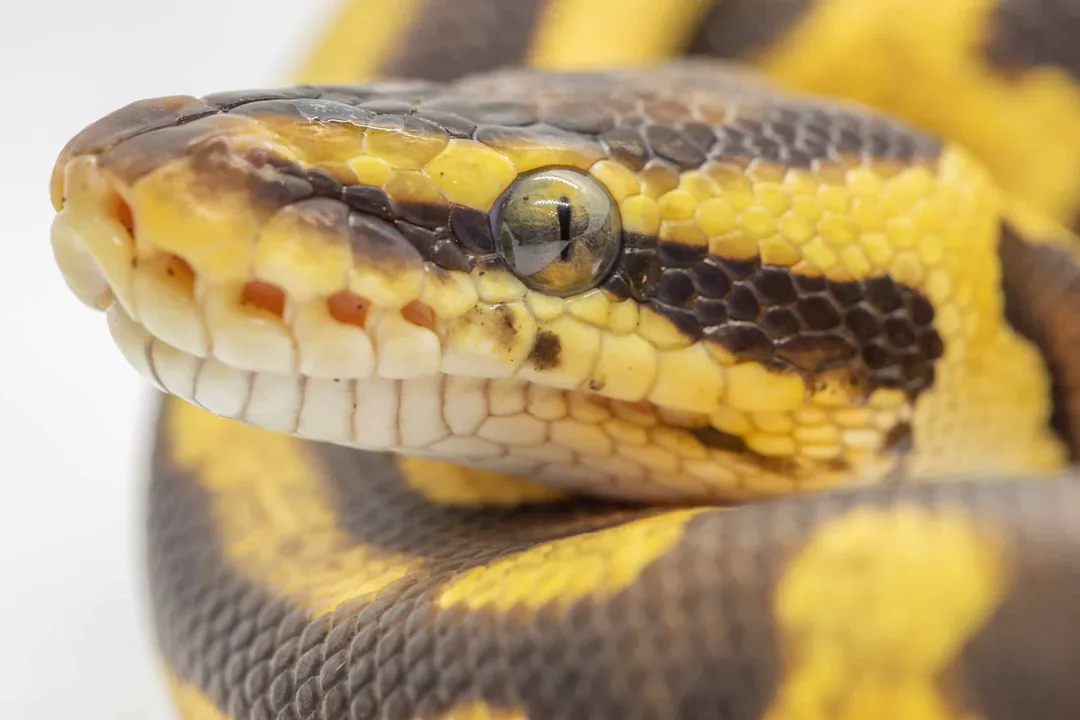
The emergence of the Yellow Belly (YB) ball python from the vast sea of imported Python regius represents a landmark in modern herpetoculture, marking a significant step in the development of captive-bred color variations. Long before morphs commanded high prices, the ball python was a common, inexpensive import, yet even then, keepers searched for anomalies. The story of the Yellow Belly begins not in a controlled breeding project, but with a keen eye spotting something unusual on the market floor.
Around 1997, Amir Soleymani noted a peculiar-looking ball python at a reptile show. This snake was being sold simply as a "Normal," but its distinct characteristics suggested otherwise. Soleymani acquired the animal, and through diligent work, he confirmed within two years, by 1999, that the trait was indeed genetic. This initial discovery set the stage for what would become one of the hobby’s most foundational and widely used genes.
# Genetic Nature

The inherited behavior of the Yellow Belly gene quickly became a focus for early geneticists in the hobby. Unlike a simple recessive trait, which requires two copies to be visually expressed, the Yellow Belly gene demonstrated incomplete dominance, now more commonly referred to as co-dominant. This classification became definitive in 2003 when Dan & Colette Sutherland of TSK bred two Yellow Bellies together.
The resulting offspring showcased the co-dominant expression perfectly. The pairing yielded a startling Super form, which they named the Ivory. The Ivory is drastically different from the single-gene Yellow Belly, often described as a nearly patternless, creamy-white snake featuring a distinct yellow stripe running down its dorsal line. The existence of this visually distinct Super confirmed that the gene modifies the visual appearance even in a single copy, yet it can also be intensified into a completely different phenotype when two copies are present.
# The Allelic Spectrum

The "evolution" of the Yellow Belly extends beyond just the YB phenotype itself; it represents a complex genetic locus, referred to by breeders as the Yellowbelly series of color morphs. This series is theorized to be comprised of at least five known alleles, which exist at the same genetic location: yellowbelly, spark, specter, gravel, and asphalt.
These alleles present on a spectrum of effect, largely influencing the loss of darker coloration and resulting in changes to the patterning. The yellowbelly allele is considered the strongest, leading to the striking Ivory Super form when homozygous. The other alleles slot in between:
- Intermediate Alleles: Spark and Specter result in homozygotes with a moderate lightening of coloration compared to wild-type, often accompanied by a pair of defined dorsal, longitudinal stripes.
- Weakest Alleles: Gravel and Asphalt show the mildest expression, causing only subtle alterations in pattern and slight overall color lightening when homozygous.
It is critical to recognize how these variations interact. Heterozygotes carrying just one copy of any of these five alleles, when crossed with a true wild-type snake, are often extremely hard to visually differentiate from a normal ball python. Some keepers note a slightly lighter underbelly in these heterozygotes, but this trait is highly variable and difficult to pin down, especially for the milder alleles. This subtle presentation creates interesting scenarios in breeding projects; for instance, a breeder aiming for a clean Yellow Belly might cross two snakes visually identified as Normal, hoping for a het carrier, but if one parent carried a milder allele like gravel, the resulting offspring might only show a subtle clean-up that could be misattributed to environmental factors or simply overlooked entirely until later breeding projects clarify the lineage.
# Distinguishing Features

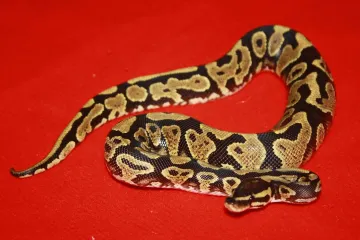
Visually identifying a single-gene Yellow Belly from a standard Normal can be challenging for the uninitiated, as the gene is often described as subtle. The traits are often best observed when looking at specific areas rather than the snake as a whole.
A key indicator that sets the Yellow Belly apart from the typical wild-type pattern—which often includes numerous small dark freckles or speckling in the pale lateral blotches—is the belly pattern. Yellow Bellies generally possess a much cleaner belly, lacking this speckling in the center. Instead, the belly scales that meet the sides are bordered by a distinct checkered or motley pattern.
Another major characteristic involves the pattern elements on the sides:
- Flames: Strong, bright markings, sometimes called "flames," appear to travel up the sides of the snake, situated between the lateral "alien head" markings.
- Coloration: The overall body coloration tends to be richer or have a warmer hue, making the dark pattern elements appear more tanned than the typical dark brown or black of a Normal.
- Head Stamp: A common field mark is a lighter area on the top of the head, often presenting as a light tanned-brown crown with lighter scales toward the rear.
- Tail: The tail area often terminates with a thick stripe or noticeable beading, contrasting with the normal tail pattern.
Despite the name, a ball python carrying the YB gene does not automatically guarantee a bright yellow underside. When assessing a potential Yellow Belly, new keepers should prioritize looking for the absence of belly speckling and the presence of the clean belly edge/flames, as these visual cues often prove more consistent than generalized yellowing [Insight 1].
# Enhancer Value
The true strength and "evolutionary" success of the Yellow Belly gene in the captive market lie in its application as a powerful enhancer. It brightens and cleans up the appearance of many other genes it is combined with, making it a staple in building designer morphs. Breeders frequently pair YB with other traits to achieve spectacular new looks that do not occur in nature.
For example, when combined with the Asphalt or Gravel alleles from the same series, the resulting morphs like Freeway (Asphalt Yellowbelly) or Highway (Gravel Yellowbelly) show clear pattern shifts. Yellow Belly’s influence is seen across the spectrum of genes:
- Combining it with Pastel yields the Pewter Belly (Cinnamon Pastel Yellow Belly).
- Its inclusion with the Spider gene, combined with Pastel, results in the Bumble Belly.
- When paired with the Piebald gene, it produces the Pumpkin Pied.
The versatility means that nearly every major gene in the hobby has a Yellow Belly combination counterpart. This utility keeps the gene relevant even if it is subtle on its own. An experienced breeder understands that a Yellow Belly isn't just a color; it is a modifier that can elevate the visual contrast and vibrancy of its partner genes, often providing the necessary "pop" that a darker gene might otherwise dampen. This makes the YB gene incredibly valuable, often cited as one of the most useful in a breeding rotation.
# Captive Trajectory
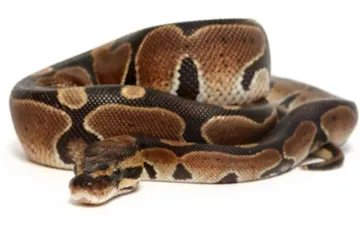
The widespread adoption of the Yellow Belly gene mirrors the broader shift in ball python breeding that began in the early 1990s. As the community moved toward captive breeding, the focus shifted from importing common animals to identifying and reproducing rare genetic mutations. The relatively low cost of the initial Yellow Belly gene, compared to early albinos which cost thousands, allowed many breeders to incorporate it into projects early on, leading to its common availability today.
The ease with which the Yellow Belly gene enhances other morphs has cemented its role in the ongoing diversification of the species. While wild ball python populations in source countries like Ghana, Togo, and Benin face conservation threats due to poaching and habitat change, the captive population, bolstered by foundational genes like YB, continues to thrive and diversify. The ongoing discovery of new alleles within the YB series itself—as indicated by the potential for genes like spark and specter to be further defined—suggests that the genetic story of this trait is still unfolding. For those interested in tracking this evolution, maintaining detailed records of lineage pairings, especially within the allelic series, is an essential practice for future genetic clarification.
#Videos
Unlocking the potential of the 'Yellowbelly' ball python morph!
How to Identify Yellowbelly in Ball Pythons! - YouTube
The Yellow Belly Ball Python: How to ID it and use it in ... - YouTube
Related Questions
#Citations
Yellow Belly - Ball Python Traits - Morphpedia
Unlocking the potential of the 'Yellowbelly' ball python morph!
Yellow Belly Ball Python - A-Z Animals
Yellowbelly - Ball-Pythons.net
Yellow Belly Ball Python Description and Photos - Northwest Reptiles
Ball Python Morph History - Reptiles Magazine