Yellow Bullhead: Adaptable American Catfish Evolution
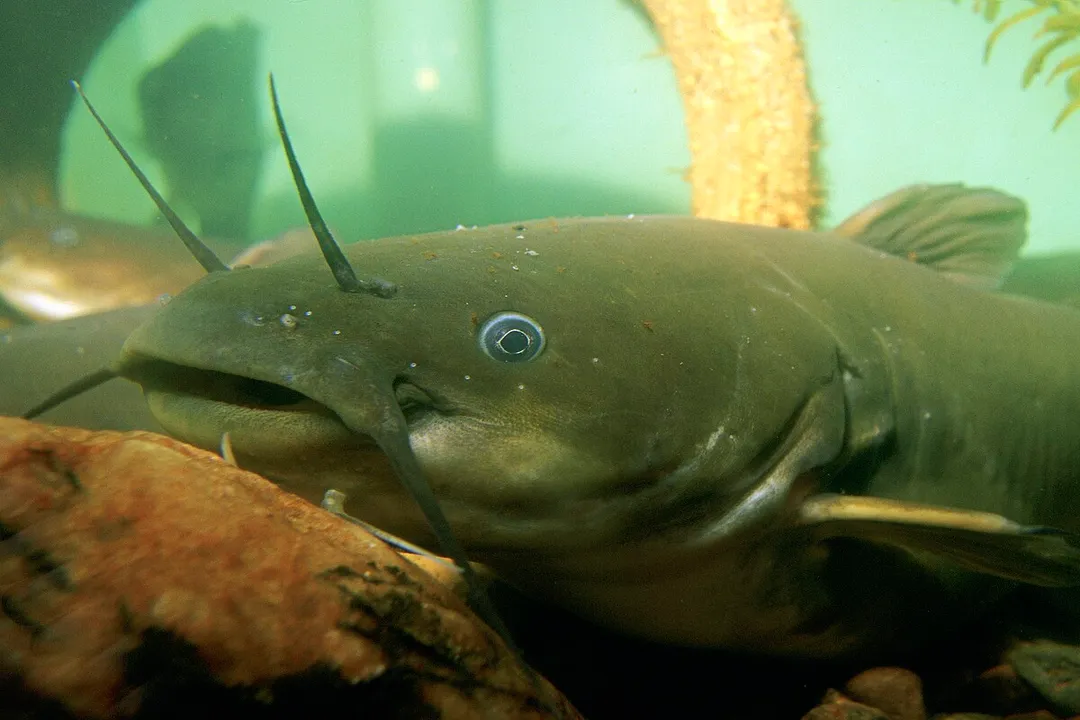
The Yellow Bullhead, Ameiurus natalis, presents an interesting case study in North American freshwater survival, possessing a collection of traits that allow it to thrive where other, more sensitive fish species might struggle. This relatively small catfish species is known for its tenacity and its ability to occupy niches across a wide geographical and environmental spectrum. [1][6] While often overshadowed by its larger cousins, like the Channel Catfish, the Yellow Bullhead has carved out a successful existence by specializing in the less demanding, warmer, and often murkier waters of its home range. [5][8] Understanding this fish requires looking closely at its physical characteristics, its preferred environment, and its nocturnal lifestyle, all of which point to a highly evolved, adaptable survivor. [1][2]
# Identification Markers
Distinguishing the Yellow Bullhead from its close relatives, particularly the Brown Bullhead (Ameiurus nebulosus), requires careful observation of a few key anatomical features. [4][8] The common name itself hints at a general coloration, often described as yellowish to dark olive-brown or gray dorsally, which fades to a distinct yellow or white on the underside. [1][4][6][8] However, environmental pressures can cause significant color shifts; some populations present almost uniformly dark coloration, making visual identification more challenging. [4] A critical difference lies in the anal fin structure: the Yellow Bullhead possesses fewer rays in this fin, typically counting between 21 and 27. [4] In contrast, the Brown Bullhead usually has between 23 and 30 rays. [4][8] Furthermore, the Brown Bullhead often displays dark mottling, which is characteristically absent in the Yellow Bullhead, lending the latter a cleaner, more uniform appearance. [4][8]
Like all members of the bullhead group, A. natalis has eight sensory barbels around its mouth. [1][3] For the Yellow Bullhead, these chin barbels are notably yellowish-white, a subtle but reliable field mark. [8] The skin is smooth and scaleless, a common trait among catfish, aiding its movement across soft, silty bottoms. [3] For anglers assessing a potential catch, looking at the tail is also useful. The tail fin is usually only slightly notched or appears nearly straight across, unlike the more deeply forked tail found on some other catfish species. [8] Young individuals often display a more bluish-gray hue before maturing into their adult pigmentation. [4]
# Size Expectation
In terms of physical stature, the Yellow Bullhead is not a giant of the aquatic world. Most individuals encountered will measure around 12 inches in length. [5][6] While larger specimens do occur, they rarely exceed 16 inches. [5][6] The reported maximum weight recorded for the species is modest, hovering around 4 pounds. [6] This smaller profile means they are often overlooked in sport fishing circles compared to their larger counterparts, yet their abundance can make them a frequent catch in suitable habitats. [6]
# Waterway Preference
The environmental niche occupied by the Yellow Bullhead is defined by its tolerance for conditions that might exclude more demanding fish. [1][6] These catfish strongly favor water bodies characterized by slow currents or areas that are entirely stagnant. [1][5][6][8] Lakes, ponds, and sluggish, meandering streams or bayous represent their ideal settings. [4][5] They are frequently found in shallow areas, particularly where dense aquatic vegetation provides cover and rich foraging opportunities. [5]
Perhaps the most significant aspect of their adaptability is their affinity for soft, muddy, or silty substrates. [1][5] This preference dictates their foraging strategy and their ability to maintain territory. [5] More profoundly, A. natalis displays a remarkable tolerance for poor water quality, specifically low dissolved oxygen levels, or hypoxia. [1][6] This physiological robustness allows them to persist in warm summer ponds where oxygen depletion is a common stressor. [6]
Considering their reliance on soft bottoms and vegetation, an angler might deduce that water clarity is rarely a major limiting factor; in fact, they seem perfectly comfortable—and perhaps even prefer—turbid or muddy conditions. [1][5] This generalist approach to water quality, coupled with their physical design, ensures wide distribution across suitable systems. [6]
This high tolerance for low oxygen provides a unique ecological advantage. In shallow, sun-baked ponds during summer heatwaves, many fish species will perish or move to limited, deeper refuge areas. The Yellow Bullhead, however, can remain active near the surface or in the benthic zone where oxygen levels might be critically low for a sunfish or bass. [6] The ability to remain active in such stressed environments suggests a highly efficient metabolic strategy when oxygen is scarce, making them true survivors of marginal aquatic habitats. [1]
# Nighttime Habits
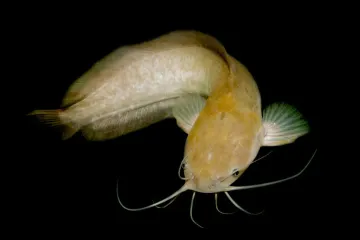
The lifestyle of the Yellow Bullhead is firmly anchored in the cover of darkness. [2][5] They are classified as nocturnal bottom-dwellers, meaning their primary activity—feeding and movement—occurs after sunset. [2][5] This behavior offers them several advantages, including avoiding visual predators that rely on daylight, such as larger birds or piscivorous mammals, and taking advantage of the increased activity of their invertebrate prey that also emerge at night. [5]
As active foragers, they systematically work the bottom substrate, using their sensitive barbels to detect food items hidden in the muck or detritus. [5] Their diet confirms this foraging method; they are true omnivores, consuming almost anything available at the bottom level. [1][4][5][6] Their menu is diverse, encompassing insects, insect larvae, crustaceans, mollusks, and various forms of aquatic plant matter. [1][5][6] They are also opportunistic, readily consuming small fish and fish eggs when the chance arises. [4]
Anglers targeting this species should modify their approach to align with these established habits. Since they are most active after dark, presenting bait low in the water column during the evening or night significantly increases the chances of a hookup. [5] Furthermore, presenting bait near known cover, such as submerged logs or dense weed lines—areas they use for daytime resting and nighttime hunting routes—is often more productive than casting into open water during daylight hours. [5] This focus on structure and darkness capitalizes on their natural behavioral rhythms.
# Lineage and Range
The Yellow Bullhead has established a significant range across the North American continent. [1][6] Its historical distribution spans the Great Lakes drainage system and the St. Lawrence River basin. [4][6] From there, its range extends southward, covering the eastern United States and reaching the Gulf Coast states. [1][6][8] This distribution pattern suggests the species evolved and adapted across a vast area with varying climatic conditions, further supporting its reputation for adaptability. [4]
While their general range is broad, specific local populations can be managed or sometimes confused with related species. [8] The inherent variability in coloration within the species makes accurate identification crucial for scientific monitoring and management efforts. [4] For instance, in areas where they coexist with Brown Bullheads, subtle morphological differences, such as the anal fin ray count or the presence/absence of mottling, become the definitive criteria for species confirmation. [4][8]
# Spawning Behavior
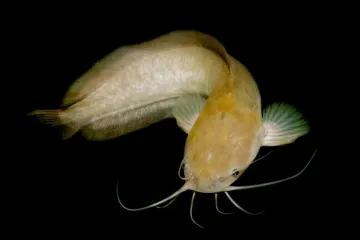
The reproductive cycle of the Yellow Bullhead is tied to the warming temperatures of spring. [4][5] Spawning generally takes place between April and June, depending on the local climate and water temperature conditions. [4][5] Like many bottom-dwelling fish, they seek out secluded, protected areas for nest construction. [4] These nests are typically constructed in depressions dug into the substrate, often strategically located beneath physical cover such as a submerged log, a large rock, or a tangle of roots. [4][5]
A notable aspect of their breeding strategy involves strong parental care, executed primarily by the male. [4][5] Once the eggs are laid and fertilized in the prepared nest site, the male takes charge of guarding the location and the developing embryos. [4][5] This dedication continues after hatching, with the male remaining protective of the resulting young fry until they disperse. [5] This level of paternal investment is a common, yet important, survival mechanism for many catfish species, ensuring a higher rate of offspring survival than broadcast spawning might allow. [4]
# Diet Breadth
The Yellow Bullhead’s success as a widespread, resilient species is deeply linked to its opportunistic and omnivorous diet. [1][6] It does not specialize heavily, instead consuming whatever appropriate food sources are available near the bottom substrate, particularly during its active nocturnal feeding periods. [5] This broad palate includes a mix of animal and plant material. [1][5]
The animal components of their diet are varied, featuring aquatic insects and their larvae, various small crustaceans, and mollusks. [1][5] They will also readily consume smaller fish and fish eggs encountered in their benthic foraging zones. [4] Supplementing this animal protein is readily consumed plant matter and detritus, which helps sustain them when invertebrate populations are low. [1][6]
If one were to chart the dietary intake of a typical Yellow Bullhead population across a growing season, one would likely see a shift. During early spring when temperatures rise, they might heavily target eggs and early-hatching insects. As summer progresses and aquatic vegetation grows, detritus and algae intake would likely increase, providing necessary bulk, before switching back to small invertebrates as fall approaches. [1][5] This nutritional flexibility, combined with the physical tolerance for low-oxygen water, makes A. natalis one of the most consistent feeders in less than ideal aquatic systems.
Related Questions
#Citations
Ameiurus natalis (Bullhead) | INFORMATION - Animal Diversity Web
Meet the Yellow Bullhead Catfish (Ameiurus natalis) - Facebook
Unveiling the Mysteries of the Yellow Bullhead: A Colorful Aquatic ...
Yellow bullhead - Wikipedia
Yellow Bullhead - FISHBIO | Fisheries Consultants
bullhead catfish (Ameiurus sp.) - Species Profile - USGS NAS
Yellow Bullhead - American Catfishing Association
[PDF] Yellow Bullhead (Amerius natalis)
Yellow Bullhead - Montana Field Guide