Which chemical components of beeswax are waxworm larvae uniquely capable of processing?
Answer
Complex esters and long-chain fatty acids
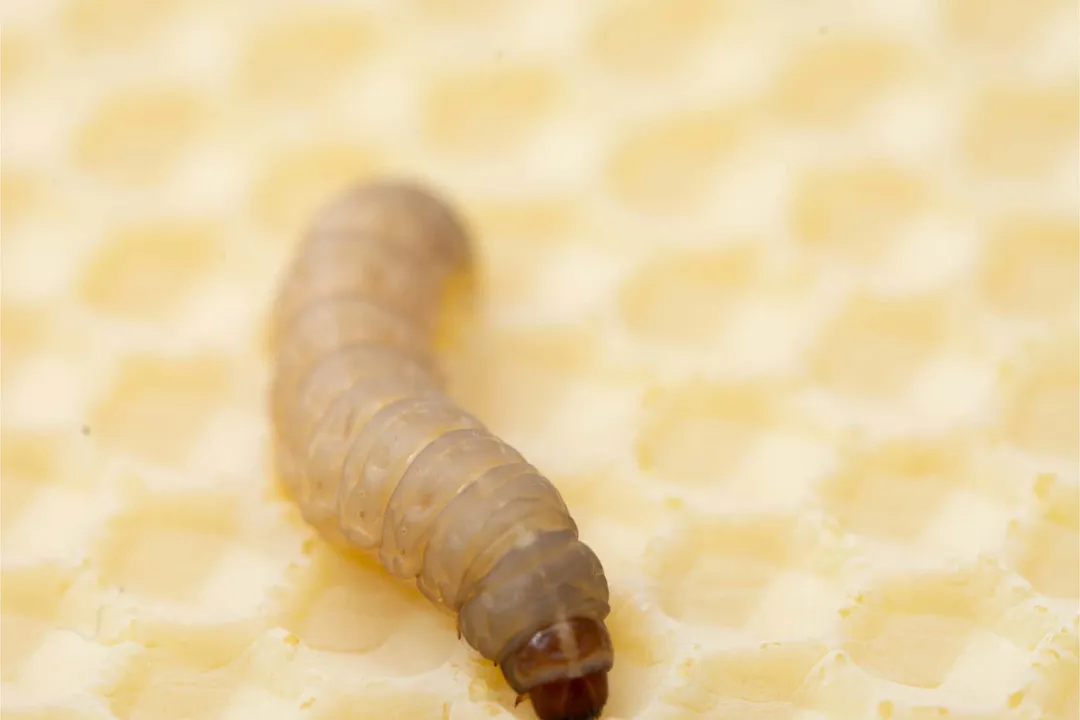
The capacity of the wax moth larva to digest beeswax is a highly specialized metabolic feat. Beeswax is chemically complex, primarily composed of long-chain esters derived from fatty acids and long-chain alcohols. The waxworm possesses the necessary enzymatic machinery to cleave these large molecules apart. This ability to break down these specific chemical structures—the complex esters and the long-chain fatty acids—is what allows them to utilize the structural wax of the comb as a direct source of sustenance, a capability that very few other insects share.
Related Questions
What three core components constitute the primary diet of wax moth larvae in a honeybee colony?What allows *Galleria mellonella* larvae to consume beeswax?What critical element is consistently cited for adult wax moth survival and egg laying?Besides consumption, what physical byproduct do developing wax moth larvae create in the comb structure?Which ingredients, besides purified beeswax, are often incorporated into successful artificial waxworm rearing media?What aspect of the waxworm’s diet determines its final nutritional value for reptiles or spiders?In which hive environment are stored supers particularly vulnerable to wax moth larvae infestation?How does the primary biological goal of the adult moth differ from the larval stage?What is the destructive consequence when wax moth larvae tunnel through and consume stored comb structure?Which chemical components of beeswax are waxworm larvae uniquely capable of processing?