Wax Moth Evolution
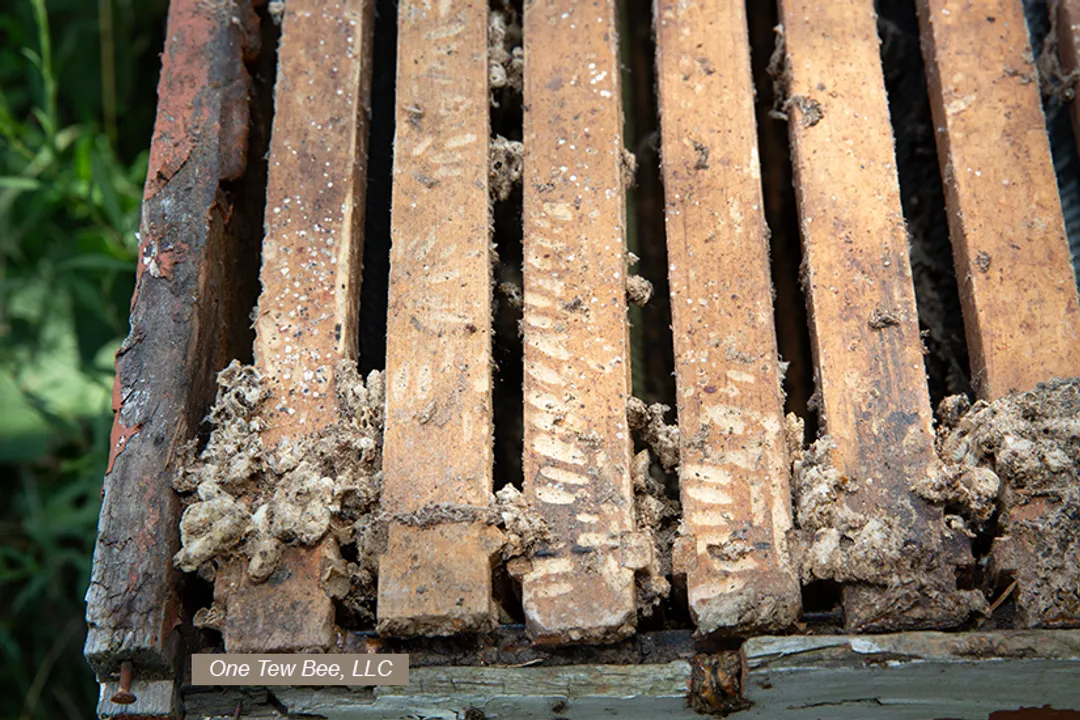
The tiny wax moths, often viewed purely as enemies of the beekeeper, represent fascinating examples of specialized insect evolution. These creatures, primarily the Greater Wax Moth (Galleria mellonella) and the Lesser Wax Moth (Achroia grisella), have spent millennia intricately linked to the honeybee, developing sharp survival mechanisms that allow them to exploit the resources within the hive, even when the colony is actively defending itself. Their success isn't due to brute strength but rather an optimized suite of sensory perception, biochemistry, and reproductive strategy honed by intense co-evolutionary pressure.
# Two Species
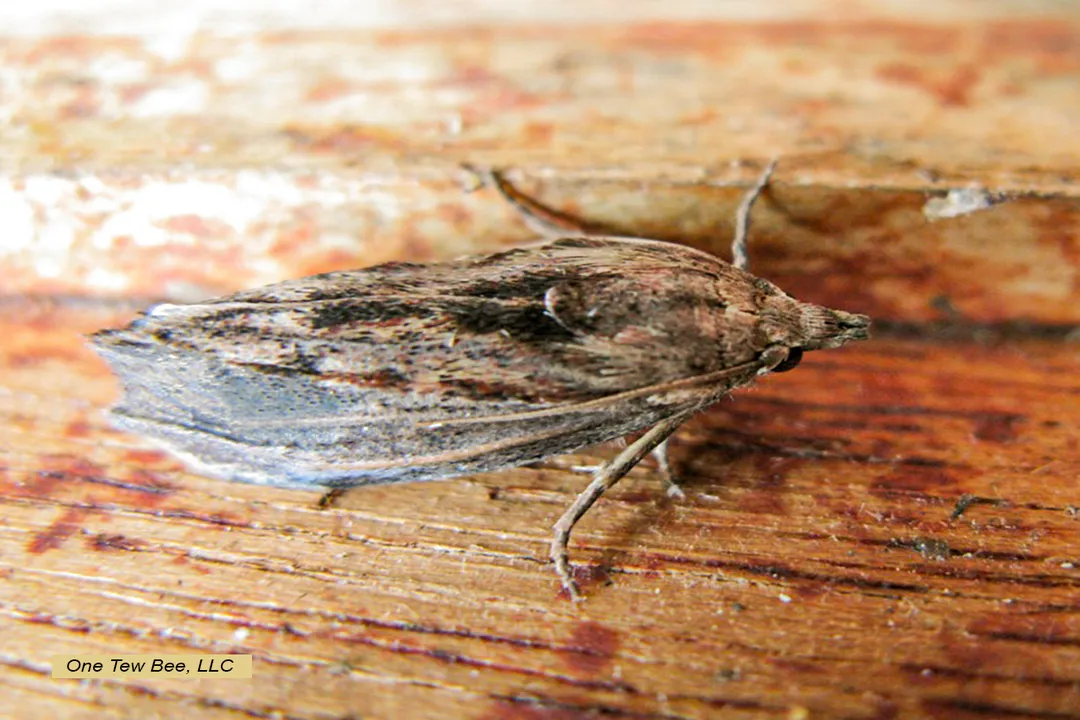
The two most common species encountered in beekeeping operations are the Greater Wax Moth and the Lesser Wax Moth, and while both are pests that damage wax combs, their evolutionary pressures and adaptations have resulted in distinct characteristics. The Greater Wax Moth, Galleria mellonella, is generally the more destructive of the two. Adults of this species can have wingspans ranging from about 18 to 37 millimeters. In contrast, the Lesser Wax Moth, Achroia grisella, is smaller, typically possessing a wingspan between 10 and 14 millimeters. This size difference is significant, as it often correlates with differences in mobility, resource needs, and escape strategies. Both species have larvae whose primary food source is beeswax, though they also consume pollen and propolis stored in the comb. Their cosmopolitan distribution is a testament to their adaptability, having spread globally alongside managed honeybee populations.
# Sensory Arms Race
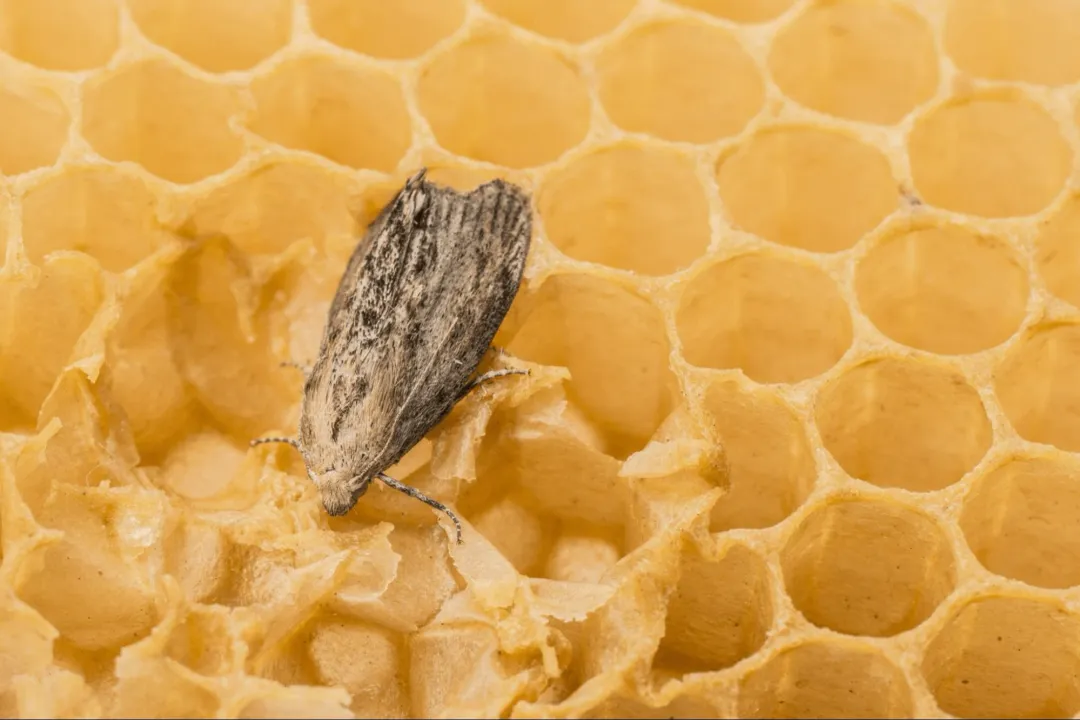
Perhaps the most astonishing evolutionary development seen in the Greater Wax Moth concerns its auditory system, which directly reflects an evolutionary arms race against nocturnal predators. Galleria mellonella possesses the most sensitive ears discovered in the insect world to date. These organs are exquisitely tuned to detect ultrasonic frequencies, specifically those used by bats for echolocation—the very sounds that guide a predator’s attack. The moth’s tympanal organs can pick up sound waves at remarkably low intensities, allowing the moth crucial milliseconds to drop out of the air or otherwise evade the incoming hunter. This hypersensitivity is a direct, high-stakes evolutionary response to predation pressure in the wild, where being audible to a bat is often a death sentence.
It is interesting to consider the sensory divergence between the two major species. While the Greater Wax Moth has evolved this extreme auditory defense, the smaller Lesser Wax Moth does not exhibit the same level of specialization in hearing, suggesting that different body sizes and flight characteristics led to distinct evolutionary solutions for predator avoidance. Where G. mellonella invested heavily in developing ultrasonic stealth, A. grisella may rely more heavily on other defenses, perhaps quicker reflexes, lower-intensity pheromone signaling for mating, or simply being less conspicuous due to its smaller size, making it a less energetically "profitable" target for a bat. This divergence highlights that evolution doesn't follow a single track; two species facing the same general threat can arrive at entirely different, yet effective, adaptations based on their starting physiology.
# Nutritional Niche
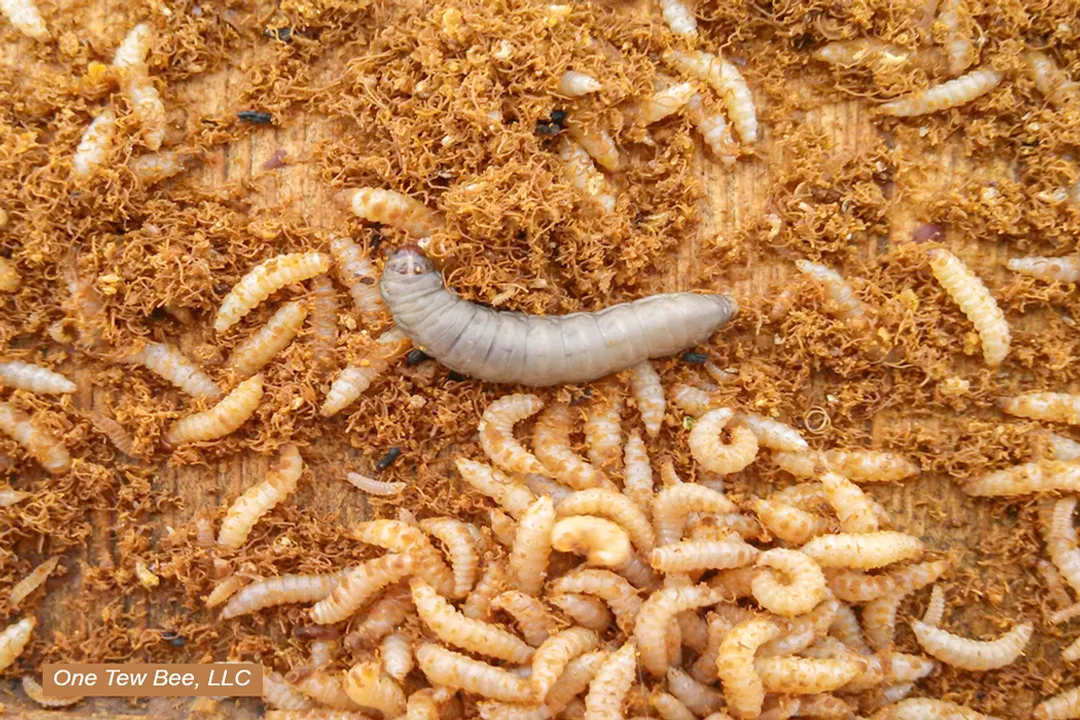
The larval stage of both moths is the destructive phase, as they burrow through wax structures. The ability to consume beeswax, which is largely composed of esters, fatty acids, and alcohols, requires a specialized metabolic toolkit. This dietary specialization has driven significant biochemical evolution within the moth's digestive system. Studies focusing on the Galleria larvae have revealed an unexpected capacity within their biology: they possess enzymes capable of breaking down polyethylene (PE), a common plastic. While this mechanism evolved to tackle the complex hydrocarbons and long-chain fatty acids found in beeswax, the fact that the G. mellonella genome contains the necessary machinery to biodegrade synthetic polymers is a powerful indicator of its evolutionary flexibility in dealing with tough organic materials.
Furthermore, the moth's association with the hive isn't purely extractive regarding wax. Research shows that Galleria mellonella larvae often associate with or harbor specific Candida species fungi within their gut. This relationship suggests a potential nutritional symbiosis or parasitism, where the fungus may assist the larva in breaking down the waxy material or providing essential nutrients the moth cannot synthesize efficiently on its own. This interplay between the host, the host's food source (wax), and a microbial partner represents a multi-tiered evolutionary adaptation to secure nutrition within the highly competitive and defended environment of the honeybee nest.
# Life Cycle Strategy
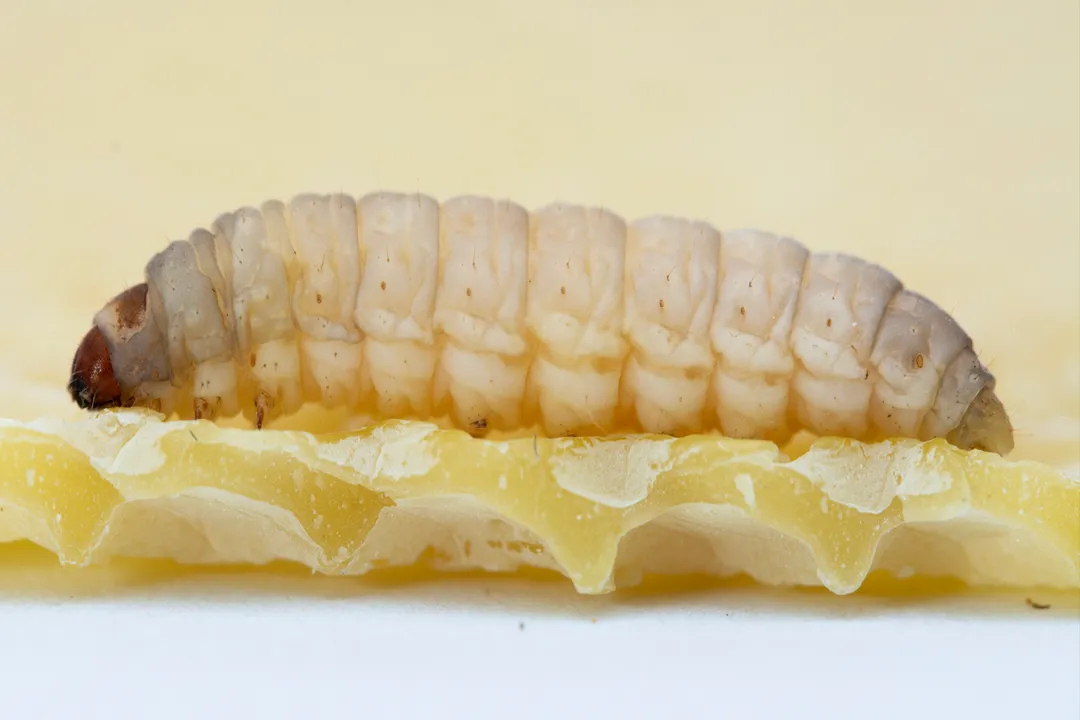
The overall life cycle of the wax moth—egg, larva, pupa, and adult—is geared toward rapid exploitation when the opportunity arises. Eggs are typically laid near or within the entrance of a hive or on combs stored outside. The larvae hatch and immediately begin feeding, growing through several instars, weaving silk galleries as they go. These silk tunnels are a critical adaptation, acting not only as protection from direct bee attack but also as physical barriers that can trap or impede the bees' ability to clean or repair. The pupal stage is often spent hidden within this silk cocoon. The entire process, from egg to adult, can be quite rapid under warm conditions, enabling the moth population to explode quickly if a colony is compromised. This reproductive speed is an evolutionary advantage, allowing them to capitalize on transient weaknesses in bee colonies before the bees can recover or before other predators arrive.
# Beekeeping Context
The modern beekeeping industry has unwittingly become a primary selective agent for wax moth evolution. By creating vast, concentrated reserves of honeycombs (stored supers, empty hives, weak nucs), humans have provided an unprecedented, stable, and easily accessible food source for the moths, which was not as common in historical wild nesting situations. This has intensified the selection pressure for moths that can successfully breach or evade bee defenses, particularly in stored equipment where the bees cannot intervene.
From an evolutionary standpoint, a healthy, populous honeybee colony represents a high-risk, low-reward scenario for a moth looking to lay eggs; the metabolic cost of surviving the bee defense is high, and the resource gain is constantly being challenged by worker bees. Conversely, a weak or dead-out colony represents a low-risk, high-reward scenario—a massive, unguarded larder. The moths that thrive in modern apiculture are those whose offspring are genetically programmed to find these compromised targets quickly or whose larval stages are tough enough to withstand minor bee counter-attacks long enough to establish a foothold. Understanding that the moth's sensory adaptations (like those incredible ears) evolved in response to natural predators, while its proliferation in storage is an artifact of human management, helps frame the current pest dynamic as a blend of deep evolutionary history and recent ecological disruption.
# Advanced Deterrence Principles
When considering management, it is helpful to view deterrence through an evolutionary lens. Since the Greater Wax Moth has evolved such refined hearing to escape bats, chemical deterrents that target the moth's olfactory or gustatory senses become the primary non-physical defense. Furthermore, the difference in destruction caused by the two species provides a tactical clue: while G. mellonella is notorious for breaking down comb structure rapidly due to its larger size and silk production, A. grisella is often considered more destructive to stored honey. This suggests that for moth management in long-term storage, the focus might need to shift slightly to address the Lesser Moth's specific feeding preference for stored honey and pollen, perhaps through colder storage rather than just focusing on eliminating the silk-weaving capability dominant in Galleria infestations. Ultimately, the best evolutionary countermeasure remains the strongest host: a vigorous, dense honeybee colony is the most effective biological deterrent available.
Related Questions
#Citations
Wax Moths and Honey Bees | Bee Culture
Plain Talk: Wax Moths and Honey Bees (193)
Wax moth - Bee Aware
ScienceShot: Wax Moth Has Most Sensitive Ears in Insect World
Lesser wax moth - Wikipedia
The Biology and Control of the Greater Wax Moth, Galleria mellonella
Wax Moths: Intriguing Creatures of the Beekeeping World
Chew on this: improved greater wax moth genome gives insight into ...
Zoologger: The moth with the highest-pitched hearing | New Scientist