What is the destructive consequence when wax moth larvae tunnel through and consume stored comb structure?
Answer
It causes stored combs to collapse, rendering them unusable
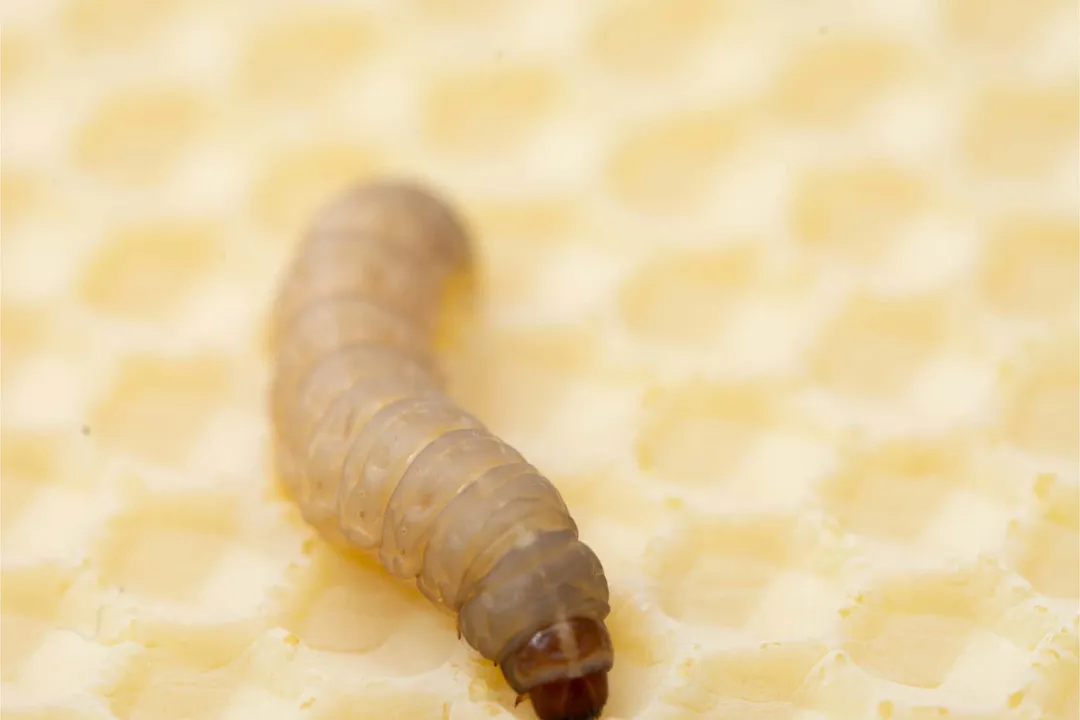
The act of tunneling by wax moth larvae, driven by their consumption of beeswax, has severe structural consequences for stored honeycomb frames. As the larvae bore through the hexagonal wax cells to access the stored contents, their activity weakens the overall architecture of the comb. This structural compromise, often exacerbated by the creation of webbing, eventually leads to the physical disintegration or collapse of the stored combs. Once the comb collapses, it is severely damaged, preventing its reuse for storing honey or for supporting a future colony, thus representing a significant loss of valuable beekeeping equipment and product.
Related Questions
What three core components constitute the primary diet of wax moth larvae in a honeybee colony?What allows *Galleria mellonella* larvae to consume beeswax?What critical element is consistently cited for adult wax moth survival and egg laying?Besides consumption, what physical byproduct do developing wax moth larvae create in the comb structure?Which ingredients, besides purified beeswax, are often incorporated into successful artificial waxworm rearing media?What aspect of the waxworm’s diet determines its final nutritional value for reptiles or spiders?In which hive environment are stored supers particularly vulnerable to wax moth larvae infestation?How does the primary biological goal of the adult moth differ from the larval stage?What is the destructive consequence when wax moth larvae tunnel through and consume stored comb structure?Which chemical components of beeswax are waxworm larvae uniquely capable of processing?