What is the primary diet of a sloth?
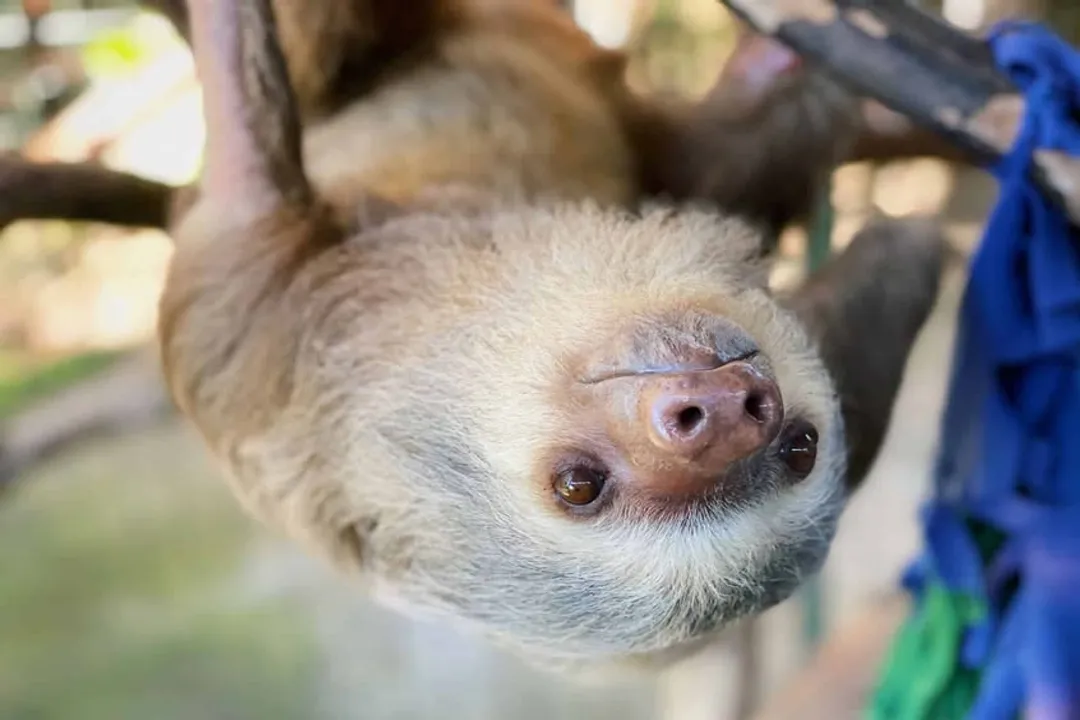
The life of a sloth is intrinsically linked to the vegetation it consumes, defining its famously slow pace and unique physiology. While they are often generally labeled as herbivores, their existence centers almost entirely on leaves, a food source that is notoriously low in easily accessible energy. [1][6] This simple, high-fiber diet dictates nearly every aspect of their daily routine, from how they move to how they process their meals. [1] The sheer commitment to leaves as the staple forms the foundation of understanding sloth biology.
# Primary Food Source
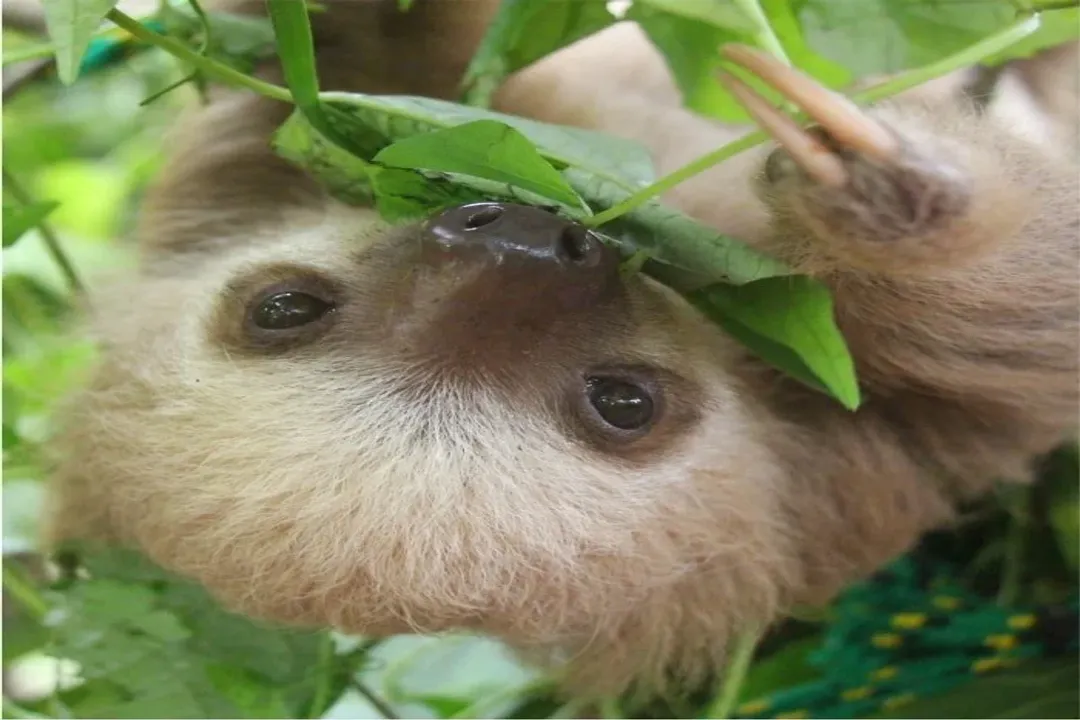
The vast majority of a sloth's intake comes from tree leaves, making them classic folivores. [1] This is true for both major groups of sloths, the two-toed (Choloepus) and the three-toed (Bradypus). [6] However, while leaves are the bedrock, the term "leaves only" isn't entirely accurate across the board, leading to crucial distinctions between the species. [6]
The three-toed sloth, perhaps the more specialized eater of the pair, subsists almost exclusively on foliage. [6] They are known to be incredibly selective, often choosing leaves from only about 50 specific tree species within their range. [6] This hyper-specialization means that if their preferred trees disappear, the sloth has very few immediate backup options.
In contrast, the two-toed sloth exhibits a slightly broader palate in the wild, though leaves remain the primary component. [3][6] Their diet incorporates leaves alongside fruit, buds, and twigs. [1][6] Some observations in captivity also suggest they might consume small amounts of insects or even meat, although this is often noted as an anomaly or a response to a less-than-ideal captive environment. [3][5]
# Species Differences
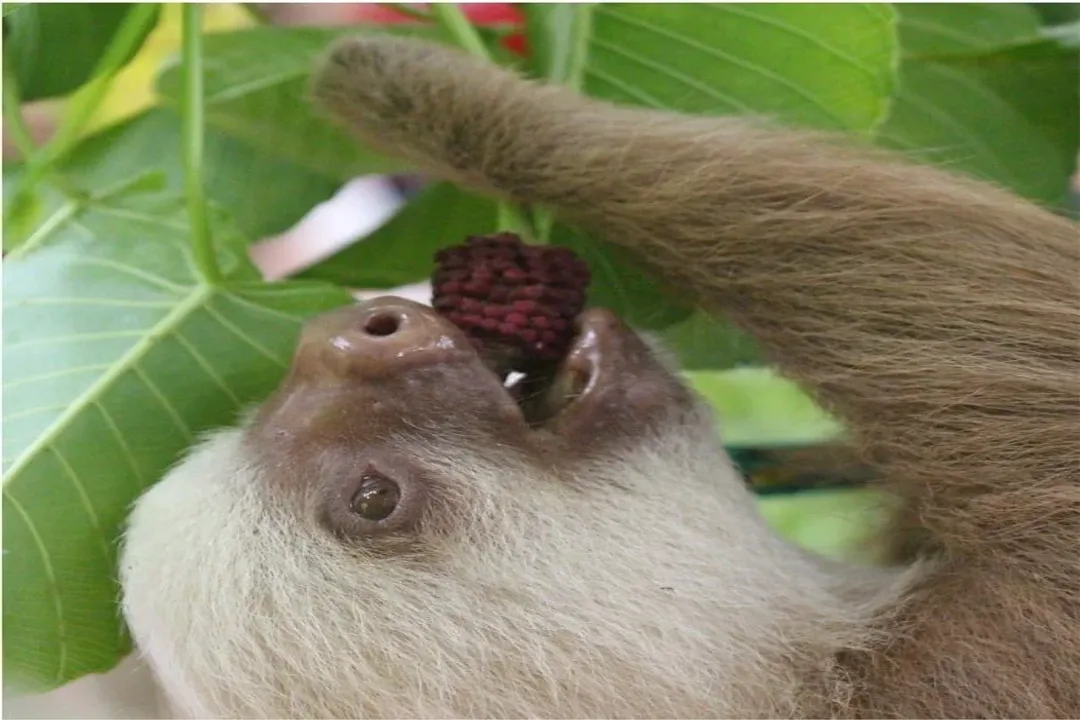
Understanding the primary diet requires recognizing the separation between the genus Bradypus (three-toed) and Choloepus (two-toed). [6] The dietary contrast between these two is one of the most significant divergences in their ecological niches, despite their similar slow movements. [6]
| Sloth Type | Primary Diet Focus | Dietary Breadth | Notes |
|---|---|---|---|
| Three-toed (Bradypus) | Leaves | Extremely narrow; highly selective | Relies heavily on specific canopy species. [6] |
| Two-toed (Choloepus) | Leaves | Broader; includes fruit, buds, twigs | Can incorporate non-plant matter occasionally in managed care. [3][6] |
The three-toed sloth's reliance on specific trees, such as those in the Cecropia genus, highlights an extreme evolutionary adaptation to a low-energy food source. [2] This specificity is likely tied to avoiding toxins; leaves contain high levels of secondary compounds that are difficult to digest, and sloths must select species whose defense chemicals they can tolerate. [1] If a particular tree is high in defensive compounds one season, these specialized eaters must switch to a lesser-liked but safer alternative, which further slows their already reduced foraging activity. [1]
The two-toed sloth's willingness to consume buds and occasional fruit provides a slight caloric advantage over its three-toed cousin, though they are still far from being considered omnivores or frugivores in the typical sense. [5][6]
# Slow Digestion System
The defining characteristic of sloth feeding habits is not what they eat, but how long it takes to process it. Because leaves offer very little net energy, the sloth has evolved a metabolism that runs on an incredibly low number of calories—often less than half of what would be expected for an animal of its size. [6] To maximize the return from such poor-quality forage, their digestive system operates in slow motion. [1]
Digestion can take anywhere from ten days up to a full month to complete a cycle. [1] This process relies heavily on foregut fermentation, similar to ruminants, but utilizing a vastly slower mechanism. [2] The stomach is not a simple bag; it is a large, complex organ divided into multiple chambers. [1]
Within these chambers, specialized symbiotic bacteria reside, which are essential for breaking down the tough cellulose and lignin found in plant matter. [1] The bacteria essentially pre-digest the food, releasing the small amount of usable energy and nutrients before the material moves on for final absorption. [2] Without this internal microbial community, the sloth would starve, unable to extract the energy locked within the tough cell walls of its diet. [1] This slow processing time means that an animal that eats infrequently and slowly, in turn, needs very little energy to maintain its body functions. [1]
It is interesting to consider that the sloth’s slow speed isn't just a behavioral quirk; it is a direct thermodynamic necessity imposed by its diet. Every unnecessary movement represents calories lost that the digestive tract is struggling to replace. [1] If the microbial balance in their specialized gut shifts—perhaps due to stress or foreign food intake—their entire energy budget collapses, leading to severe health issues. [2]
# Captive Diets Supplements
In managed care settings, such as zoos, the challenge shifts from finding rare, safe leaves to providing a balanced intake that mimics the nutrient profile of the wild diet while ensuring all necessary vitamins and minerals are present. [5][9] Because relying solely on a few species of wild leaves is risky for maintaining captive health, keepers offer a variety of items to ensure total nutrient coverage. [9]
For two-toed sloths in human care, the diet typically centers on a large volume of leafy greens. Acceptable greens often include Romaine lettuce, endive, parsley, clover, and alfalfa. [9] These form the necessary high-fiber, low-sugar base. [2][9] In addition to greens, keepers provide a range of vegetables, such as carrots, squash, and sweet potatoes, which offer slightly more concentrated energy and different vitamins than pure leaves. [2][9]
A key point of divergence in captive management is the handling of fruit. While wild two-toed sloths consume some fruit, excessive amounts in captivity are strongly discouraged because the high sugar content can disrupt the delicate bacterial balance in their gut, potentially leading to fatal digestive upset. [2][9] Zoo protocols often limit fruit severely, prioritizing roughage and vegetables instead. [9] Furthermore, captive diets are frequently supplemented with specialized herbivore chow or pellets designed to provide guaranteed micronutrients that might be inconsistent in a natural browse setting. [5]
While three-toed sloths are rarely kept outside of highly specialized conservation settings due to their extreme dietary needs, when they are housed, keepers must meticulously replicate the exact leaf composition of their wild food sources, a task that demands expert botanical knowledge. [2]
# Dietary Limits and Survival
The restrictive nature of the sloth diet places severe limitations on their ecology and behavior. The need to consistently source leaves that are not overly toxic or lacking in nutrition means that sloths must be highly selective about where they live. [1] Their habitat is dictated not by temperature or predator availability alone, but fundamentally by the presence of their preferred food trees.
This dietary constraint creates a fascinating feedback loop with their speed. A common misconception is that sloths move slowly just to hide from predators, but the reality is that moving fast would require too many calories, which the leaves cannot easily supply. [1] An interesting way to frame this energy deficit is to compare their intake to an equivalent-sized mammal, like a domestic cat. A cat needs high-density protein and fat to fuel rapid movement; the sloth, subsisting on the biological equivalent of low-grade roughage, simply cannot generate that energy, so its entire existence is calibrated to conserve every joule it extracts. [1]
The need to find these specific leaves influences where sloths defecate, too. Since they descend from the canopy—a time of extreme vulnerability—only about once a week to excrete waste, they often choose a spot near the base of the tree they have been feeding in. [1] This behavior potentially relates to nutrient cycling, ensuring that the waste deposited near the base of a tree provides crucial fertilizer, perhaps benefiting the very species they depend on, thereby creating a localized, self-sustaining loop within a small area of the forest. [1] This connection between waste, soil, and specific food source highlights a deep ecological reliance beyond simple consumption.
Related Questions
#Citations
What Do Sloths Eat? Sloth Diet, Food, and Digestion
[PDF] Sloth Nutrition Guide
Two Toed Sloths Facts & Information - Folly Farm
What do sloths eat in the wild? - Facebook
Two-toed Sloths (Choloepus spp.) Fact Sheet: Diet & Feeding
Sloth - Wikipedia
What is the diet of sloths? Do they ever consume humans as ... - Quora
[PDF] Feeding Two-Toed Sloths • AC-21-001 - usda aphis