Wax Moth Scientific Classification
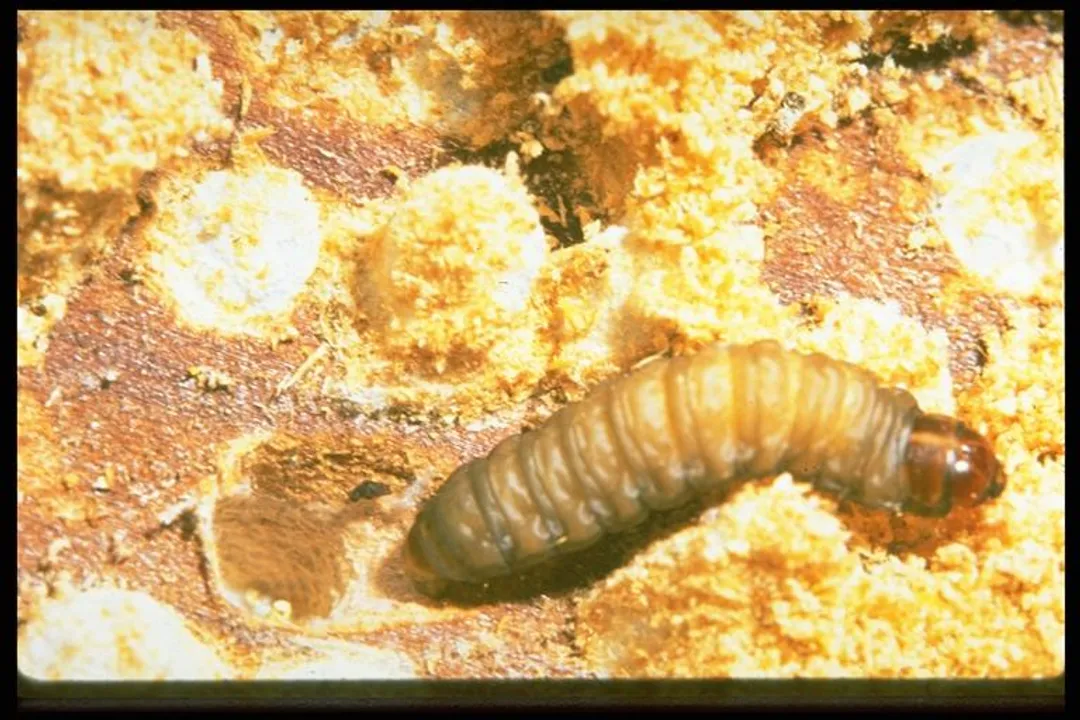
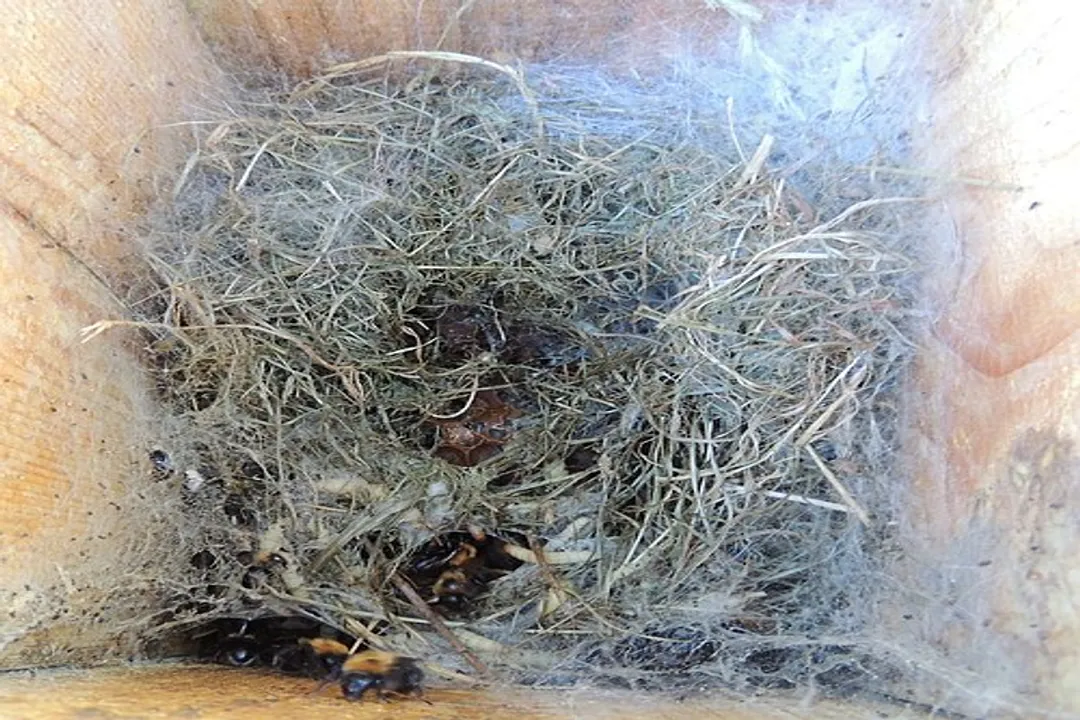
The creature often simply referred to as the wax moth, or more precisely the Greater Wax Moth, Galleria mellonella, holds a distinct, if sometimes notorious, position in the natural world. Its scientific classification provides the necessary structure to understand its biological relationships, whether we consider it as a significant pest to apiculture or as a fascinating model organism in laboratory settings. [2][4] Mapping out its taxonomy reveals its deep connections within the insect world and clarifies why it possesses its unique characteristics, such as its ability to digest beeswax. [9]
# Major Groupings
The taxonomic hierarchy begins at the broadest levels, immediately establishing Galleria mellonella as a multicellular, complex organism. It belongs to the Kingdom Animalia. [1][10] This places it within the vast group of organisms that ingest organic matter, have specialized sense organs, and can typically respond quickly to stimuli. [1]
Moving down the tree, the species is classified under the Phylum Arthropoda. [1][10] This classification signifies that the wax moth shares key features with insects, spiders, and crustaceans: a segmented body, a jointed exoskeleton, and an open circulatory system. This phylum represents the largest animal phylum, underscoring the sheer diversity of life that shares this fundamental blueprint with the moth. [1]
# Winged Insects
Within Arthropoda, the classification narrows to the Class Insecta. [1][10] Insects are distinguished by having a three-part body—head, thorax, and abdomen—and usually three pairs of jointed legs attached to the thorax. [1]
The next significant division is the Order Lepidoptera. [1][5][10] This order encompasses all moths and butterflies. A defining characteristic of Lepidoptera, which helps distinguish them from other insect orders, is the presence of scale-covered wings, which give the order its name (from Greek lepis meaning scale, and pteron meaning wing). [1] The life cycle of all Lepidoptera involves complete metamorphosis: egg, larva (caterpillar), pupa, and adult. [4] This four-stage progression is intrinsically linked to the wax moth's impact, as the larval stage is the destructive one, capable of consuming beeswax and stored products. [4][9]
Considering the complete life cycle of an organism like G. mellonella offers an interesting perspective on resource management within an ecosystem or a managed hive. For a species whose larvae thrive on stored resources—honeycomb wax—the larval feeding phase must be optimized for rapid growth before the adult stage, which focuses solely on reproduction. This tight coupling between the larval diet and the overall life strategy is a direct result of its placement in a highly specialized lineage within Lepidoptera.
# Family Placement
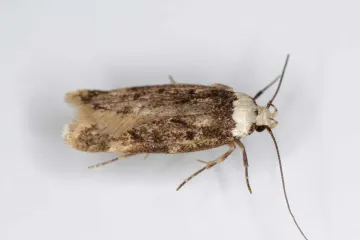
The progression continues down to the Family level, where the wax moth is categorized under Galleriidae. [1][2][10] This family groups moths that share more specific morphological and ecological traits with each other than with other moth families. Some taxonomic treatments may place Galleriidae as a subfamily within the broader Pyralidae (snout moths), but its specialized nature often warrants its recognition at the family level in many contemporary systems. [5]
The defining characteristic that unites the members of Galleriidae is their association with social insects, primarily bees and wasps. [2] Unlike many other moth families whose larvae consume foliage or stored grains, Galleriidae larvae have evolved to feed on the wax constructions and stored materials of their hosts. [9] This ecological niche is what separates the wax moth from many of its close relatives.
Within Galleriidae, Galleria mellonella belongs to the genus Galleria. [1][10] The species name, mellonella, is suggestive, referring to honey or bee-related substances, echoing its primary food source. [4] The identification of the Greater Wax Moth is quite stable across major classification databases, such as the USDA's i5k Initiative, which logs it under its binomial nomenclature. [6]
For researchers, this precise placement within Galleriidae provides context. The ability to synthesize enzymes capable of breaking down complex lipids found in beeswax—a substance generally indigestible by other insects—is an adaptation refined within this lineage. It is fascinating to note that this same enzymatic capability is now being intensely studied for its potential to degrade polyethylene, one of the most persistent human-made pollutants. [2] The classification system, therefore, doesn't just describe where the moth sits historically; it hints at its biochemical potential.
# Species Detail
The culmination of the scientific classification is the specific species name, Galleria mellonella. [1] This binomial nomenclature, standardized by Linnaeus, ensures that scientists globally can refer to the exact same organism, regardless of local common names, which can sometimes vary regionally or even mistakenly be applied to similar-looking species. [2][4]
To further anchor its identity in biological databases, Galleria mellonella possesses specific identifying codes. For instance, the NCBI Taxonomy Browser assigns it the unique identifier 7137. [10] Furthermore, NatureServe lists it under the global element ID ELEMENT_GLOBAL.2.113119. [3] These unique numerical tags are essential for data aggregation, especially when comparing its distribution or genetic profile against other organisms in vast biological inventories. [3]
While the primary context for G. mellonella is often its pest status—infesting stored combs and damaging hives, especially in warmer climates where bee colonies might be weaker or in storage [4][9]—its scientific status also encompasses its role in research. [2] Its ease of rearing, rapid life cycle, and robust immune system have made it a standard laboratory proxy for studying insect pathogenesis, particularly when testing new antimicrobials against bacterial or fungal infections. [1][2]
The table below summarizes the agreed-upon taxonomic ranks for the Greater Wax Moth, demonstrating how a seemingly simple insect is nested within the hierarchy of life:
| Rank | Classification |
|---|---|
| Kingdom | Animalia |
| Phylum | Arthropoda |
| Class | Insecta |
| Order | Lepidoptera |
| Family | Galleriidae |
| Genus | Galleria |
| Species | G. mellonella |
| NCBI ID | 7137 |
This structured classification confirms that despite its small size and highly specific dietary habits, Galleria mellonella is firmly rooted in the broad lineage of scaled-wing insects, while its unique adaptations place it within a small, specialized family. [1][5] Understanding this placement allows apiculturists to anticipate its behavior based on known characteristics of similar pests, and simultaneously allows biochemists to recognize its unique metabolic pathways based on its evolutionary history within the Galleriidae. [9]
Related Questions
#Citations
Galleria mellonella - Wikipedia
greater wax moth (Galleria mellonella (Linnaeus, 1758)) - Invasive.Org
Galleria mellonella - NatureServe Explorer
Greater Wax Moth - Field Guide to Common Texas Insects
Wax Moth - Galleria mellonella - NatureSpot
Galleria mellonella | i5k Workspace@NAL
Species Galleria mellonella - Greater Wax Moth - Hodges#5622
Greater Wax Moth - Veseris
Wax moth - Bee Aware
Galleria mellonella - NCBI