What distinguishes the Greater Wax Moth (*Galleria mellonella*) wingspan?
Answer
Can reach up to 30 to 35 millimeters
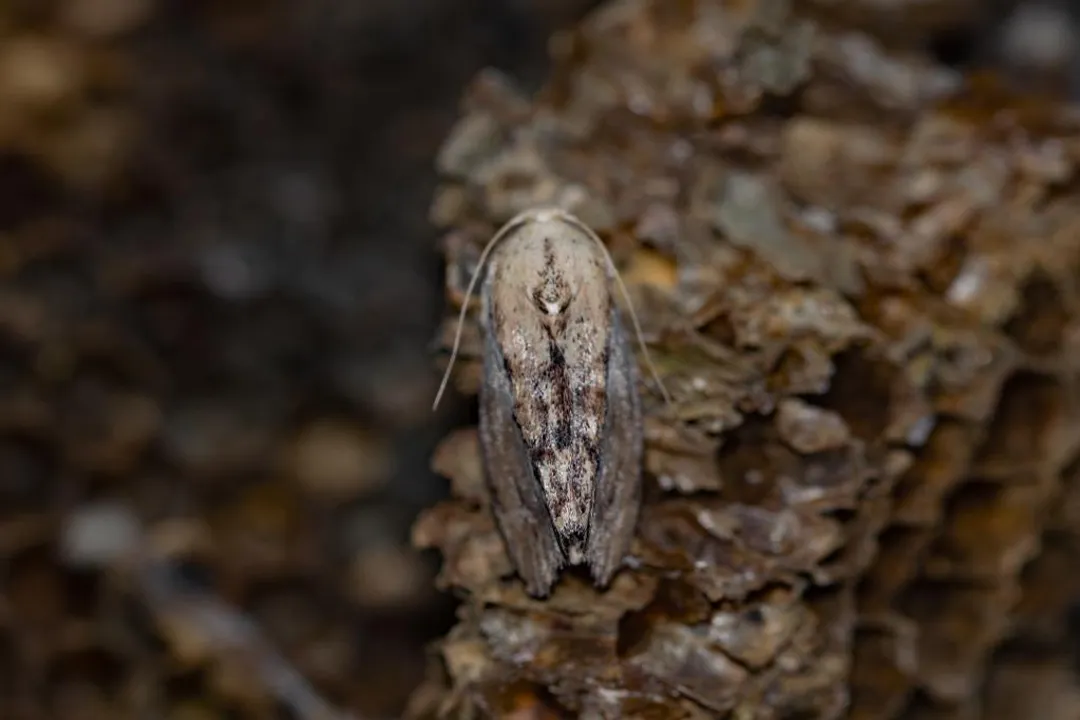
The Greater Wax Moth (*Galleria mellonella*) is recognized as the generally more destructive species between the two common types encountered by beekeepers. Its physical characteristics include a notably larger size compared to its counterpart. Specifically, its wingspan is capable of extending significantly, reaching up to 30 to 35 millimeters. This size difference is a key distinguishing feature when compared to the Lesser Wax Moth (*Achroia grisella*), which typically has a wingspan under 25 millimeters. Additionally, the Greater species exhibits a distinct wing pattern featuring scalloped or wavy margins on its forewings.
Related Questions
Which stage of the wax moth causes substantial damage to hive materials?What distinguishes the Greater Wax Moth (*Galleria mellonella*) wingspan?What cold temperature kills all wax moth stages in stored comb?What resources, besides beeswax, do wax moth larvae consume?How do strong, healthy honeybee colonies primarily defend against wax moths?What minimum temperature is required for effective heat treatment of infested combs?Outside of apiculture, what role does *Galleria mellonella* larva serve in laboratories?How do the forewings of the Lesser Wax Moth (*Achroia grisella*) compare to *Galleria mellonella*?What granular substance found in the comb indicates active feeding by wax moth larvae?What is a primary outcome when wax moth larvae infest a weak honeybee colony?Besides visual inspection, what physical property might warn of severe wax moth damage in stored supers?