Besides textiles, which specific stored commodities are recorded as larval food sources for *Endrosis sarcitrella*?
Answer
Flour, dried fruit, and dog biscuits
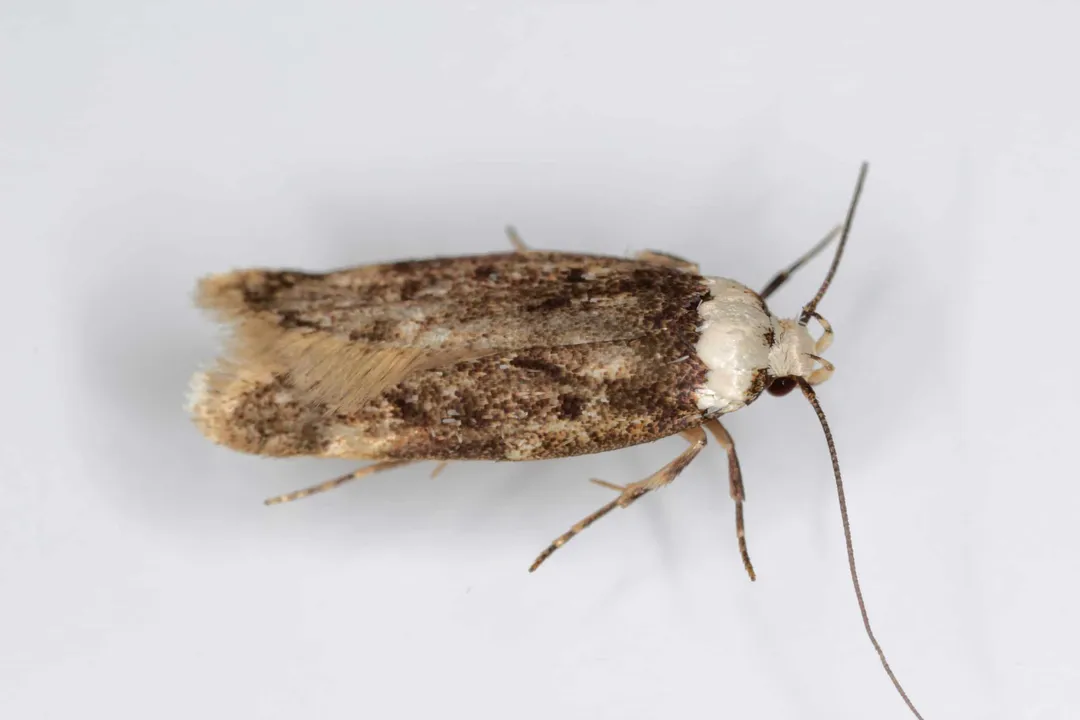
While frequently associated with fabrics, the larvae of *Endrosis sarcitrella* are highly adaptable generalists and readily feed on certain stored dry goods, especially when textile options are limited. Recorded examples of these stored commodities include flour, dried fruit, and even dry pet food such as dog biscuits. This overlap in diet means infestations can occur in pantry environments, presenting as spoiled goods rather than damaged clothing.
Related Questions
What is the documented sustenance for the adult stage of the White-shouldered House Moth?Which materials, rich in protein, are primary natural fibers consumed by the larva of *Endrosis sarcitrella*?Besides textiles, which specific stored commodities are recorded as larval food sources for *Endrosis sarcitrella*?What ubiquitous environmental detritus allows *Endrosis sarcitrella* larvae to subsist in dark, neglected areas?What key nutritional element do larvae derive from consuming natural fibers like wool and silk?How are the mouthparts of the adult White-shouldered House Moth adapted in contrast to the larvae?In terms of damage, how are the adult moths categorized compared to their larval stage?What does finding *Endrosis sarcitrella* exclusively in dusty reaches far from stored food or clothing imply about their diet?What is required for successful eradication of *Endrosis sarcitrella* based on its varied larval diet?What characteristic enables *Endrosis sarcitrella* to maintain its status as a common household insect worldwide?