Wax Moth Facts
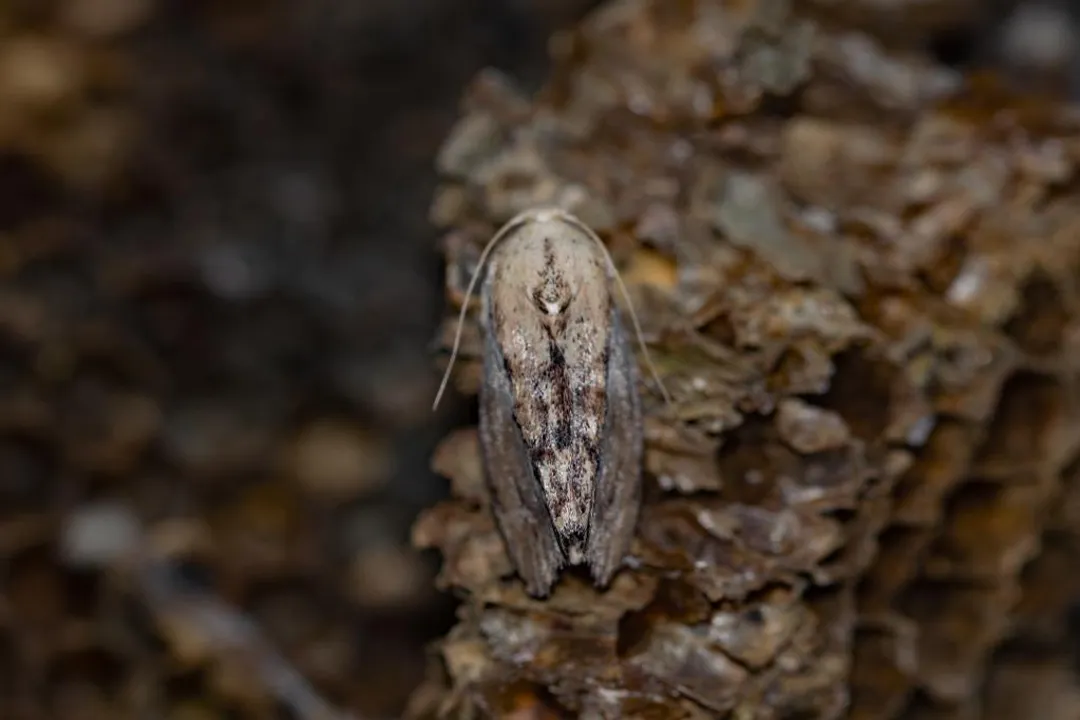
The presence of wax moths can cause considerable consternation for anyone managing honeybee colonies or holding onto surplus hive equipment. These insects, primarily consisting of the Greater Wax Moth (Galleria mellonella) and the Lesser Wax Moth (Achroia grisella), are recognized pests within apiculture worldwide. [1][6] While the adult moths themselves do not directly harm the bees, the damage inflicted by their larval stages is substantial, targeting the materials bees rely on for survival and reproduction. [2][9] Understanding the distinction between the two species, their development, and the specific ways they compromise a hive is key to effective management. [3][8]
# Species Comparison
Beekeepers often encounter two main culprits: the Greater Wax Moth and the Lesser Wax Moth. [3] Distinguishing between them is not merely an academic exercise; it can sometimes influence management decisions, particularly regarding the scale of the threat. [8]
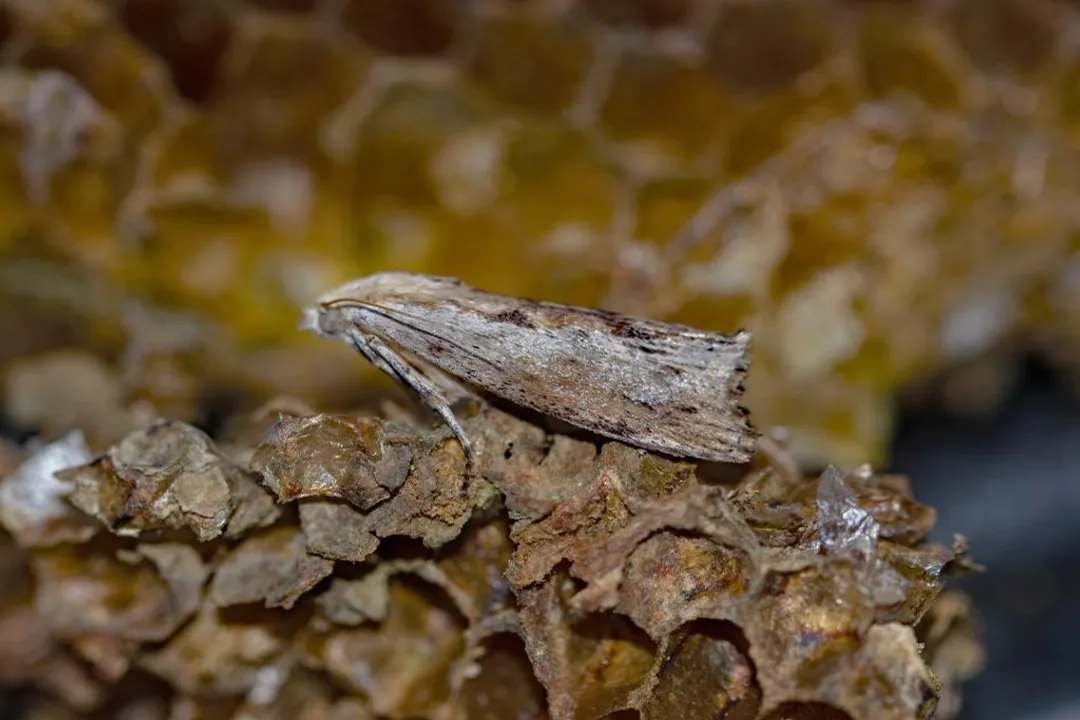
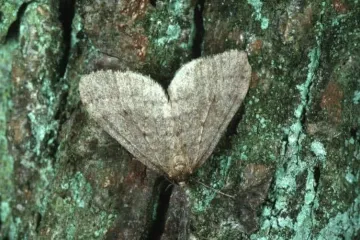
The Greater Wax Moth, Galleria mellonella, is generally the more destructive species. [7] Adults are typically grayish-brown or reddish-brown, though coloration can vary. [1][7] They tend to be larger, with wingspans that can reach up to 30 to 35 millimeters. [3][7] Close inspection of their wings reveals a distinctive pattern—the forewings often display scalloped or wavy margins and a darker, mottled appearance. [8]
Conversely, the Lesser Wax Moth, Achroia grisella, is smaller, with a wingspan usually under 25 millimeters. [3][8] Its adults are a more uniform, duller grayish-brown color. [8] A key difference often noted is the wing shape: the Lesser Wax Moth's forewings have smoother, straighter edges compared to the Greater species. [8] While the Lesser Wax Moth can certainly cause damage, especially to stored materials, the Greater Wax Moth is usually responsible for the most severe infestations in active hives. [3][5]
# Life Cycle Stages
Both species follow a typical four-stage insect life cycle: egg, larva, pupa, and adult. [2] The duration of this cycle is heavily influenced by ambient temperature, with warmer conditions accelerating development. [5]
# Eggs and Hatching
The adult female moth initiates the cycle by depositing her eggs. [2] A single female can lay hundreds of eggs, sometimes over 400, depending on the species and conditions. [1] These eggs are tiny and are often deposited in cracks and crevices within the hive structure or directly onto the beeswax surfaces where the larvae will emerge and begin feeding. [1][2]
# Larval Feeding
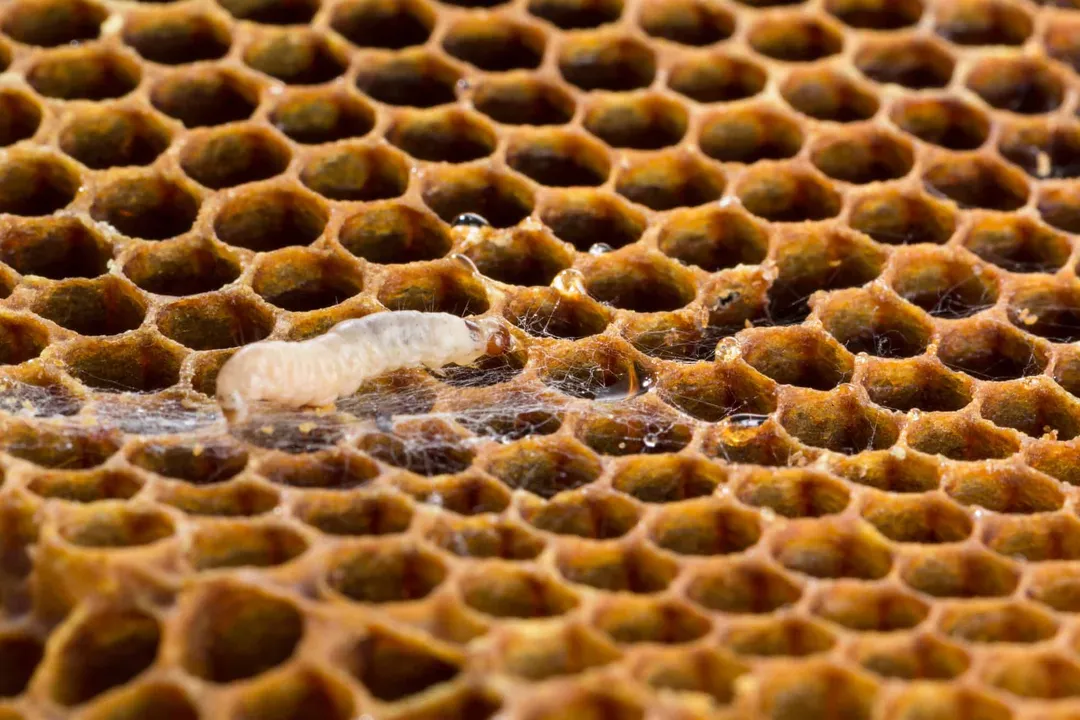
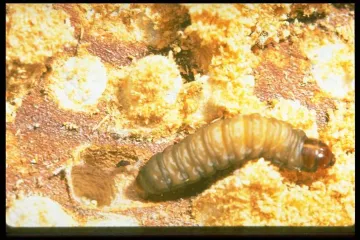
The larval stage is where the most significant damage occurs. [9] Once the larva hatches, its entire purpose shifts to consumption. [7] Wax moth larvae feed voraciously on beeswax, which makes up the structural material of the comb. [2][7] However, their diet is not limited to wax alone; they also consume pollen and honey, effectively degrading the resources stored by the bees. [3][9] The larvae create silken tunnels or galleries as they move through the comb, which helps them hide from predators and insecticides while simultaneously trapping debris and making the comb structurally unsound. [1][5] Given that the Greater Wax Moth can reach about 1 inch (25 mm) in length as a mature larva, and a single larva might consume roughly 300 square inches of comb over its development period, the cumulative effect of an infestation can be devastating if unchecked. [1][3]
# Pupa and Adult
After sufficient feeding, the mature larva seeks out a sheltered location to pupate. [2] This often occurs in protected areas, such as in the corners of a hive box, beneath the frames, or within cracks in the wood. [1] The larva spins a tough, silken cocoon, within which metamorphosis takes place, eventually resulting in the emergence of the adult moth. [2] The adult stage is focused primarily on reproduction, with the female seeking a suitable location to lay her next generation of eggs, thereby continuing the cycle. [2]
# Pest Damage
The primary threat posed by wax moths is their destruction of the structural integrity of the apiary environment. [6] This damage manifests in two main contexts: active honeybee colonies and stored equipment.
# Active Colony Damage
In a healthy, strong colony, the bees can usually manage and repel minor wax moth activity. [9] The bees recognize the silk and presence of the larvae and will often remove them. [1] However, wax moths become a significant problem when they target weak colonies. [2][9] If a colony is small, diseased, or suffers from poor management, the bees lack the numbers to defend the hive effectively. [2][9] In such scenarios, the larvae can tunnel through the brood comb, destroying cells that contain developing bees (brood). [9] This leads to the death of developing bees and further weakens the colony, creating a destructive feedback loop. [2] The larvae also contaminate the comb by consuming honey and pollen, often leaving behind silken webbing and frass (excrement) that render the comb unusable for future honey storage or brooding. [3][9]
# Stored Equipment Threat
Perhaps the most common area for catastrophic wax moth damage is in stored hive equipment, such as empty supers or old drawn-out combs taken out of rotation. [6][10] When stored in a dark, warm place, these combs represent an easy, concentrated food source for the moths, far from the defense mechanisms of an active colony. [10] The larvae methodically consume the beeswax, rendering the frames useless and necessitating their destruction. [6] The presence of beeswax itself is the attractant; any equipment containing beeswax, including foundation or old beekeeping tools that have touched infected comb, can serve as a substrate for infestation. [1]
# Prevention and Control
Managing wax moths centers on a dual approach: ensuring colony health and implementing rigorous sanitation and proper storage techniques for equipment. [5]
# Colony Strength
The most direct biological defense against the Greater Wax Moth is the colony itself. [9] Beekeepers who maintain strong, populous colonies with vigorous populations of guard bees are less likely to suffer major damage. [2][9] Regular inspections are crucial to catch signs of stress or decline before the wax moths become established. [5] If a hive is struggling—perhaps due to disease, Queen failure, or pesticide exposure—beekeepers should intervene promptly, either by strengthening the hive with resources or by requeening, rather than letting the colony languish into a state where it cannot defend its comb. [9]
# Equipment Management
For empty supers and drawn comb stored over winter or between seasons, temperature is the most critical control factor. [10] Storing beeswax comb below freezing temperatures (around or ) for several hours will kill all stages of the moth, including eggs and cocoons. [1][5] Alternatively, heat treatment can be effective; exposing the combs to temperatures above or for a sustained period will also achieve mortality. [1][10] Combining these temperature controls with good physical storage practices is essential. For instance, storing frames tightly packed in sealed containers, rather than loosely stacked, reduces accessible crevices for egg-laying and pupation. [5] A practical management tip I’ve often seen employed is to institute a rotation: never store more than one year's worth of drawn comb at a time, and always treat the oldest stored frames with cold storage before placing them back into active rotation the following spring, ensuring any lingering eggs are eliminated before the weather warms up. [3]
# Chemical and Physical Controls
In some situations, particularly with heavy infestations in stored combs, chemical control may be considered, though it requires caution due to the proximity to honey stores. [5] Products containing Dichlorvos (often sold as resin strips) were historically used, but many modern beekeepers avoid them due to concerns about residue, preferring physical or thermal methods. [5] For Galleria mellonella, treatment with Bacillus thuringiensis (Bt) has shown some efficacy in disrupting larval development when the product is applied directly to the comb, though susceptibility can vary between strains. [4] Simple physical traps, often involving pheromones or attractive baits, can be placed near storage areas to monitor or reduce the adult moth population, though these are generally considered supplemental to sanitation. [3]
# Lab Use
Interestingly, while Galleria mellonella is notorious in apiculture, it holds significant value in scientific laboratories outside of beekeeping studies. [4] The Greater Wax Moth larva is extensively used as a bio-indicator organism in various fields. [4] Its resilience and ease of rearing make it a standard model for testing the toxicity of novel compounds or materials. [4] Researchers use the larvae to study host-parasite interactions and to evaluate the immunosuppressive effects of different substances, due to its relatively non-pathogenic nature toward mammalian hosts when compared to other laboratory insects. [4]
# Distinguishing Presence
Recognizing the signs of wax moth activity early is paramount to preventing colony collapse. [1] Visual inspection should look for more than just the presence of the adult moth; the evidence of the larvae is the true indicator of an active problem. [5]
Signs to look for during hive inspection include:
- Silken Webbing: Extensive, messy tunnels and webbing throughout the comb structure. [1]
- Frass: Dark, granular droppings left behind by the feeding larvae. [3]
- Damaged Comb: Areas where the wax has been chewed away, especially on the edges of the frames or in unused foundation. [6]
- Pupal Cocoons: Small, brownish, silken casings found tucked into hive corners or under inner covers. [1]
If a beekeeper finds extensive damage in a frame where the bees have completely abandoned the comb, it is often a sign that the infestation was allowed to progress unchecked for too long. [3] It’s important to remember that even if you only see a few adult moths flying around, their short lifespan means they have likely already laid eggs, and the real threat is the next generation of larvae developing within the protected spaces of the comb. [2]
If you are comparing stored equipment and notice that one stack of supers seems unusually light or flimsy compared to another of similar age, handle that stack with extreme care; severe wax moth damage can reduce the comb weight significantly, sometimes leaving behind little more than a fragile network of silk and debris. [3] This observation highlights that the weight and feel of the stored wood and wax can be as indicative of damage as visual inspection alone, acting as an early warning system for material integrity. [10]
Related Questions
#Citations
Wax moth - Bee Aware
The Lifecycle and Dangers of Wax Moths - PerfectBee
[PDF] Wax Moth
Galleria mellonella - Wikipedia
[PDF] WAX MOTH | Utah Department of Agriculture and Food
Wax moth a beekeeping pest - Agriculture Victoria
Greater Wax Moth / Honeycomb Moth - Butterfly Conservation
Wax moth | The BeeMD - IDtools
Wax moth - Vita Bee Health
Wax moth - NSW Department of Primary Industries