Besides consumption, what physical byproduct do developing wax moth larvae create in the comb structure?
Answer
Extensive webbing
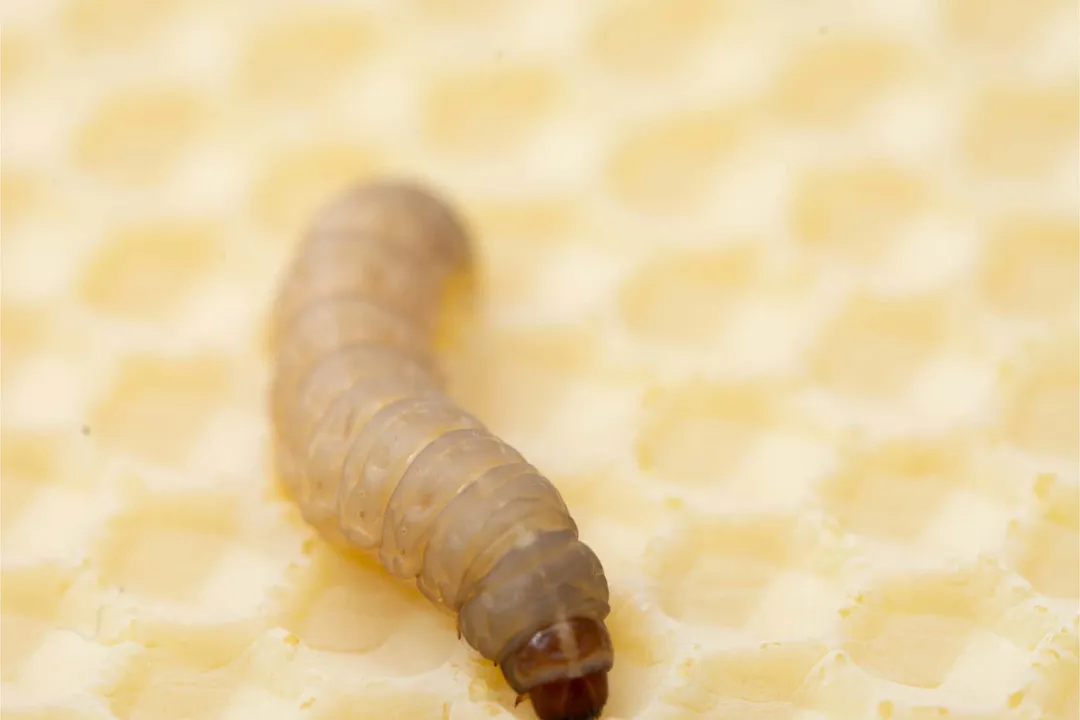
The destructive impact of wax moth larvae within a beehive goes beyond mere nutritional depletion of resources like honey and pollen. As these larvae develop and move throughout the honeycomb structure, they excrete and create a significant amount of webbing. This silk-like material forms a dense network throughout the comb. This extensive webbing physically binds sections of the structure together and, more critically, can lead to the collapse of the stored combs. When combs collapse due to this webbing, they become entirely unusable for subsequent honey production or for rearing future bee colonies, resulting in significant economic loss for beekeepers.
Related Questions
What three core components constitute the primary diet of wax moth larvae in a honeybee colony?What allows *Galleria mellonella* larvae to consume beeswax?What critical element is consistently cited for adult wax moth survival and egg laying?Besides consumption, what physical byproduct do developing wax moth larvae create in the comb structure?Which ingredients, besides purified beeswax, are often incorporated into successful artificial waxworm rearing media?What aspect of the waxworm’s diet determines its final nutritional value for reptiles or spiders?In which hive environment are stored supers particularly vulnerable to wax moth larvae infestation?How does the primary biological goal of the adult moth differ from the larval stage?What is the destructive consequence when wax moth larvae tunnel through and consume stored comb structure?Which chemical components of beeswax are waxworm larvae uniquely capable of processing?