In which hive environment are stored supers particularly vulnerable to wax moth larvae infestation?
Answer
Dark, undisturbed areas rich in honey and pollen
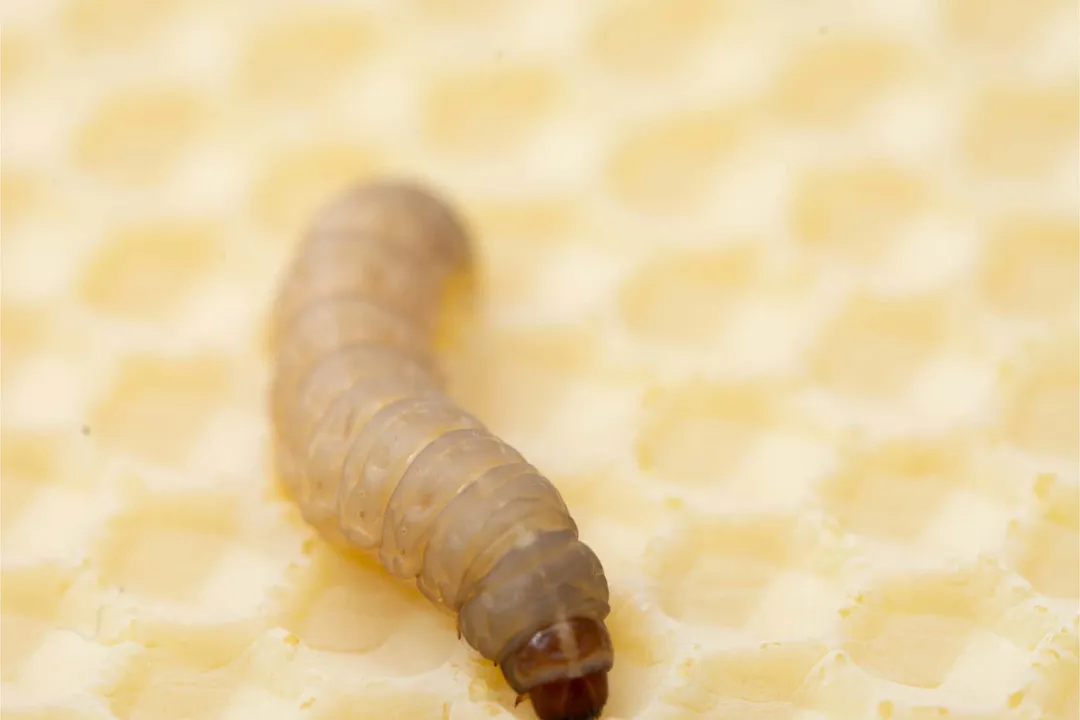
The success of a wax moth infestation in stored beekeeping equipment, such as supers, is highly dependent on environmental conditions that favor larval development and discourage bee defense. Larvae thrive best in conditions that are dark and where human interference is minimal. Overwintered or stored supers are frequently targeted because they are left undisturbed in dark locations and often contain significant stores of honey and pollen, providing the voracious feeders with an abundant, easily accessible food supply without the threat of a strong, populous colony actively defending the material.
Related Questions
What three core components constitute the primary diet of wax moth larvae in a honeybee colony?What allows *Galleria mellonella* larvae to consume beeswax?What critical element is consistently cited for adult wax moth survival and egg laying?Besides consumption, what physical byproduct do developing wax moth larvae create in the comb structure?Which ingredients, besides purified beeswax, are often incorporated into successful artificial waxworm rearing media?What aspect of the waxworm’s diet determines its final nutritional value for reptiles or spiders?In which hive environment are stored supers particularly vulnerable to wax moth larvae infestation?How does the primary biological goal of the adult moth differ from the larval stage?What is the destructive consequence when wax moth larvae tunnel through and consume stored comb structure?Which chemical components of beeswax are waxworm larvae uniquely capable of processing?