Winter Moth Diet

The Winter Moth, Operophtera brumata, presents a fascinating, if sometimes frustrating, study in insect feeding habits, primarily because the major damage is inflicted by a stage that is only present for a short window of the growing season. While the name suggests winter activity, the most significant feeding occurs much later, driven entirely by the newly hatched larvae emerging in the spring. This distinction—between the adult flight period in late fall/early winter and the larval feeding period in spring—is crucial for understanding its dietary impact on landscapes and forests.
# Larval Appetite

The primary dietary concern regarding the Winter Moth revolves around the caterpillar stage. These larvae are voracious generalists, meaning they possess a remarkably broad palate compared to some highly specialized insects. As soon as they hatch, typically when buds are breaking or the first tiny leaves are unfurling, they begin consuming plant tissue. Their diet is essentially the new, tender foliage of many deciduous trees and shrubs. The caterpillars feed continuously throughout the spring, growing rapidly as they consume the soft, nutrient-rich new growth.
When observing an infested area, one might notice that the caterpillars start by feeding on the leaf margins or within the protected space of the opening bud, later moving to skeletonize the leaves or consume them entirely. This heavy feeding pressure during such an early, critical growth phase is what causes such severe stress to the host plants.
# Broad Range

The list of potential host species for the Winter Moth is extensive, covering many common temperate zone trees. This wide host range complicates management efforts because it means that removing one susceptible species from the landscape might not entirely eliminate the threat if other species remain available as food sources.
Commonly cited primary hosts include:
- Oaks (Quercus species)
- Maples (Acer species)
- Apple (Malus)
- Blueberry (which can suffer significant yield loss)
- Willow (Salix)
- Birch (Betula)
- Elm (Ulmus)
Even ornamental shrubs like Lilac and Rose have been noted as acceptable food sources when preferred trees are heavily infested. In commercial settings, such as apple orchards, the foliage of the apple tree itself becomes the target, leading to yield reduction and reduced tree vigor if the defoliation is severe. It is worth noting that while they consume a great variety, the level of preferred feeding can vary depending on local populations and the exact timing of bud break across different species.
# Adult Intake
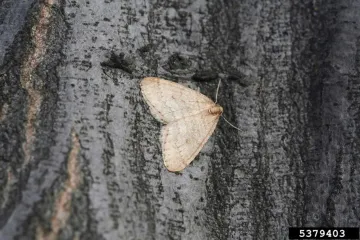
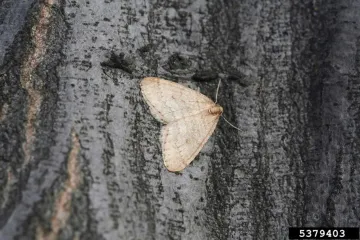
A sharp contrast exists between the larval feeding habits and those of the adult moths. The adult Winter Moths, both male and female, are generally considered non-feeding stages. The females are flightless and remain near the ground, while the males fly in late fall or early winter, usually between late November and early January, to find mates. Because their primary activities are mating and oviposition (egg-laying), the adults do not possess mouthparts adapted for significant feeding, or simply do not take sustenance during their brief adult life. Therefore, any direct control efforts aimed at the adult stage are not focused on reducing consumption, but rather on preventing egg-laying or capturing the flying males.
# Timing Impact
The timing of the larval diet is intrinsically linked to the seasonal development of the foliage. The period of active feeding is relatively brief, generally spanning from early spring through late spring or early summer, depending on the local climate and the specific host plant. The critical window for damage occurs right after bud break.
Consider how this timing affects management strategy: if defoliation is severe and occurs early in the spring before the tree has fully developed its summer canopy, the plant is forced to use significant stored energy reserves to produce a second set of leaves. This repeated energy expenditure year after year, especially under drought conditions or on already stressed trees, is what ultimately leads to decline or death. If the feeding window is missed—for example, if the larvae have completed their development and pupated before treatment is applied—the feeding damage is complete for that season, and remedial action at that point primarily targets subsequent years' populations. For those monitoring high-value specimens, tracking the very first signs of leaf emergence on the earliest-leafing native oaks in a given location can provide a precise starting point for any topical treatments, often preceding the full leaf-out of later-developing ornamental maples by several days.
# Damage Profile
The result of the Winter Moth's diet manifests as noticeable damage to the foliage. Early feeding inside the buds results in distorted, stunted, or ragged leaves. As feeding progresses, the characteristic appearance of an infested canopy is often one of skeletonization, where the veins of the leaf remain intact, but the soft tissue between them is entirely consumed. In heavy infestations, the canopy can be entirely defoliated. While a healthy, mature tree can usually recover from one or two seasons of complete defoliation by producing a new canopy, repeated defoliation over several consecutive years is what leads to serious decline and mortality, particularly in younger, smaller, or already stressed trees. In blueberry production, for instance, feeding on the current year’s fruit spurs can directly eliminate the potential harvest for that season.
# Management Synthesis
Because the larval diet is so broad and the feeding window is temporally restricted to early spring, successful management often relies on understanding this specific dietary cycle. Traditional strategies focus on interrupting this brief feeding period when the caterpillars are most vulnerable and actively consuming foliage. Control tactics generally aim for the time when the caterpillars are small, around one-quarter to one-half inch in length, just after they emerge from the buds.
It is fascinating to compare the utility of different control methods against the diet. Systemic treatments, for example, must be absorbed by the plant and translocated to the new leaf tissue before the larvae begin feeding to be truly effective, requiring careful pre-application timing. Conversely, contact insecticides or biological controls like Bacillus thuringiensis (Bt) must be applied directly to the leaves while the caterpillars are actively eating them.
For homeowners facing infestation, the sheer number of potential host plants means that a highly focused approach is often more practical than attempting landscape-wide chemical application. If a property has a few irreplaceable, high-value specimens—say, a mature heirloom oak or a prized apple tree—direct protection of those specific plants during the vulnerable spring feeding stage, perhaps through trunk injection or targeted foliar spray when warranted, offers a better return on management effort than trying to eradicate the entire population across less critical shrubs. This prioritizes saving the most valued elements of the landscape based on their susceptibility to the larval diet. Given that the adult females do not fly, physical barriers like sticky bands placed around trunks in the fall can be effective at stopping them from crawling up to lay eggs on the branches, thereby starving the next year's generation before their diet even begins. This demonstrates a management approach targeting the precursor to the diet rather than the diet itself.
The life cycle, therefore, dictates the diet, and the diet dictates the management window. The winter period is for adult activity and egg survival, the spring for larval consumption of new growth, and the summer for pupation in the soil, where they wait to start the cycle anew. Understanding that the "Winter Moth" is truly a spring feeder is the key to protecting trees from its destructive appetite.
Related Questions
#Citations
Winter Moth - Butterfly Conservation
WINTER MOTH Operophtera brumata - Maine.gov
Winter moth - Integrated Pest Management
Winter Moths - Mass Audubon
Winter Moth - New England Tree Fruit Management Guide
What to do about Winter Moth Caterpillar - Weston Nurseries
[PDF] Winter Moth
[PDF] WINTER MOTH
Winter Moth | NHBugs
Winter Moths – Males Don't Eat, Females Don't Fly