Wax Moth Physical Characteristics
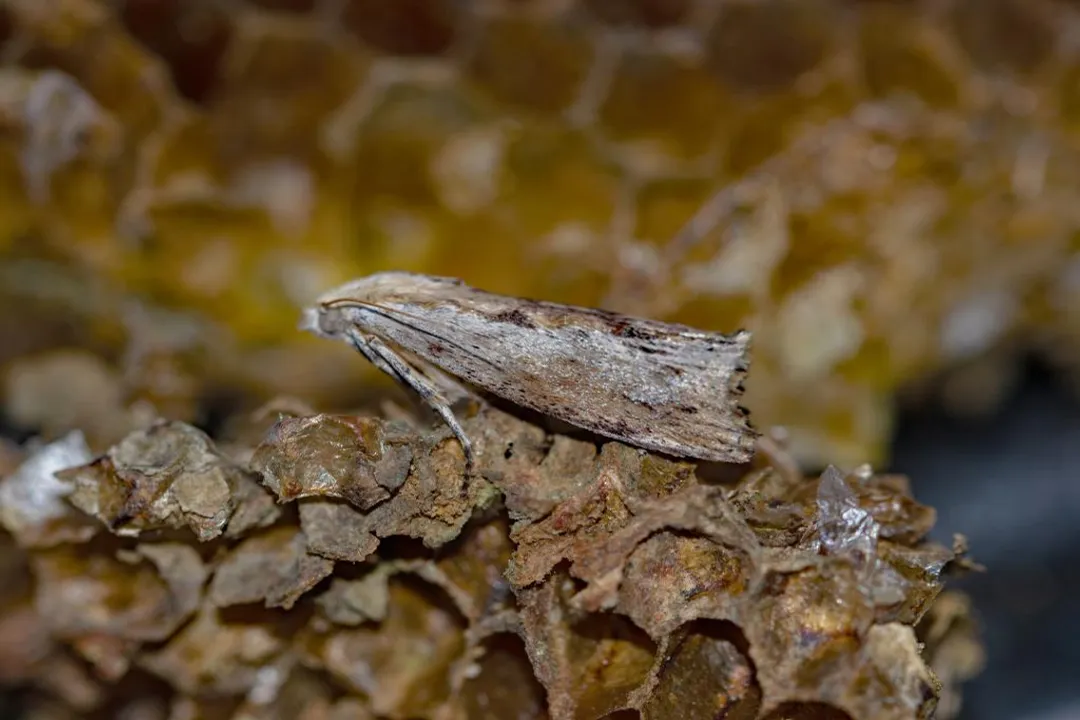
The appearance of the wax moth, particularly the destructive Greater Wax Moth (Galleria mellonella), provides essential clues for identification, whether found lurking near a beehive or inspected within damaged comb. These creatures present distinct physical characteristics across their life stages, from the delicate adult insect to the destructive larva.
# Adult Size
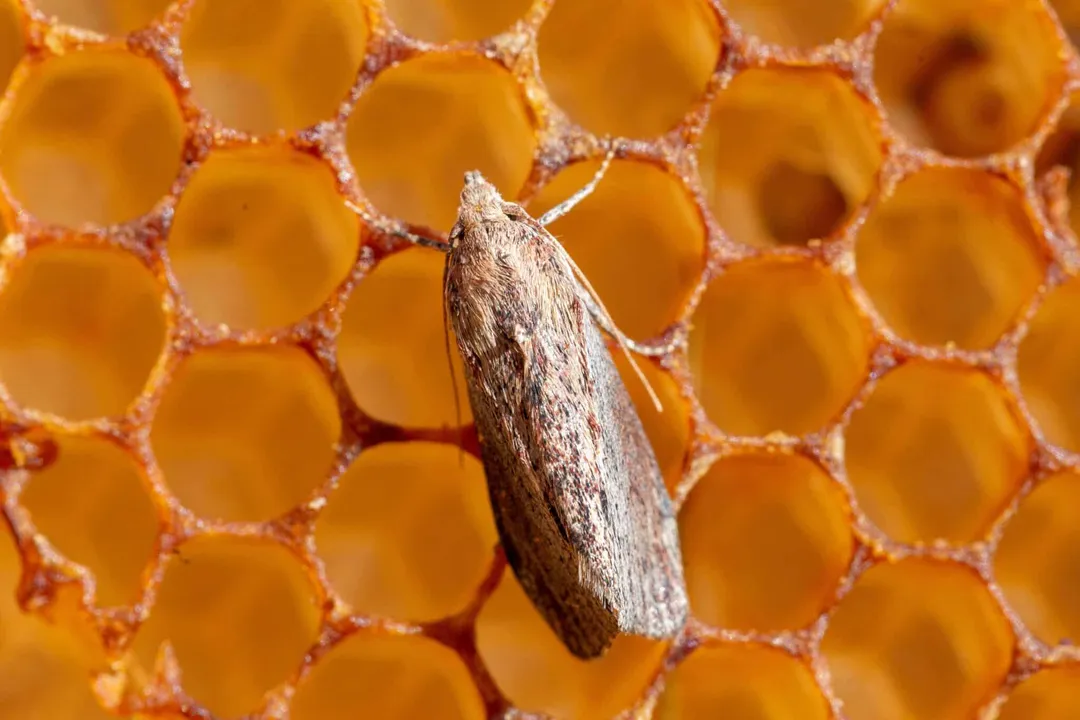
The adult stage of the Greater Wax Moth is readily recognizable by its wingspan, which falls consistently within a measurable range across several observations. Most sources agree that the typical wingspan for Galleria mellonella adults stretches between 30 to 40 millimeters. [2][4][7][8][9] More specific measurements place this range from up to . [1][4] When converted to inches, this equates to approximately $1.25$ to $1.5$ inches, or to . [3][8][9]
It is worth noting that descriptions of wax moths sometimes show variation, which might relate to species differences or environmental conditions. While the characteristics above align for G. mellonella, some reports of a general "Wax Moth" cite a notably smaller wingspan of only to . [6] This significant difference underscores why precise measurement and location context are important when distinguishing between the Greater Wax Moth and its smaller relative, the Lesser Wax Moth (Achroia grisella), which possesses a smaller physical profile. [6] For beekeepers dealing with serious comb destruction, focusing on the larger to range is usually the primary concern.
| Moth Species (Likely) | Wingspan Range (mm) | Wingspan Range (Inches) | Primary Identifier Note |
|---|---|---|---|
| Greater Wax Moth (G. mellonella) | Larger size, mottled forewings [1][2][7] | ||
| Wax Moth (General/Lesser) | N/A | Smaller reported size [6] |
# Wing Appearance
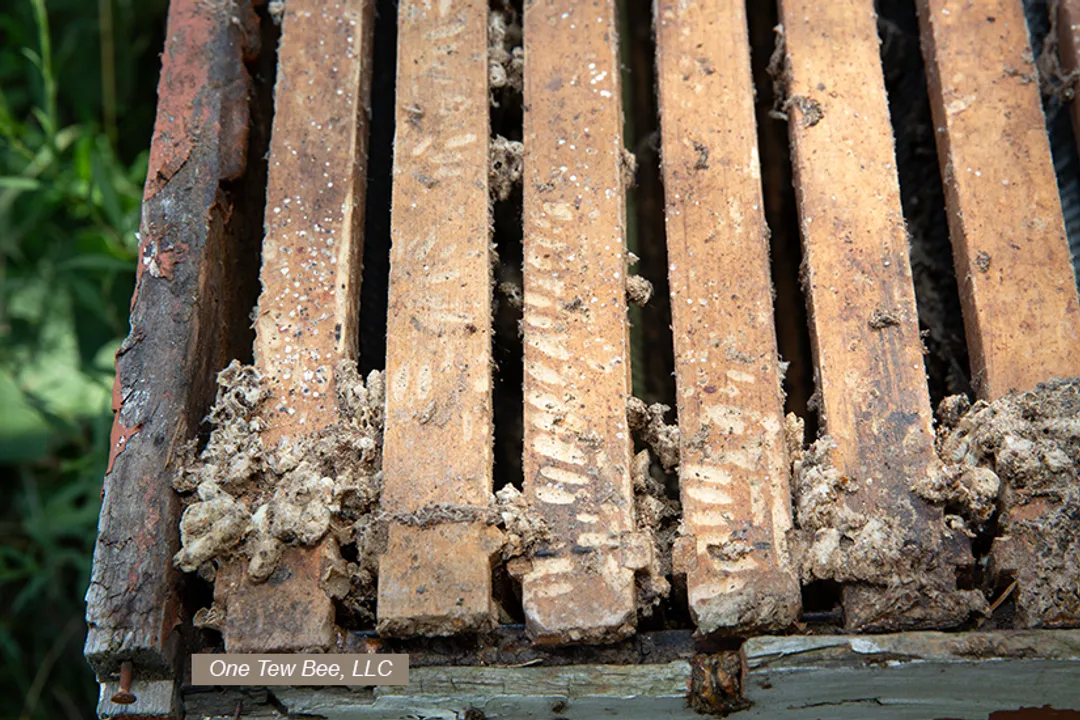
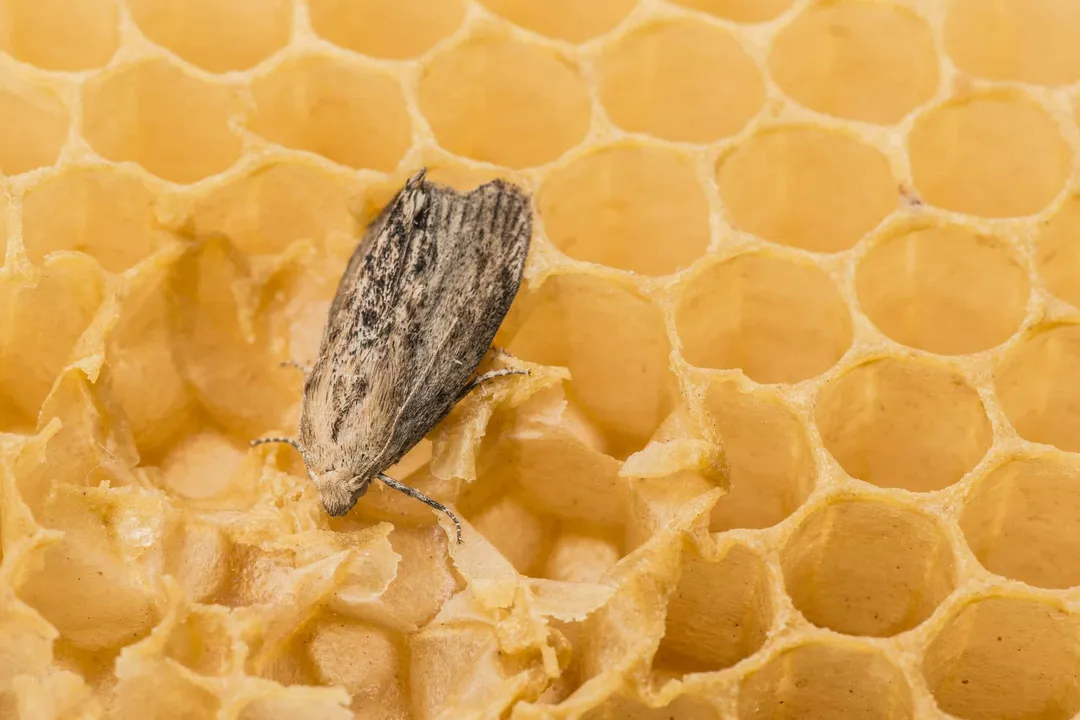
The visual appeal of the adult wax moth is concentrated primarily on its forewings, which serve as the main feature for identification. The overall impression is generally described as a mottled or patterned brownish-grey. [7] This patterning is created by a mix of colors, including black, white, grey, brown, and sometimes yellow speckling. [1][4] In contrast, the hindwings tend to be significantly plainer, often presenting a uniform, silvery-grey color. [1][4]
A subtle but useful physical distinction exists between the sexes in this species. Male wax moths often exhibit a darker overall coloration compared to their female counterparts, who may appear lighter or more uniformly colored. [2][9] This sexual dimorphism in color intensity can sometimes aid in field identification, although the underlying mottled pattern remains the key characteristic of the forewings. [2]
# Larval Stage
The larval stage, or caterpillar, is the life phase responsible for the actual damage within the hive, as they consume beeswax, honey, and pollen stores. [1][7] Physically, the larvae are characterized by their pale body color, typically described as creamy-white or greyish. [1][2][3][4][7][9] A crucial feature that helps distinguish the wax moth larva from many other caterpillars is its head capsule. This part of the body is noticeably dark in color. [2][3][7][8][9]
The size attained by the larva before pupation is also significant for pest management. These caterpillars can grow to a substantial length, usually reaching up to long. [1][2][3][4][7][9] For someone familiar with standard beekeeping equipment, realizing that a larva is roughly the length of a standard wooden frame's thickness can provide an immediate visual context for the maturity of the infestation they are inspecting.
# Structure and Movement
Beyond external color and size, the larval activity leaves distinct physical evidence. Wax moth larvae are known for spinning silken tubes or tunnels as they move through the comb structure. [5] Unlike many moth caterpillars that build cocoons from which they emerge, the Galleria mellonella larva does not possess silk glands that produce a full cocoon structure, but rather spins these protective silken linings for their feeding corridors. [2][5]
When handling older larvae, one might notice that the body color appears less purely white and more soiled or dirty-white, sometimes described as greyish, which reflects the material they are consuming, particularly pollen and debris mixed with the wax. [7] An adult moth, when at rest or found near hive entrances or on the ground, blends in due to its buff or mottled brown appearance, making it less conspicuous than its destructive larval stage. [5][6] The structural differences between the sexes in terms of wing darkness, as mentioned earlier, are subtle visual cues that might be spotted upon close examination of a resting adult moth. [2][9]
Related Questions
#Citations
Wax moth - Bee Aware
Galleria mellonella - Wikipedia
Wax Moths - Texas Apiary Inspection Service (TAIS)
Greater Wax Moth / Honeycomb Moth - Butterfly Conservation
Wax Moths and Honey Bees | Bee Culture
Wax Moth - Galleria mellonella - NatureSpot
Wax moth a beekeeping pest - Agriculture Victoria
Wax Moth - Galleria mellonella - A-Z Animals
[PDF] WAX MOTH | Utah Department of Agriculture and Food