What specific plant species are mentioned as larval food sources for *Operophtera brumata*?
Answer
Oak, birch, and heather.
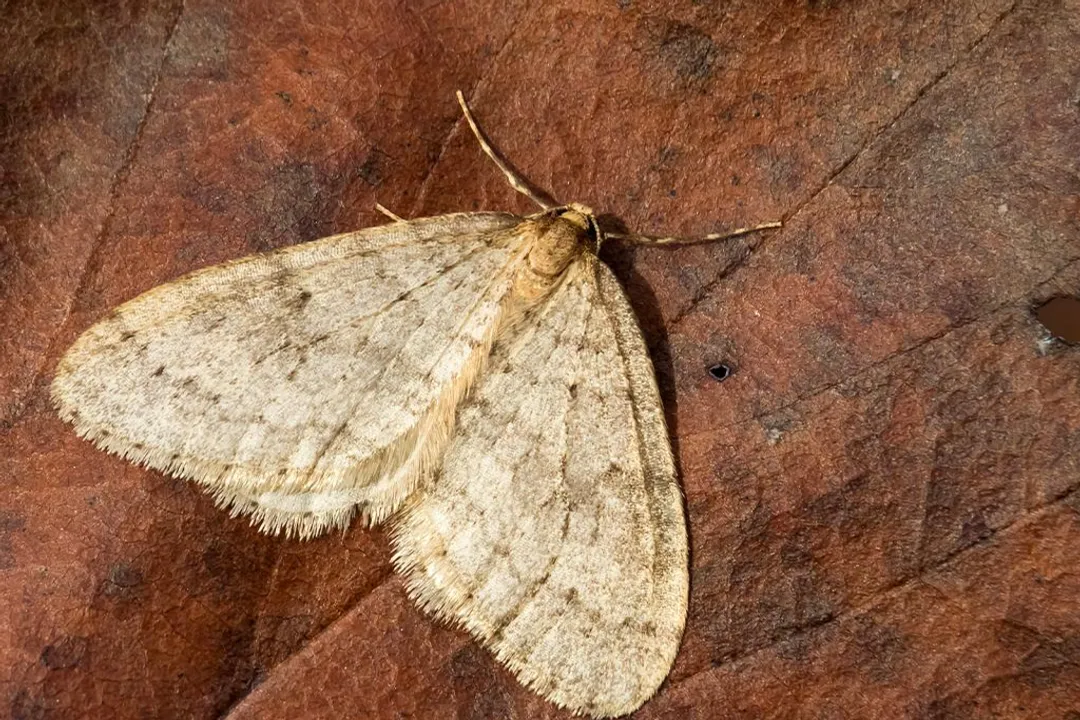
The larvae of the Winter Moth are generalist feeders, which provides some level of resilience to their population dynamics. The provided information specifies that these larvae consume the new foliage of several deciduous trees and shrubs. The primary examples listed are common hardwood species such as oak and birch. Additionally, the text notes that heather is also consumed as a viable food source during the larval feeding phase. This dietary flexibility buffers the population against total failure if resources on one host species become suboptimal, though synchronization issues with the most preferred species remain a key concern.
Related Questions
What distinct flight capability difference exists between male and female Winter Moths?What term describes the synchronized timing between an insect’s development and its food resource availability?What specific plant species are mentioned as larval food sources for *Operophtera brumata*?If Winter Moth larvae emerge too late relative to early leaf-out, what condition is the foliage in?What specific environmental cues are suggested to likely control the timing of Winter Moth larval hatch?What significant risk arises if the acceleration of spring warming surpasses the moth's rate of genetic adaptation or dispersal?How can researchers quantify the fitness reduction in Winter Moth populations due to phenological sorting?Where in the moth’s territory is the selective force for earlier hatching likely to be weak or possibly detrimental?What is the primary function of the larval stage in the life cycle of *Operophtera brumata*?What evolutionary adaptation mechanism is considered less likely to be the primary mechanism for the Winter Moth given adult constraints?What is the state of the wings on the functionally flightless female *Operophtera brumata*?