What physical color indicator signals the imminent hatching of Operophtera brumata eggs?
Answer
The eggs turn dark blue shortly before the larva emerges
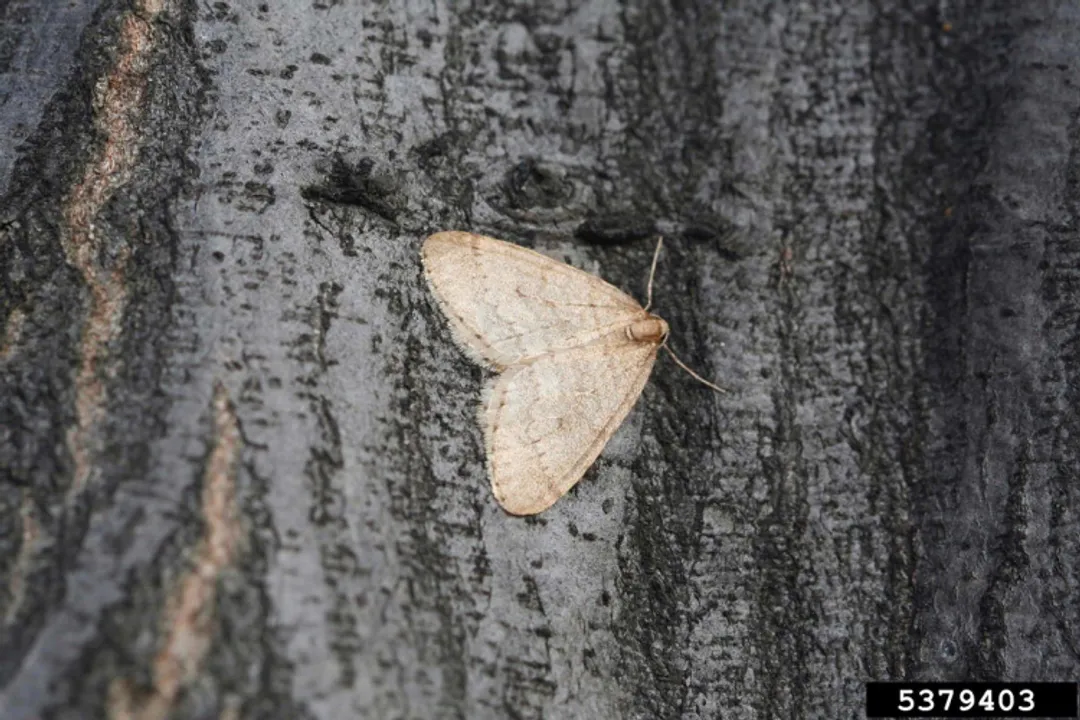
The eggs laid by the female Winter Moth undergo a critical physical change just prior to the larvae hatching. Initially, the eggs are observed to be orange in color when first deposited. However, as the development within the egg progresses toward the point of eclosion, a distinct and crucial color transition occurs: the eggs become dark blue. This shift provides a very narrow observational window for individuals seeking to treat the eggs chemically before the destructive larval stage begins feeding on host plant material.
Related Questions
What specific adaptation defines the female Operophtera brumata regarding movement?Why do Winter Moth larvae exhibit the characteristic "looping" gait described as "looper" movement?What physical color indicator signals the imminent hatching of Operophtera brumata eggs?What fine detail is sometimes noted regarding the base of the male Winter Moth's wings?What dispersal technique do very young Operophtera brumata larvae utilize for moving between host plants?Which phrase is used to describe the physical appearance of the flightless female Winter Moth's abdomen?In North America, which geographical area is specifically mentioned as containing the invasive presence of Operophtera brumata?What approximate wingspan measurement is frequently cited for the winged male Winter Moth?What specific marking characterizes the pale green larval form of Operophtera brumata?What correlation is suggested between the physical size of the adult female moth and her reproductive capability?