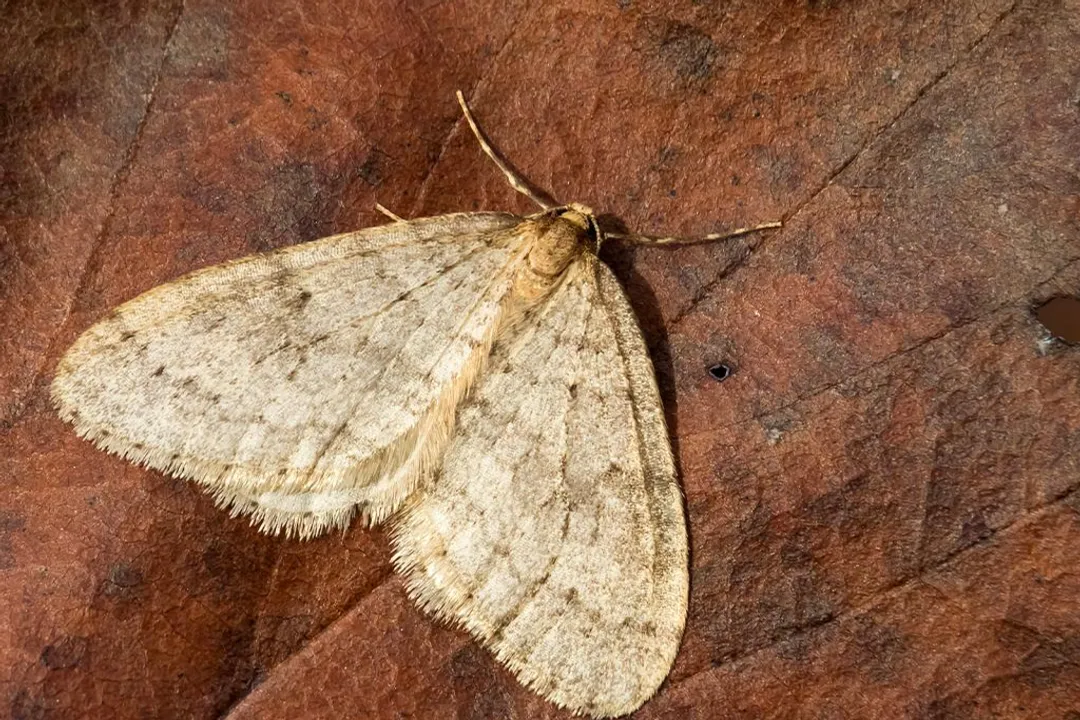
If Winter Moth larvae emerge too late relative to early leaf-out, what condition is the foliage in?
The foliage is already tougher, less nutritious, or simply too advanced for optimal feeding.
A core evolutionary pressure on the Winter Moth relates directly to the timing of larval hatch relative to the spring flush of host plant leaves. When spring temperatures warm earlier than historical norms, plants advance their leaf-out schedule. If the moth's genetically determined hatching cue (often tied to dormancy requirements like winter chilling) does not shift at the same rapid pace, the larvae emerge belatedly into foliage that is past its prime nutritional window. This suboptimal foliage is described as being tougher and less nutritious, drastically reducing the growth rate and overall developmental success of the larvae, consequently lowering fitness.