How many comet moth species exist?
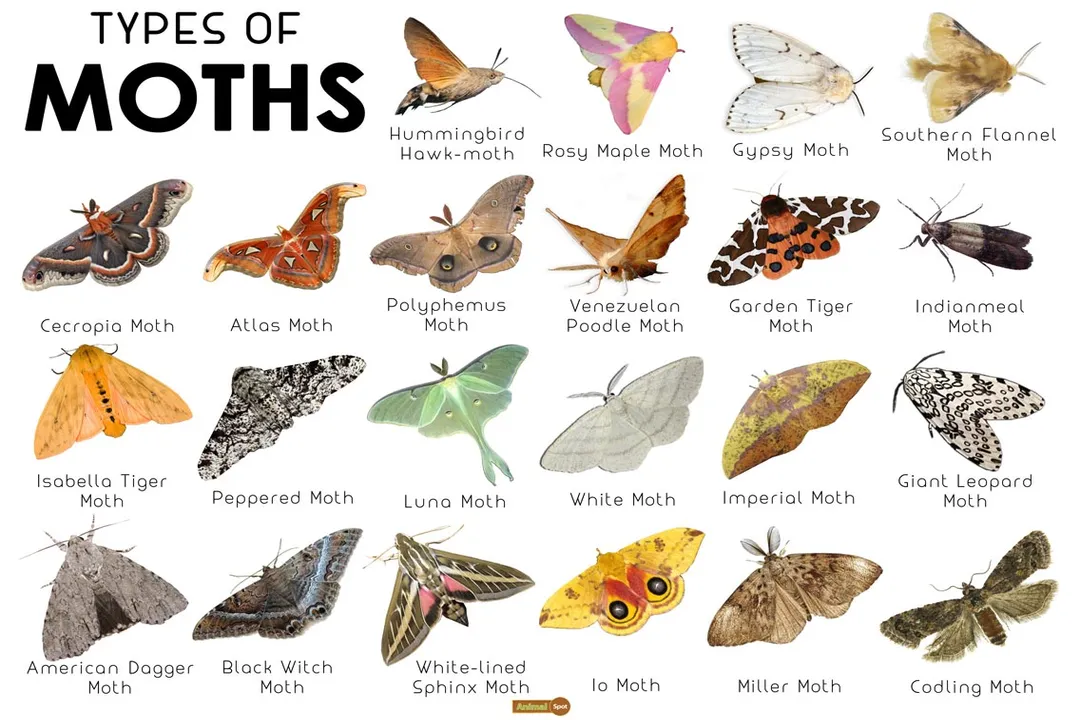
The common name "Comet Moth" generally points to a single, exceptionally striking member of the insect world: Argema mittrei, also widely recognized as the Madagascan Moon Moth. While the question of "how many species" might imply a broad group, in practice, this stunning creature stands largely alone under that title, acting as a singular icon from the rainforests of Madagascar. To put its singularity into perspective, this one species exists within an order, Lepidoptera, that boasts an astonishing number of relatives; estimates for the total number of moth species worldwide range from around 160,000 to possibly 200,000, with a significant number still undocumented by science. The Comet Moth, therefore, represents a highly specialized niche within a massive, complex insect family.
# The Singular Species
Argema mittrei was first officially documented and described in 1847 by Félix Édouard Guérin-Méneville. It belongs to the family Saturniidae, a group that includes other giants like the emperor moths and royal moths, encompassing about 2,300 described species. Despite being a familiar face to enthusiasts, the Comet Moth is considered endangered in its native wild habitat due to severe environmental pressures. It is endemic, meaning it is naturally found nowhere else on Earth besides the rainforests of Madagascar.
# Defining Features
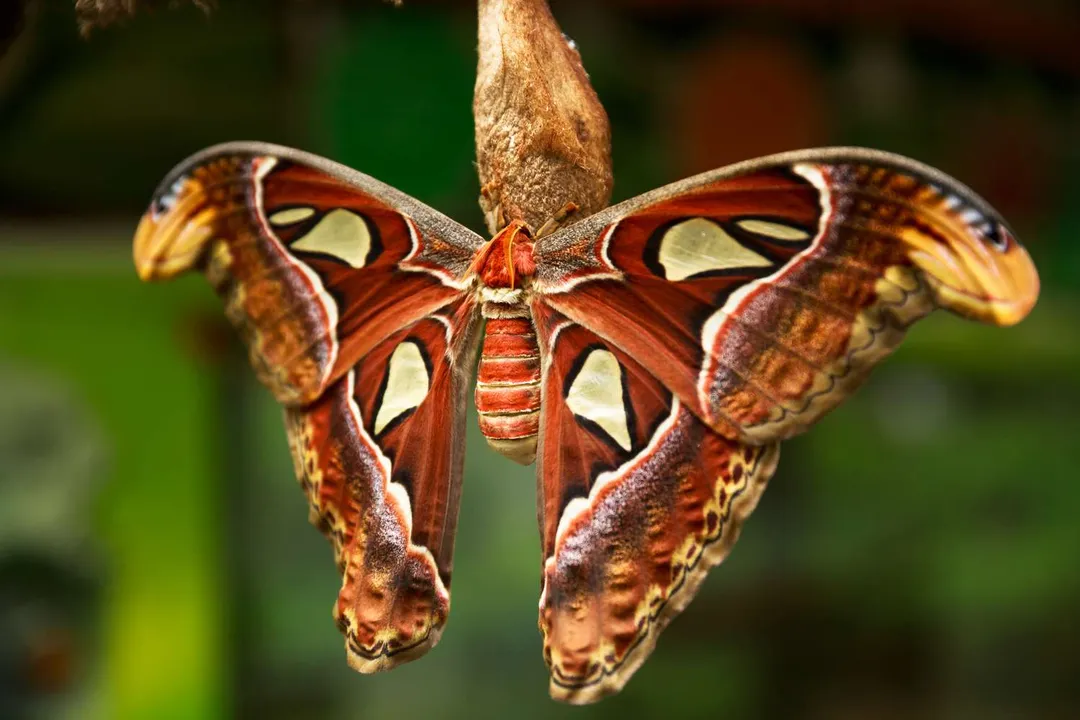
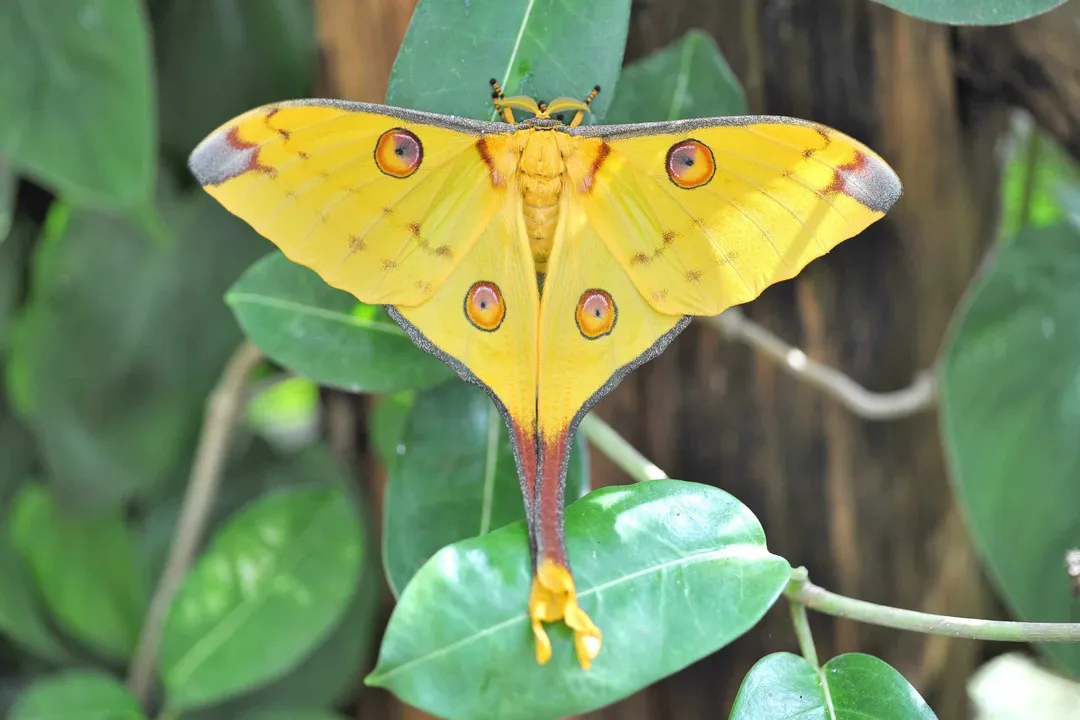
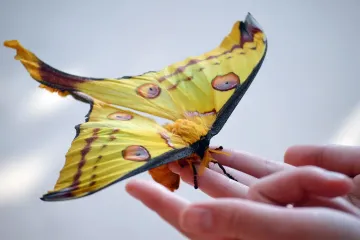
The appearance of A. mittrei is what secures its fame. The most defining characteristic that grants it the name "comet" is the presence of extraordinarily long, trailing tails extending from the hindwings. In males, these tails can measure up to 15 centimeters in length. The wings themselves are large, featuring vibrant patterns of yellow and red, accented with shades of brown and green, helping the moth camouflage itself against daytime backgrounds.
Size comparisons clearly establish its status among the giants of the moth world. The male Comet Moth can sport a wingspan of approximately 20 centimeters (about 7.9 inches), placing it among the largest silk moths globally. Sexual dimorphism is evident: males possess long, conspicuous, feathery antennae used for detecting pheromones, while female antennae are noticeably thinner. A second key feature, referenced in its genus name Argema (Greek for "speckled eye"), is the presence of large eyespots on the wings. These spots are theorized to mimic the appearance of a much larger, more dangerous animal, serving as a deterrent to potential predators.

# Reproduction Focus
The adult stage of the Comet Moth represents a drastic biological trade-off: maximizing reproductive success during a strictly limited window, having foregone feeding entirely. After emerging from the pupa, the adult moth lacks a functioning digestive system; its mouthparts have effectively atrophied over evolutionary time. Consequently, the adult's entire existence is focused on mating and egg-laying, sustained only by the fat reserves built up during its larval stage.
The lifespan varies by sex, highlighting the differing demands on each. Males typically live for a brief four to five days, dedicating this time to actively seeking a mate using their sensitive antennae. Females, benefiting from slightly larger fat reserves, often survive longer, sometimes up to seven to ten days, as their primary remaining purpose after mating is finding appropriate host plants to deposit their clutch of 100 to 150 eggs. This tight schedule means every single day of adult life is critical, putting immense evolutionary pressure on successful mate location and egg deposition before the stored energy runs out.
# Development and Diet
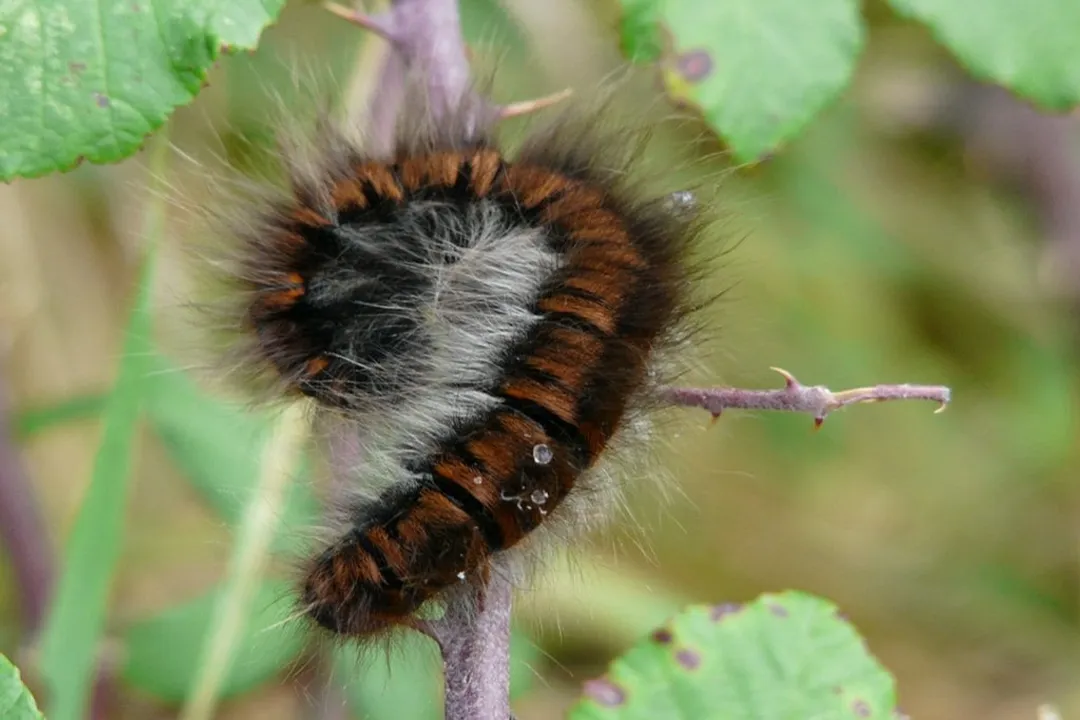
The lengthy development phase stands in stark contrast to the brief adult existence. Females lay eggs that typically take 10 to 20 days to hatch. Once the caterpillar emerges, it enters a phase of constant, aggressive feeding that lasts for about two months. This larva is bright green when fully grown and relies on specific host plants for sustenance. Key food sources for the caterpillars include various species within the Eugenia and Weinmannia genera, as well as Eucalyptus gunnii and plants like Liquidambar. After this intense growth period, the caterpillar spins a silk cocoon, where it may remain in the pupal stage for an unusually long time, sometimes five to six months, before the final metamorphosis into the adult moth. It has been noted that the exterior of the A. mittrei cocoon features small holes, possibly an adaptation to prevent rainwater accumulation and drowning during its long pupation.
# Threats and Captivity
The vulnerability of Argema mittrei is directly linked to its specialized dietary needs as a caterpillar. Because the larvae depend on specific native plants, habitat destruction through deforestation and slash-and-burn agricultural practices in Madagascar directly threatens the moth's survival, leading to its endangered status. The irony is that while the wild population is dwindling, the species is successfully bred in captivity for entomological collections and the exotic insect trade. Observing this dedication to maintaining Argema mittrei in controlled environments while its natural ecosystem vanishes offers a somber commentary on conservation priorities; flagship species can secure dedicated resources for captive breeding, but this effort exists against the backdrop of potentially thousands of less charismatic, undescribed moth species whose survival is far less visible and supported.
# Defensive Adaptations
Beyond its striking appearance, the Comet Moth possesses fascinating defensive capabilities, particularly against its chief nocturnal predators: bats. Moths and bats are locked in an evolutionary arms race concerning echolocation, and A. mittrei has evolved a sophisticated countermeasure. Studies suggest that the structure of its wings allows for the absorption of ultrasound waves. When a bat emits its hunting cry, the moth reflects a dampened or "muffled" echo, essentially rendering itself acoustically invisible or difficult to track to the bat. This ultrasound absorption is considered its primary defense function, supplementing passive defenses like crypsis (camouflage) and the startling effect of its large eyespots.
The moth’s physical structure offers other layered defenses. In addition to the eyespots, the very large, flowing tails may serve a distraction function, drawing a predator’s attack away from the moth’s vital body parts during an aerial chase. Furthermore, although not explicitly detailed for A. mittrei in all sources, many related Saturniidae moths produce silk cocoons, and the massive wing surface area common in these giants is generally recognized as an adaptation to disrupt sonar signals.
# The Broader Moth Context
To truly appreciate the Comet Moth, one must remember the vastness of the group it belongs to. Moths are fundamentally different from their butterfly relatives in several ways, including generally being nocturnal, having thicker bodies, and possessing threadlike or feathery antennae (whereas butterflies usually have thin antennae tipped with clubs). The structure that unites their flight—the frenulum, a small fold of tissue connecting the forewings and hindwings—allows them to fly with greater efficiency than many butterflies.
When considering the scale of Lepidoptera diversity, the Saturniidae family, where the Comet Moth sits, is just one part of an order containing nearly 200,000 species globally. While 160,000 is a common estimate for described moths, the fact that scientists believe up to five times that amount might still be unknown suggests that the biodiversity represented by Argema mittrei is just the visible tip of an enormous, largely uncatalogued biological iceberg. Whether other Argema species exist, or if there are other "comet-like" moths yet to be named, remains an open question within the continuing study of these nocturnal marvels.
Related Questions
#Citations
Comet moth - Wikipedia
Comet Moth Insect Facts - Argema mittrei - A-Z Animals
20 Moth Species More Beautiful Than Butterflies - Treehugger
Moth Facts, Types, Classification, Habitat, Diet, Adaptations
Madagascar Comet Moth - Argema mittrei - The Butterfly Babe