What specific adaptation defines the female Operophtera brumata regarding movement?
Answer
Has effectively lost the ability to fly
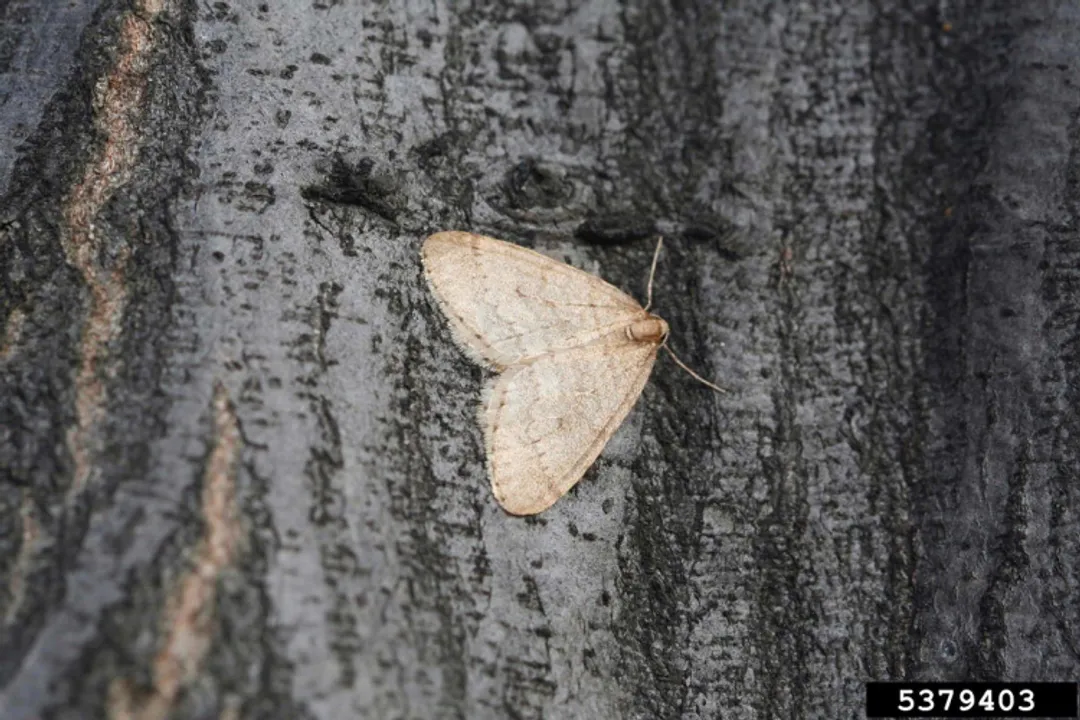
The female Winter Moth exhibits extreme sexual dimorphism characterized by her inability to fly. She is described as virtually wingless, often possessing only greatly reduced wings appearing as small stubs or rudimentary structures. This flightless state dictates her reproductive strategy; she emerges from the pupa and must crawl, typically up tree trunks or buildings, to a stationary position where she emits pheromones to attract flying males. This inability to disperse aerially confines her subsequent egg-laying site to the immediate vicinity of her emergence point.
Related Questions
What specific adaptation defines the female Operophtera brumata regarding movement?Why do Winter Moth larvae exhibit the characteristic "looping" gait described as "looper" movement?What physical color indicator signals the imminent hatching of Operophtera brumata eggs?What fine detail is sometimes noted regarding the base of the male Winter Moth's wings?What dispersal technique do very young Operophtera brumata larvae utilize for moving between host plants?Which phrase is used to describe the physical appearance of the flightless female Winter Moth's abdomen?In North America, which geographical area is specifically mentioned as containing the invasive presence of Operophtera brumata?What approximate wingspan measurement is frequently cited for the winged male Winter Moth?What specific marking characterizes the pale green larval form of Operophtera brumata?What correlation is suggested between the physical size of the adult female moth and her reproductive capability?