What is an imperial moth?
The Imperial Moth (Eacles imperialis) immediately commands attention within the world of Lepidoptera, often cited as one of the largest and most magnificent moths inhabiting North America. [4] Its impressive presence is rooted not just in sheer size, with wingspans frequently reaching up to $4.5$ inches, or roughly $11.4$ centimeters, but also in its remarkable variability across its expansive range. [1][2] Encountering this creature, whether in a suburban yard light or deep within a mixed deciduous forest, offers a glimpse into the sheer diversity found even within a single species designation.
# Wing Appearance
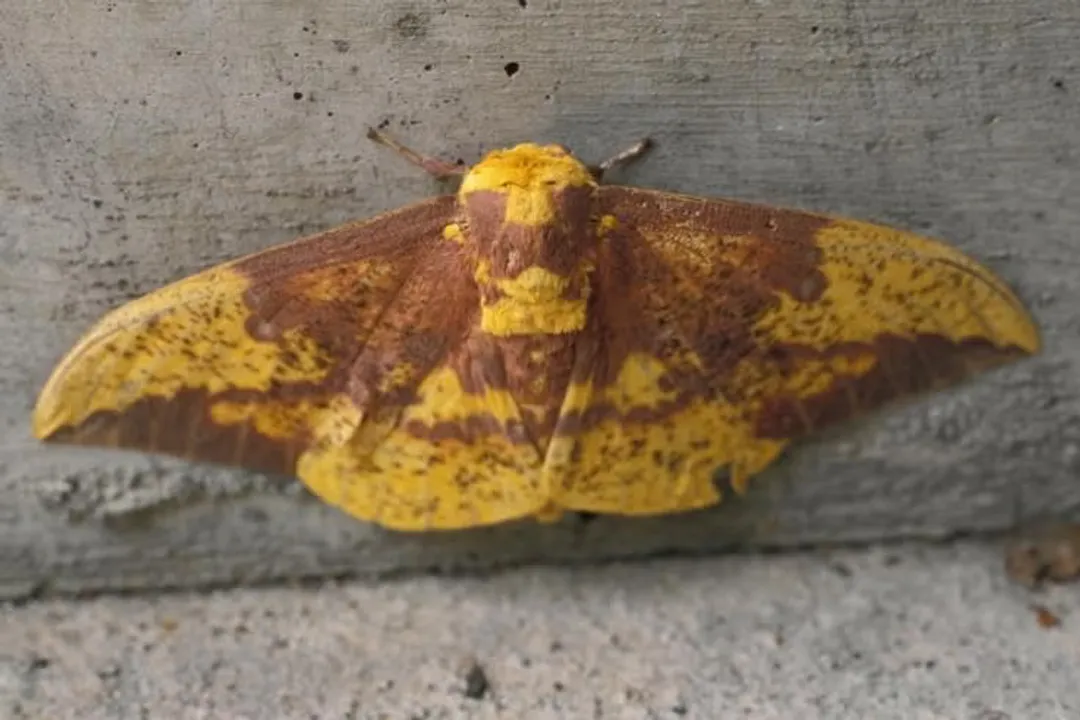
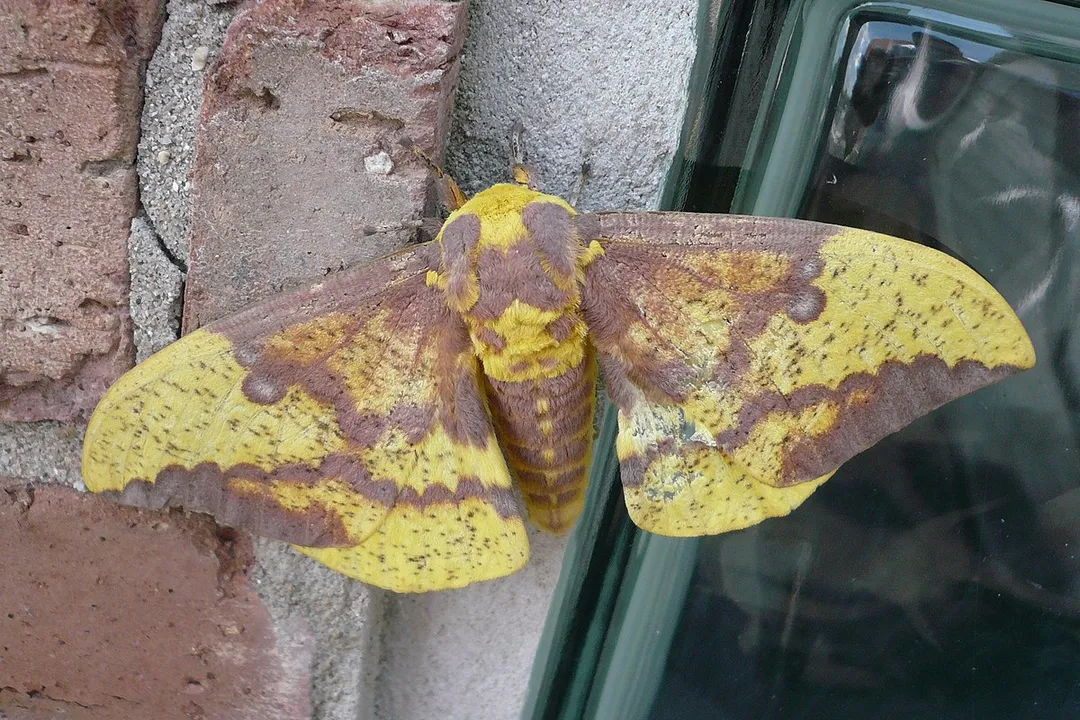
The adult Imperial Moth is perhaps best known for its striking, though highly inconsistent, coloration. [1][2] The base color typically ranges from a bright, sunny yellow to various shades of brownish-yellow. [2][3] Across this background, dark brown or black markings are common, often manifesting as spots or bands scattered across the wings. [1] However, this variability extends to extremes; some individuals exhibit entirely dark brown or nearly black coloration, making them quite distinct from their brighter cousins. [1][2] This wide spectrum of pigmentation means that two moths sitting side-by-side might look like entirely different species until closely examined.
A feature often used for definitive identification is the ocellus, or eyespot, present on each hindwing. [1] While this spot can occasionally be faint, it is usually discernible, often outlined or ringed with white or a paler hue. [1][5] For those attempting to distinguish the Imperial Moth from the superficially similar Io moth (Automeris io), the location of the eyespots is key: the Imperial Moth displays them on the hindwings, whereas the Io moth features large, unmistakable eyespots on its forewings. [1] Distinguishing sex is straightforward by examining the antennae; males possess conspicuously feathery or bipectinate antennae, perfectly adapted for detecting female pheromones, while females have thinner, more simple antennae. [1][3]
# Geographic Spread
The geographic reach of Eacles imperialis is considerable, stretching across a significant portion of the eastern half of the continent. [1][2] Its territory covers southern Canada and extends throughout the eastern United States, reaching westward toward the Great Plains and as far south as Texas. [1][3] This broad distribution means that local populations experience differing environmental pressures, which likely contributes to their noticeable physical variations. [2]
This species readily adapts to different environments, being found in open woodlands, mature deciduous forests, and even amidst human development in suburban settings. [1][3] The timing of their appearance, however, is strongly tied to latitude. Southern populations may produce multiple generations within a single year—a phenomenon known as being multivoltine—while northern populations typically manage only one generation annually (univoltine). [1][2] Adults generally fly from late spring through the late summer months, contingent upon the specific climate and generation cycle of the region. [1][2]
# Life Cycle Stages
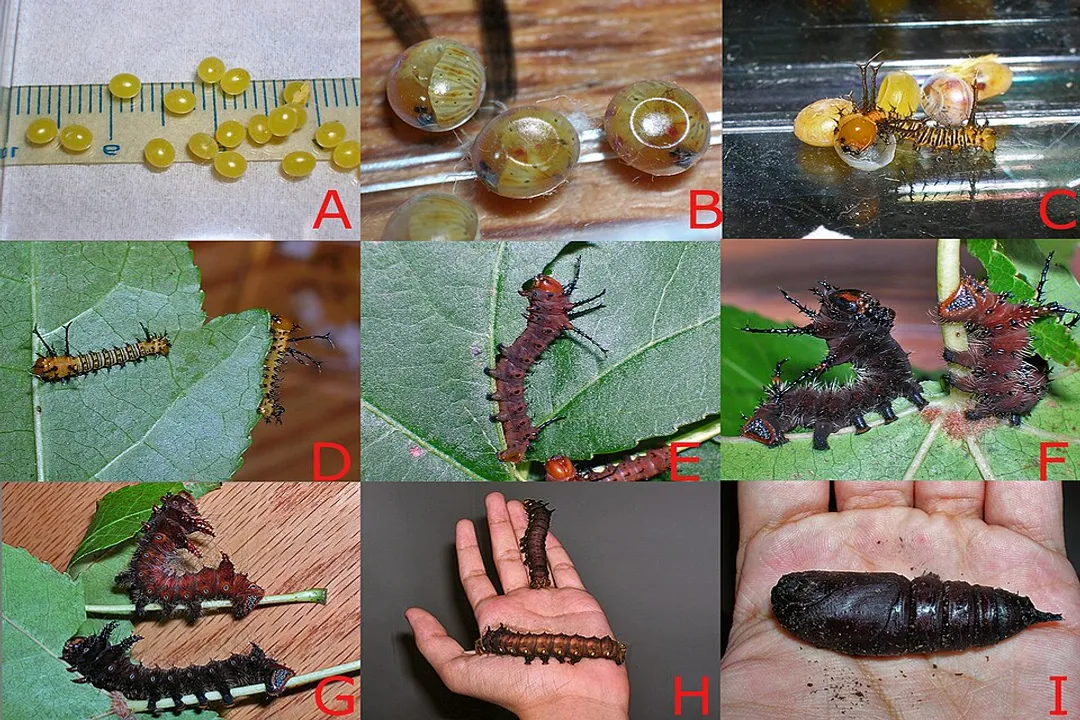
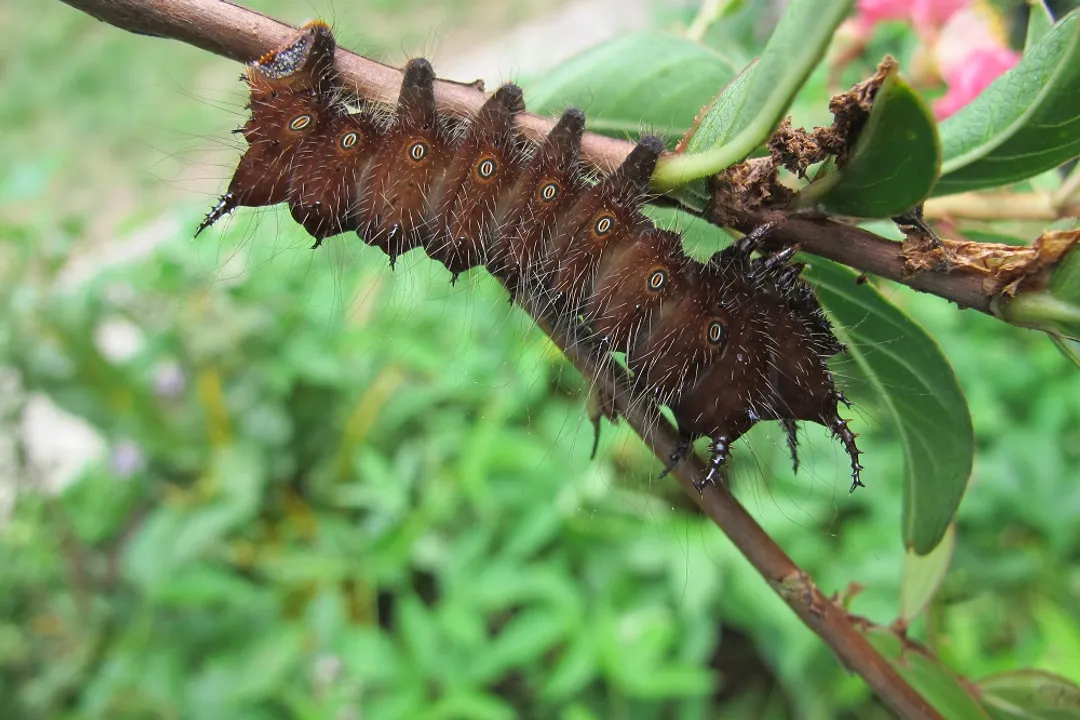
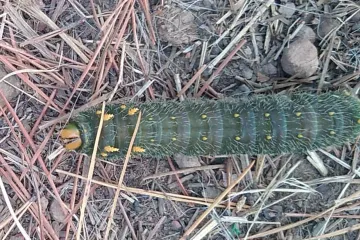
The journey from egg to magnificent adult involves significant transformation, particularly in the larval stage. [6] The Imperial Moth caterpillar is a large, hairy creature, generally displaying colors that include brownish, reddish, or a greenish-yellow hue. [2][6] Some descriptions note a row of stiff, spiky tubercles running along the body, and all larvae possess a distinct, though sometimes small, tail horn at the posterior end. [2] For observers looking for these larvae in areas with deciduous trees, it is worth noting that some instars are predominantly bright green with white stripes running lengthwise, offering superb camouflage against foliage. [6]
Interestingly, the larval stage presents a marked contrast to the adult form. While the adult is large and conspicuous, the caterpillar has evolved effective camouflage against its leafy backdrop. [1] This difference in appearance suggests distinct evolutionary priorities: safety through blending while feeding versus display or predator confusion during the brief, reproduction-focused adult phase. A simple tip for those wishing to observe this cycle firsthand is to look for pupae in the soil after the last feeding season. The moth overwinters in this stage, forming a cocoon just beneath the soil surface, often mixing silk strands with soil particles to create a sturdy cell. [3] Monitoring garden beds or the base of trees where dense foliage was present in the fall can sometimes reveal the overwintering pupae before they emerge with the warmer weather. [3]
The adult moth itself exists for a comparatively short time, dedicated almost entirely to mating. [5] Like many large moths, the adults are nocturnal, frequently drawn to sources of artificial light after dark. [1][6]
# Host Plants
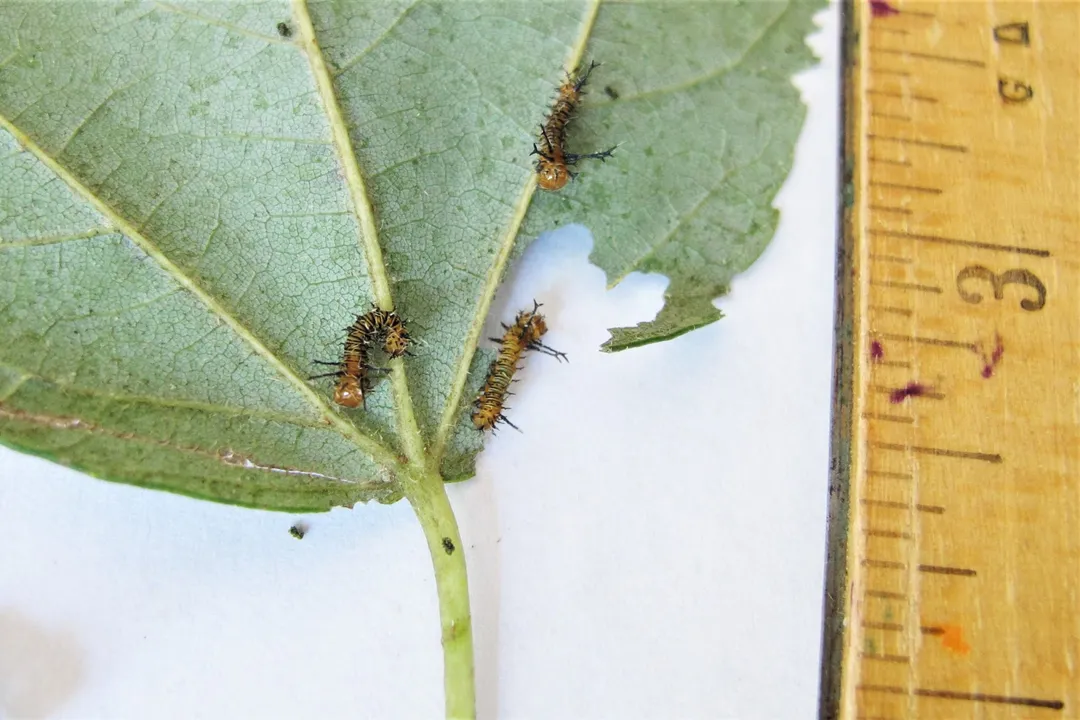
The caterpillar's diet reflects the species' widespread adaptability. Eacles imperialis is considered a generalist feeder, meaning the larvae are not strictly dependent on one or two types of plants. [1][2][3] They consume the leaves of a vast array of trees, including members of the Pinus (pine), Quercus (oak), sweetgum, birch, and maple genera, among many others. [1][2][6]
While they are generalists, this broad palate can sometimes cause issues in specific managed environments. In commercial forestry operations, especially those involving young pine plantations, high numbers of Imperial Moth caterpillars can occasionally lead to noticeable localized defoliation, classifying them, in those specific contexts, as minor pests. [3] However, in the typical landscape, their generalist feeding habits help distribute their impact across available vegetation rather than focusing damage on a single valuable species.
# Comparative Notes
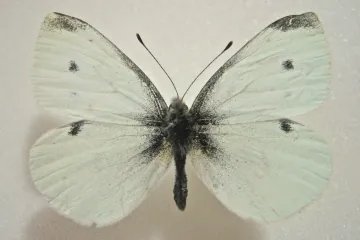
When assessing the size of this moth, it is helpful to keep its relatives in perspective. While certainly large, the classification as "one of the largest" is accurate for the eastern regions it dominates. [4] Understanding the variability in appearance is key to accurate identification, especially given how dramatic the differences can be between a dark morph specimen and a vibrant yellow one. This phenotypic plasticity—the ability of a single genotype to produce different phenotypes—is quite pronounced in this species and is a fascinating area for ecological study; we see less of this dramatic shift in closely related species like the Io moth, whose appearance is far more fixed. [1]
| Characteristic | Imperial Moth (E. imperialis) | Io Moth (A. io) |
|---|---|---|
| Hindwing Eyespot | Present, often pale-ringed | Absent (Eyespots on forewings only) |
| Antennae (Male) | Feathery (Bipectinate) | Feathery (Bipectinate) |
| Primary Distribution | Eastern North America | Eastern and Central North America |
| General Color Range | Highly variable (Yellow to dark brown) | Generally fixed (Yellowish with distinct eyespots) |
This table highlights that relying on size alone is insufficient; the placement of the eyespot remains the most reliable quick check to confirm identity when a large moth appears at a porch light. [1] The presence of the distinct dark-ringed ocellus on the lower wings immediately signals an Eacles specimen rather than an Automeris one. The very structure of the adult moth—large, often boldly marked—contrasts sharply with the somewhat drab, yet well-camouflaged, caterpillar, illustrating a successful dual survival strategy across its life stages. [2][6]
#Videos
Learn the fascinating story of the Imperial Moth! Everything you need ...
Related Questions
#Citations
Eacles imperialis - Wikipedia
The Imperial Moth: A Magnificent Creature! - The Farm In My Yard
Imperial Moth - Texas A&M Forest Service
Say hello to the imperial moth! This is one of North America's largest ...
Learn the fascinating story of the Imperial Moth! Everything you need ...
Imperial Moth | NC State Extension Publications
Imperial Moth | Mass.gov
Imperial Moth - Missouri Department of Conservation
Species Eacles imperialis - Imperial Moth - Hodges#7704
EENY602/IN1051: Imperial Moth Eacles imperialis ... - UF/IFAS EDIS