What is the primary function of the larval stage in the life cycle of *Operophtera brumata*?
Answer
Primary feeding stage.
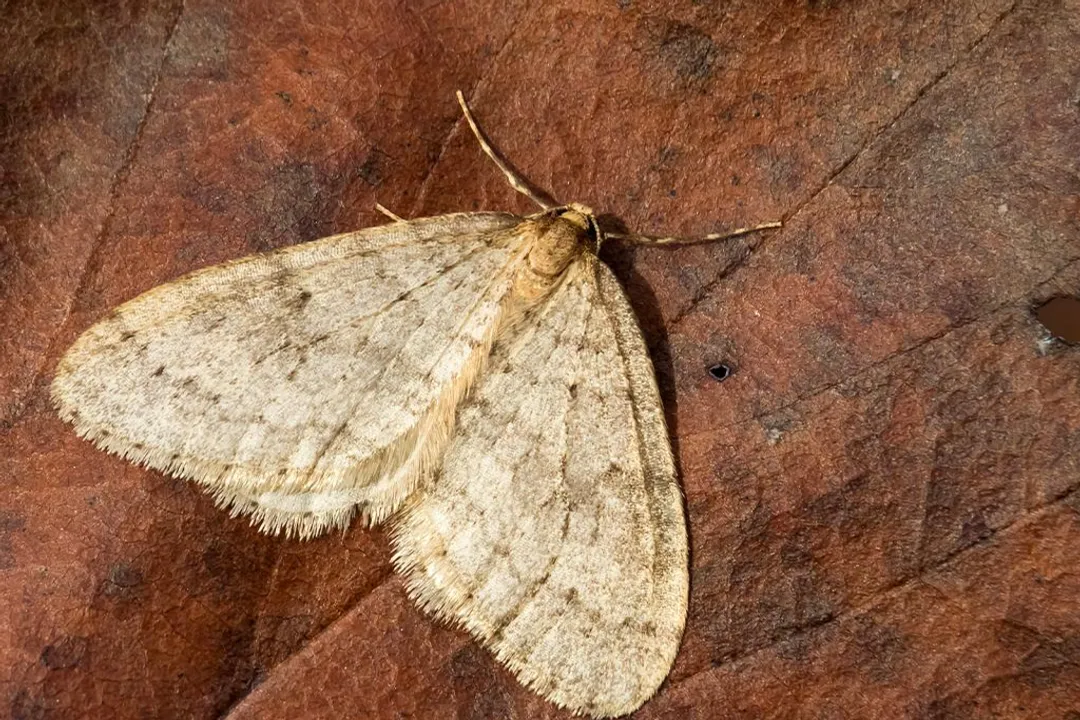
The life cycle of the Winter Moth involves distinct stages with specialized functions linked to seasonal timing. The eggs are laid in autumn and overwinter, representing the dormancy phase. When the larvae emerge early in the spring, this stage is dedicated almost entirely to intensive feeding and growth, consuming the new foliage of deciduous trees and shrubs. Successful completion of this primary feeding phase is essential because it dictates the energy reserves available for the subsequent pupation phase, which eventually leads to the adult stage responsible for reproduction later that year.
Related Questions
What distinct flight capability difference exists between male and female Winter Moths?What term describes the synchronized timing between an insect’s development and its food resource availability?What specific plant species are mentioned as larval food sources for *Operophtera brumata*?If Winter Moth larvae emerge too late relative to early leaf-out, what condition is the foliage in?What specific environmental cues are suggested to likely control the timing of Winter Moth larval hatch?What significant risk arises if the acceleration of spring warming surpasses the moth's rate of genetic adaptation or dispersal?How can researchers quantify the fitness reduction in Winter Moth populations due to phenological sorting?Where in the moth’s territory is the selective force for earlier hatching likely to be weak or possibly detrimental?What is the primary function of the larval stage in the life cycle of *Operophtera brumata*?What evolutionary adaptation mechanism is considered less likely to be the primary mechanism for the Winter Moth given adult constraints?What is the state of the wings on the functionally flightless female *Operophtera brumata*?