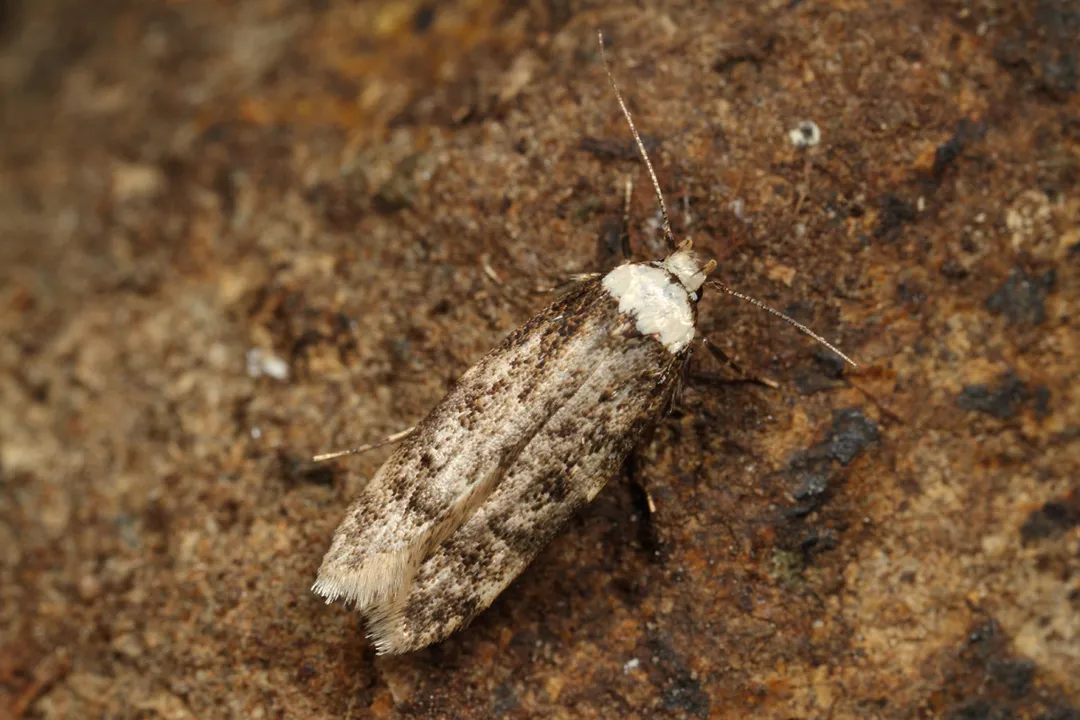
How do E. sarcitrella larvae protect themselves while feeding in stored commodities?
They spin silken threads that bind particles together, creating silken webs or tubes.
The larval stage of the White-shouldered House Moth is adapted to feeding internally or semi-exposed within stored products like grains or cereals. To ensure protection while feeding voraciously and to construct necessary retreats, the caterpillars engage in significant silk production. They spin silken threads that serve the function of binding the surrounding particles—such as grain dust or food fragments—together. This results in the formation of protective silken webs or tubes around themselves, creating a safe microenvironment within the bulk food source where they can continue consuming the host material without constant threat from external factors or competition.