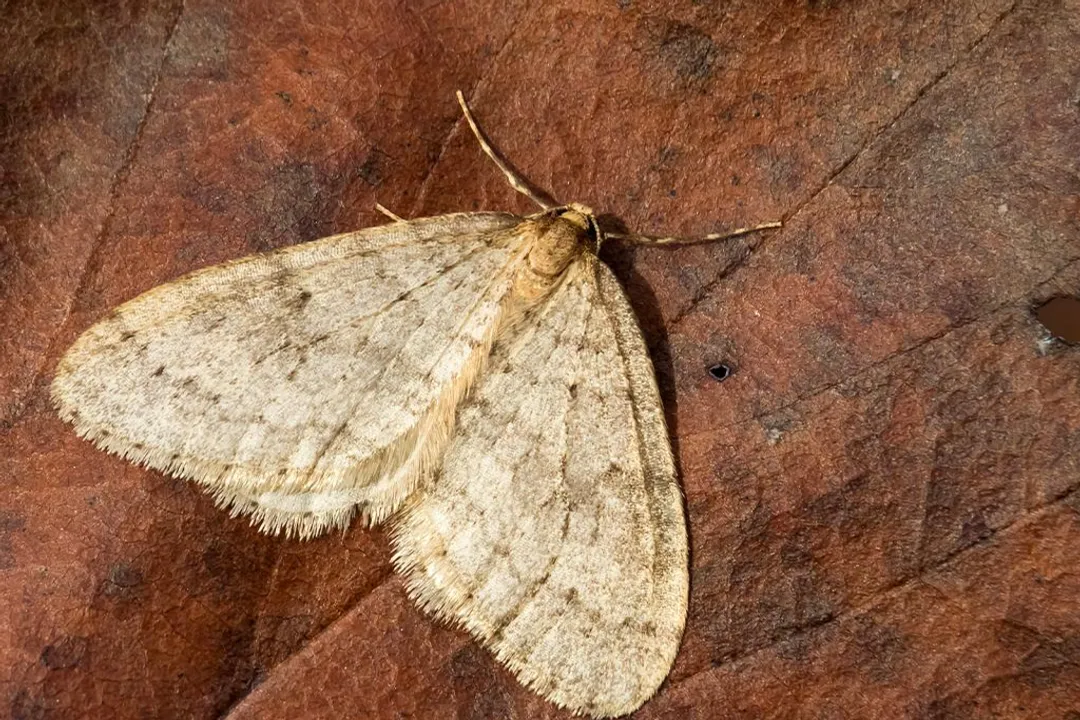
What specific environmental cues are suggested to likely control the timing of Winter Moth larval hatch?
Accumulated degree days or chilling hours.
The text distinguishes between the cues governing different life stages for the Winter Moth. While the adult flight timing might be influenced by photoperiod (day length) cues established the previous year, the critical trigger for the egg to hatch—which initiates the larval stage—is indicated to be highly responsive to immediate temperature fluctuations. Specifically, the timing is likely dependent on physiological markers related to temperature accumulation, such as accumulated degree days or the required number of chilling hours that must be satisfied during the winter dormancy period. This difference in cueing mechanism makes the egg hatch timing relatively more plastic and responsive to short-term climatic shifts than the adult emergence timing.