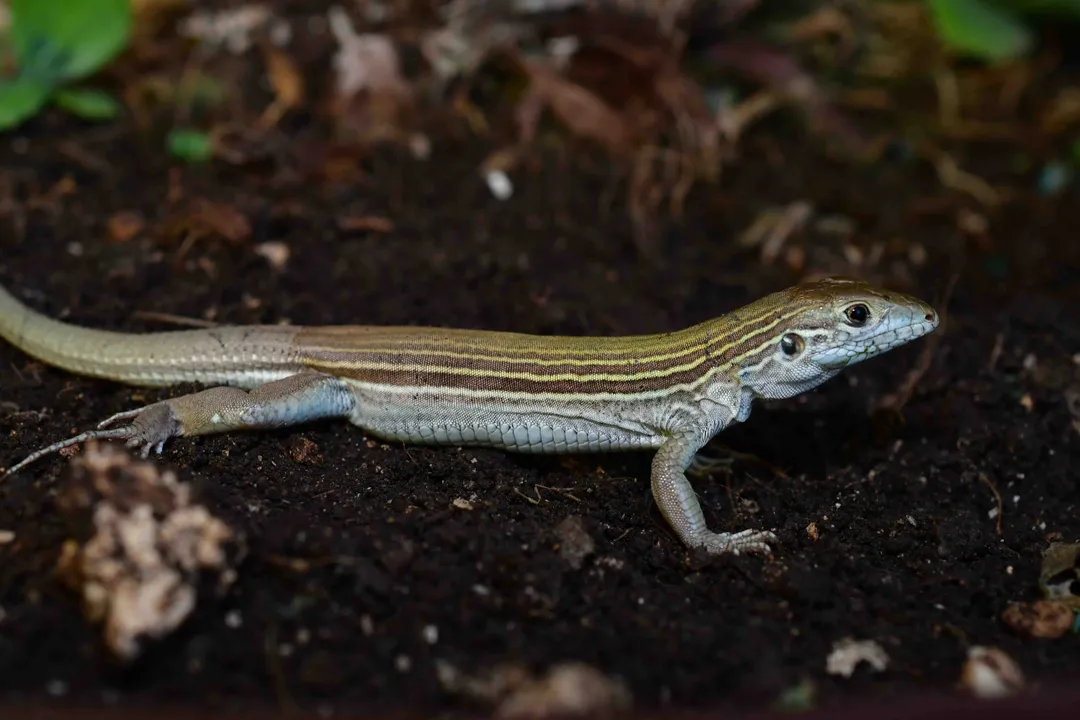
What specific mechanism of parthenogenesis is employed by many *Aspidoscelis* species?
Automictic parthenogenesis
Many *Aspidoscelis* species utilize a specialized form of asexual reproduction called automictic parthenogenesis to maintain diploidy without fertilization. In sexually reproducing vertebrates, the egg is haploid following meiosis and requires sperm input to restore the necessary diploid state for embryonic development. Automictic parthenogenesis circumvents this requirement. In certain instances within this process, the resulting haploid products generated by meiosis actually fuse together. This fusion effectively restores the full diploid genetic complement to the embryo without any genetic contribution from a male, thereby ensuring the offspring is genetically viable and typically a near-perfect clone of the mother.