Whiptail Lizard Locations
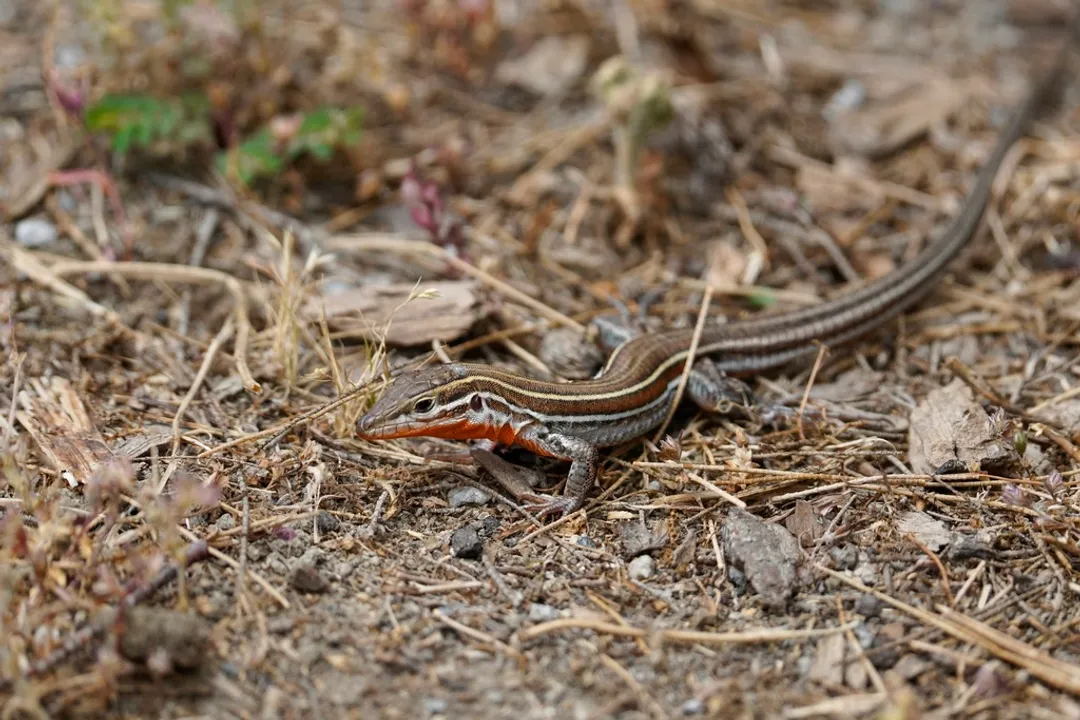
The world of whiptail lizards is defined by speed, sunlight, and a surprisingly varied distribution across the arid and semi-arid landscapes of North America. These slender, quick-moving reptiles, often characterized by their exceedingly long tails—hence the name—are not found uniformly across the continent but rather congregate in specific ecological niches, primarily across the American Southwest and extending into Mexico. Pinpointing where to find them requires understanding which species inhabits which patch of desert, grassland, or scrubland, as their distributions are often quite localized.
# Species Mapping
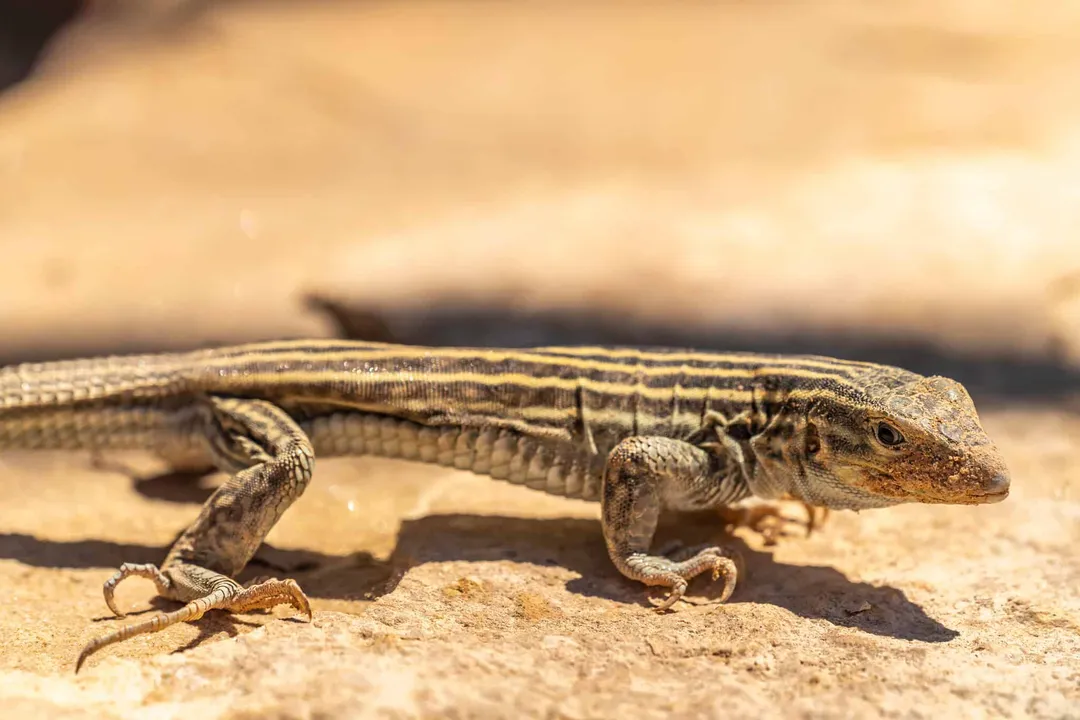
Whiptails belong to the genus Aspidoscelis (formerly Cnemidophorus). Recognizing the sheer number of species—some sources point to over 40 in the Western Hemisphere—is the first step in tracking them down. Their distribution is not a single contiguous area; instead, it’s a patchwork of ranges dictated by elevation, temperature tolerance, and specific soil types. For instance, while many species thrive in the hot Sonoran Desert, others are adapted to the higher plateaus or the more humid environments found near the Gulf Coast of Texas.
For those interested in tracking specific morphs, understanding the regional segregation is key. In California, identifying whiptails involves navigating several similar-looking species, requiring close attention to tail spotting and body patterning. Similarly, Arizona hosts several species whose ranges abut or overlap in interesting ways, such as the Plateau-striped Whiptail, which occupies different habitats than its desert-dwelling relatives.
# Western Territory
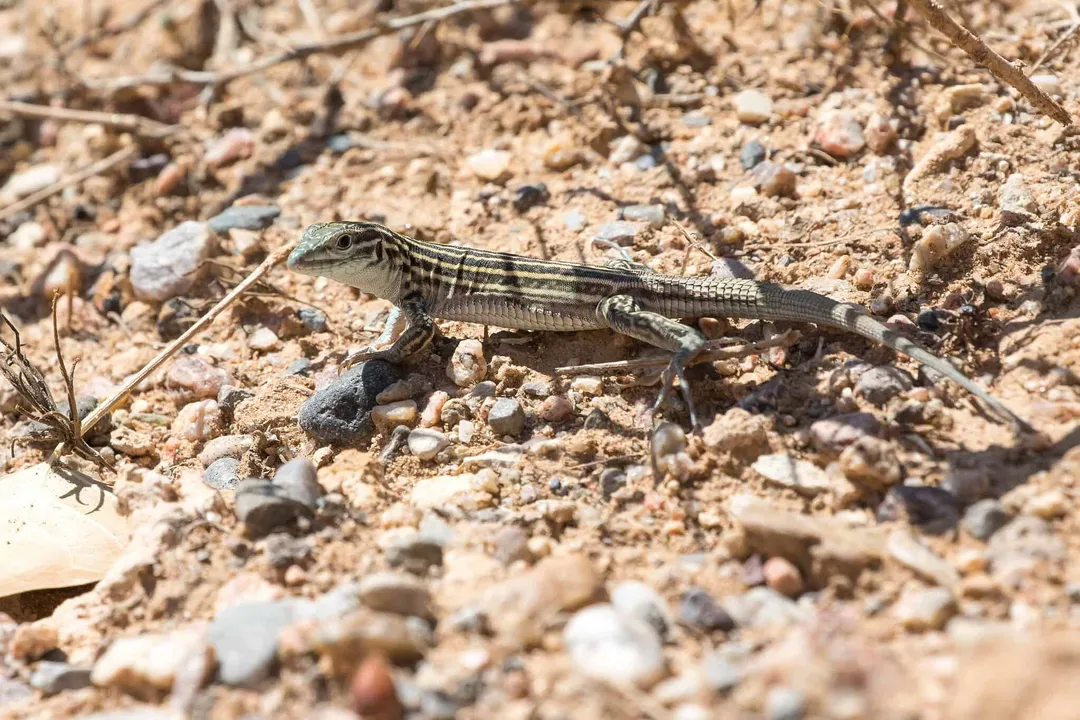
The Western Whiptail (Aspidoscelis tigris) offers a classic example of a widespread but geographically defined distribution. This species is generally found throughout the Mojave and Colorado Deserts, extending its range into parts of Nevada, Utah, and southeastern California. When looking for this particular lizard, observers should focus on sandy or sparsely vegetated desert floors where they can utilize their speed to evade predators.
In contrast to some other whiptails, A. tigris seems quite tolerant of varying soil conditions across its range, though sandy areas remain prime real estate. Comparing this to the needs of the Texas Spotted Whiptail, which prefers the coastal plains and brushy areas of South Texas, highlights the environmental specialization that fragments the broader whiptail group’s location. If you are in the Great Basin region, you are looking for A. tigris, but crossing into the mountains of Arizona or New Mexico might introduce you to entirely different, locally adapted species.
An insightful way to approach location tracking, particularly for a generalist like A. tigris, is to think in terms of microhabitats rather than just general biomes. Even within a large, seemingly uniform desert expanse, whiptails will concentrate near features that offer temporary shade or access to insects—perhaps the base of a large creosote bush or an area with slightly looser, finer sand for easier burrowing.
# Arizona Assemblages
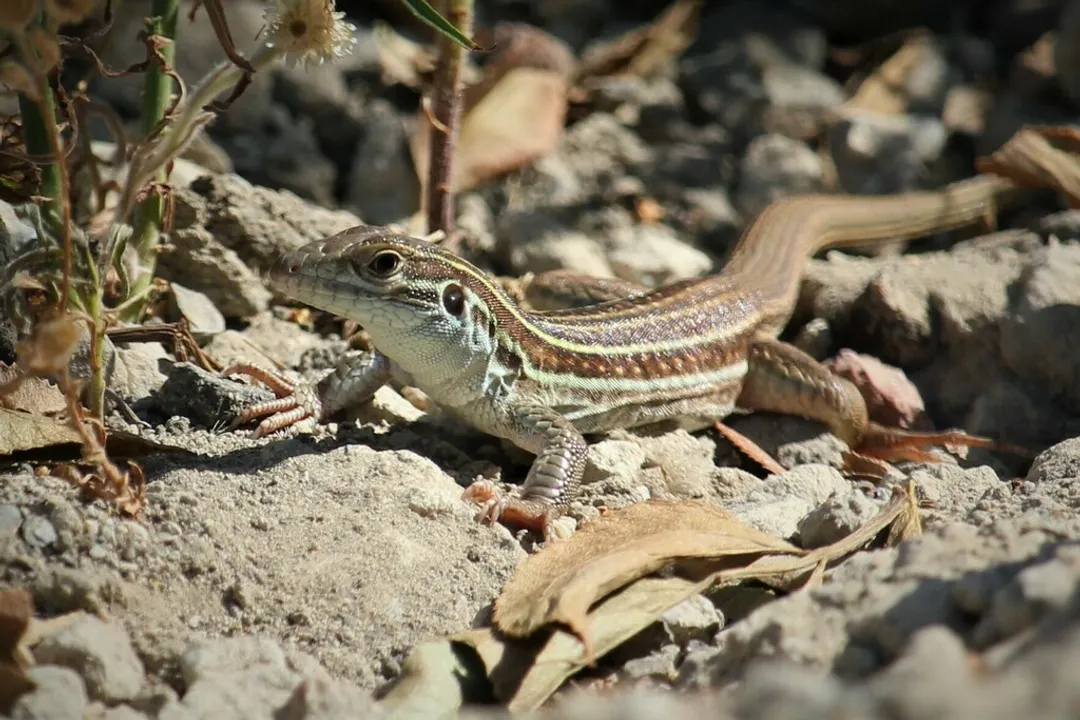
The area around the Arizona-Sonora border presents an incredible density of whiptail diversity, making the state a focal point for enthusiasts. The Arizona-Sonora Whiptail (Aspidoscelis sonorae) is specifically adapted to the hot, arid environments typical of the Sonoran Desert lowlands. Locations offering open, sun-drenched ground with scattered low vegetation are characteristic habitats for this species.
The Arizona Sonora Desert Museum groups whiptails into several categories based on their distribution within the region, effectively creating a geographic guide map for the enthusiast. For instance, certain species are strictly confined to the desert floor, while others ascend into the foothills or sky islands. If you are studying lizard populations near Tucson, understanding the elevation cutoff points becomes crucial, as one species might dominate below 3,000 feet while another takes over above that line.
Furthermore, the presence of certain plant communities can serve as an excellent indicator of potential whiptail presence, linking the lizard's location directly to its food source, which consists primarily of insects and spiders. In the low desert regions of Arizona, an observer should prioritize areas with good insect activity on sunny days for the best chances of a sighting.
# California Sightings
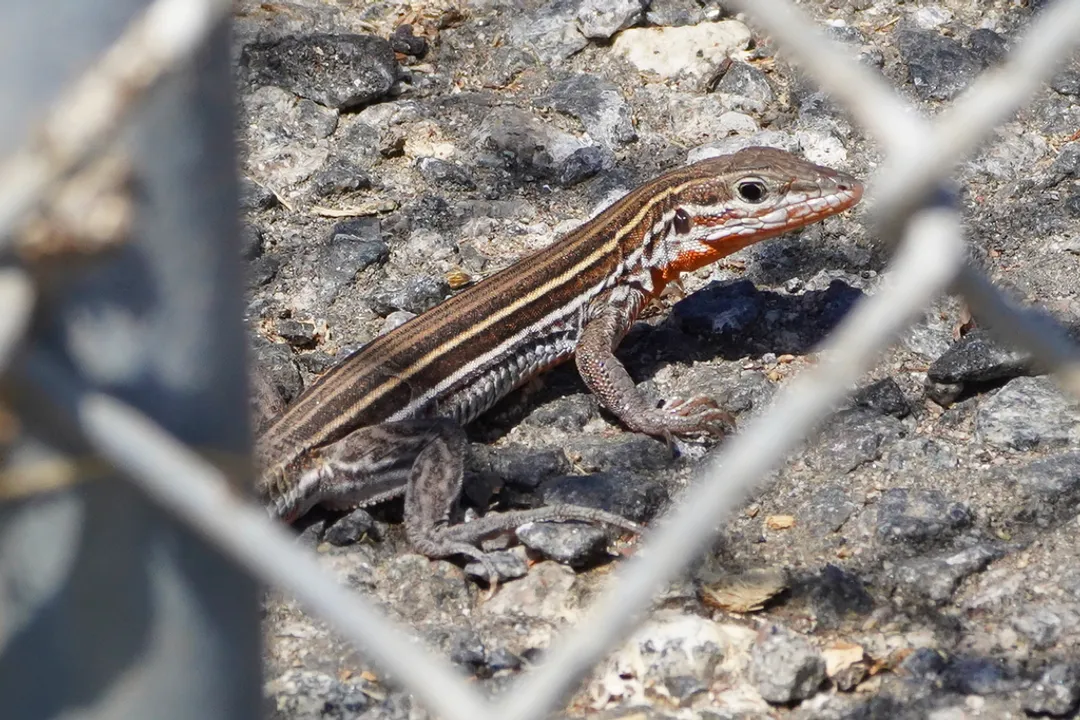
California's whiptail populations present a specific identification challenge, particularly because several species coexist or have adjacent ranges, sometimes leading to hybridization. The general guidance for California herpetology often involves careful examination of pattern continuity. For instance, some species show unbroken lines running down the body, while others feature disrupted or spotted patterns.
The distribution within California tends to favor the southern and eastern parts of the state, avoiding the high, cold elevations of the Sierra Nevada. When searching in Southern California, one must be aware of subtle differences in the tail patterns that separate closely related species like the Desert Grass-Whiptail from others found in similar Mojave Desert habitats.
To maximize success in California, look for areas where the terrain is less rocky and more open than what you might find favored by certain lacertid lizards. Whiptails prefer running room. A useful, though not always definitive, heuristic is that if you see a lizard that is distinctly faster and more whip-tailed than the common fence lizards or side-blotched lizards in a sandy wash, you are likely looking at an Aspidoscelis species.
# Texas Range Focus
Moving eastward, the Texas Spotted Whiptail (Aspidoscelis sexlineata) provides a distinct geographical focus, particularly in the southern part of the state. Its range is associated with the South Texas Plains, including areas like the Rio Grande Valley. This area is characterized by its different vegetation structure compared to the deep deserts of Arizona and California—often featuring brushy habitats and slightly higher humidity near the coast.
Locating this species involves seeking out areas where the ground cover is not entirely bare sand but includes some denser grasses or low shrubs that offer quick cover from overhead threats. Unlike the lizards adapted to pure, open desert, the Texas Spotted Whiptail seems better suited to environments where underbrush provides more structure, though they still require open patches for basking and foraging. If you are in the coastal prairie transition zones of South Texas, this species is a more likely candidate than the Western Whiptail species common thousands of miles away in the Mojave.
# A Biological Distribution Factor
Beyond simple geography, one critical biological characteristic of certain whiptail species significantly impacts their distribution: parthenogenesis, or asexual reproduction. The Texas Whiptail (Aspidoscelis uniparens) is one such species, composed entirely of females that reproduce without males, resulting in cloned offspring.
While this doesn't dictate where the species can live in terms of climate, it does explain how a highly successful, isolated population can establish and maintain a range. When a single, highly adaptable female colonizes a new, suitable habitat patch—perhaps across a geographic barrier that prevents male migration—parthenogenesis allows that population to rapidly stabilize and spread within that new territory. This phenomenon is less about finding a male and female pair and more about finding the specific environmental conditions that allowed the initial colonizing parthenogenetic female to thrive.

# Habitat Conditions Dictating Location
The general environmental needs of whiptails across their range suggest several common denominators, even if the specific flora changes. They are overwhelmingly heliothermic, meaning they require sun exposure to regulate their body temperature. This mandates that the best locations are generally open areas or the edges of thicker vegetation where sunlight penetrates consistently during peak activity hours.
Soil substrate is another significant determinant of location. Many species, including the Plateau-striped Whiptail, are often found in areas with loose soil or sandy substrates, which aids in rapid burrowing when disturbed or when seeking to escape excessive heat. If the ground is too hard-packed or covered by a dense mat of low-growing shrubs, the likelihood of finding a whiptail decreases significantly, even if the temperature is otherwise ideal.
Considering the annual cycle, the location of activity also shifts seasonally. During the cooler spring and fall months, whiptails may be found basking openly for longer periods. As summer temperatures peak, their active locations often shift to shaded microclimates—under shrubs or in burrows—during the hottest part of the day, only emerging during brief windows. A dedicated searcher in Arizona might find a whiptail out at 9 AM in a flat, open area, but by 1 PM, the same animal might only be retrievable by carefully investigating the base of a large saguaro or clump of mesquite near that morning spot.
To put these habitat elements into practical terms for a field trip, an observer aiming to see whiptails should prioritize sites with:
- Sun Exposure: Open ground or south-facing slopes.
- Substrate: Sandy, gravelly, or loose soil rather than solid rock faces.
- Vegetation Structure: Sparse coverage allowing for quick dashes between cover objects (rocks, debris, or low bushes).
For example, comparing a high-elevation pinyon-juniper woodland (often too cool and structurally complex) with a lower-elevation desert wash (ideal open sand and sun) clearly illustrates why location matters so much to these lizards. The Wash, even if it appears barren, provides the necessary thermal gradient and substrate for their lifestyle.
# Documentation and Reporting
For those involved in citizen science or tracking reptile occurrences, documenting where these sightings happen adds immense value to understanding population stability and range shifts. Platforms that gather observational data are often the best source for confirming current or expanding locations for species like the Western Whiptail or identifying novel locations for parthenogenetic species. Reviewing recent submissions for a specific state—say, California—can show whether a species previously thought restricted to the Mojave Desert is now popping up in slightly more coastal scrub areas, which would suggest a minor, ongoing range adjustment influenced by local warming trends or habitat alteration.
The specific GPS coordinates or detailed location descriptions provided in these records help researchers map out known population centers. For instance, finding a cluster of confirmed sightings for the Texas Spotted Whiptail in a specific county in the Rio Grande Valley solidifies that region as a reliable hot spot for observers. This data-driven approach moves beyond anecdotal evidence to build a clearer picture of the true geographic extent of these fast-moving, often overlooked reptiles.
Related Questions
#Citations
Western whiptail
Whiptails (Aspidoscelis spp.)
Identifying California's Whiptail Lizards
Whiptail Lizard Animal Facts
SONORAN SPOTTED WHIPTAIL Aspidoscelis sonorae
Plateau Striped Whiptail | U.S. Geological Survey
Species Spotlight: Whiptail Lizards
Lizard Watching: the Texas Spotted Whiptail
California Whiptails - Species Aspidoscelis (Cnemidophorus)
Cnemidophorus uniparens (Desert Grassland Whiptail)