Whiptail Lizard Facts
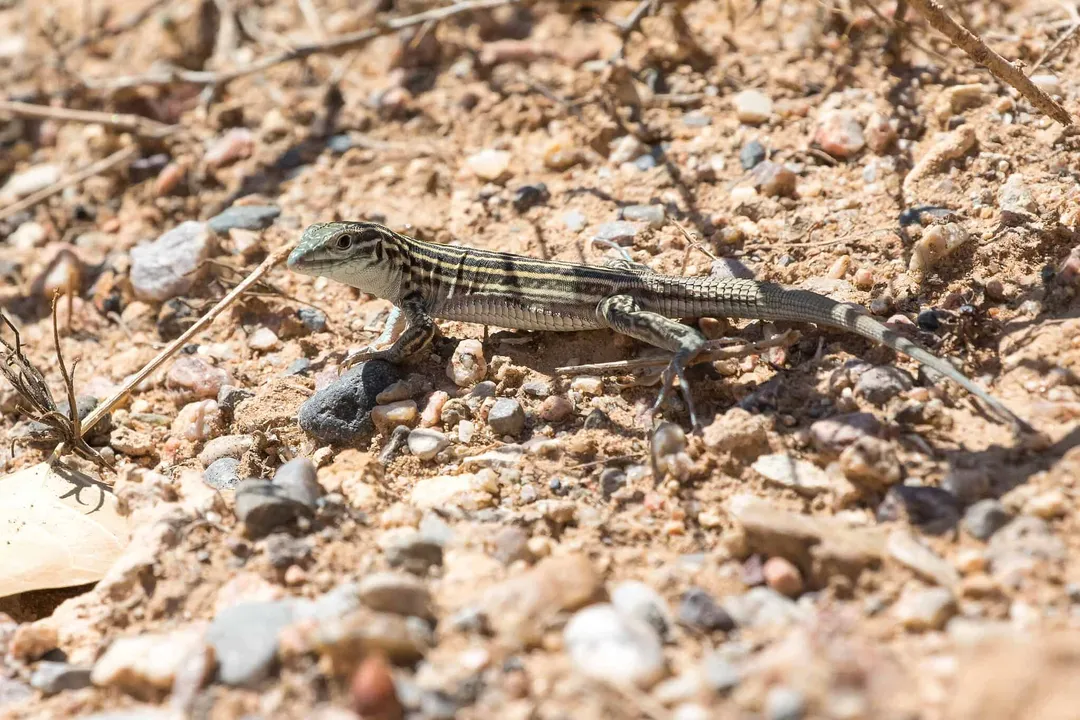
The slender, swift reptile known as the whiptail lizard darts across the arid floor of the American Southwest, its name perfectly capturing its most striking physical attribute: an exceptionally long, thin tail that often dwarfs the lizard’s actual body length. These lizards, belonging to the family Teiidae, are recognized for their lean build and pointed snouts, features that complement their high-speed lifestyle. With over 150 species spread across diverse environments ranging from desert scrub to tropical islands, their adaptations vary, but many share an energetic, diurnal activity pattern.
# Body Markings
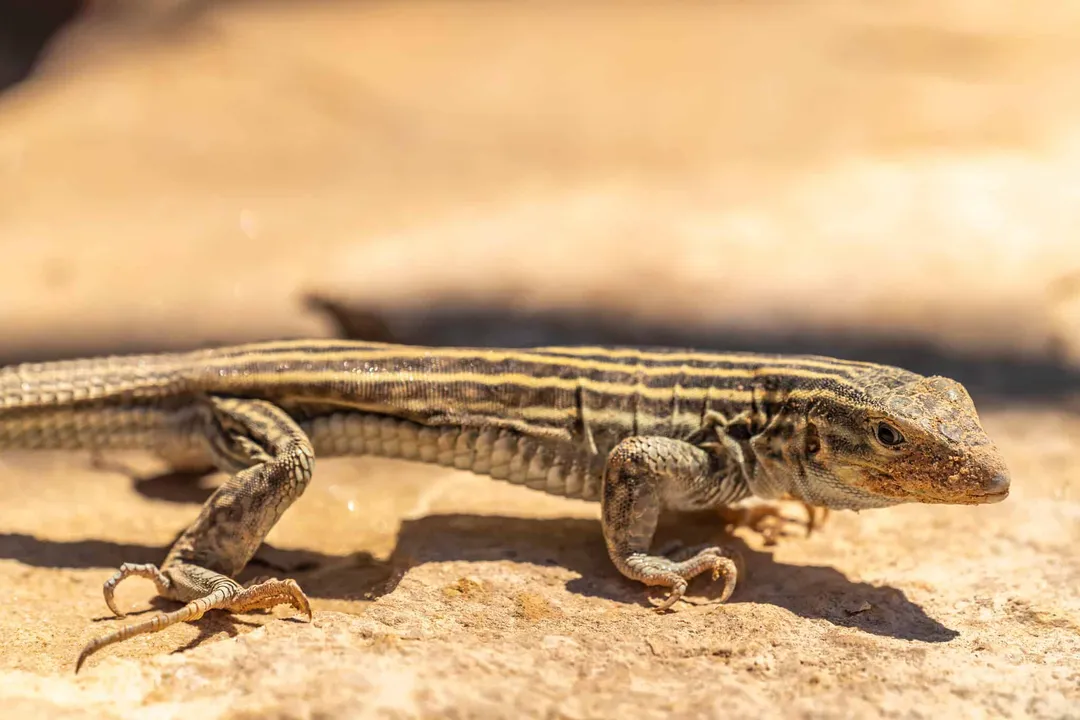
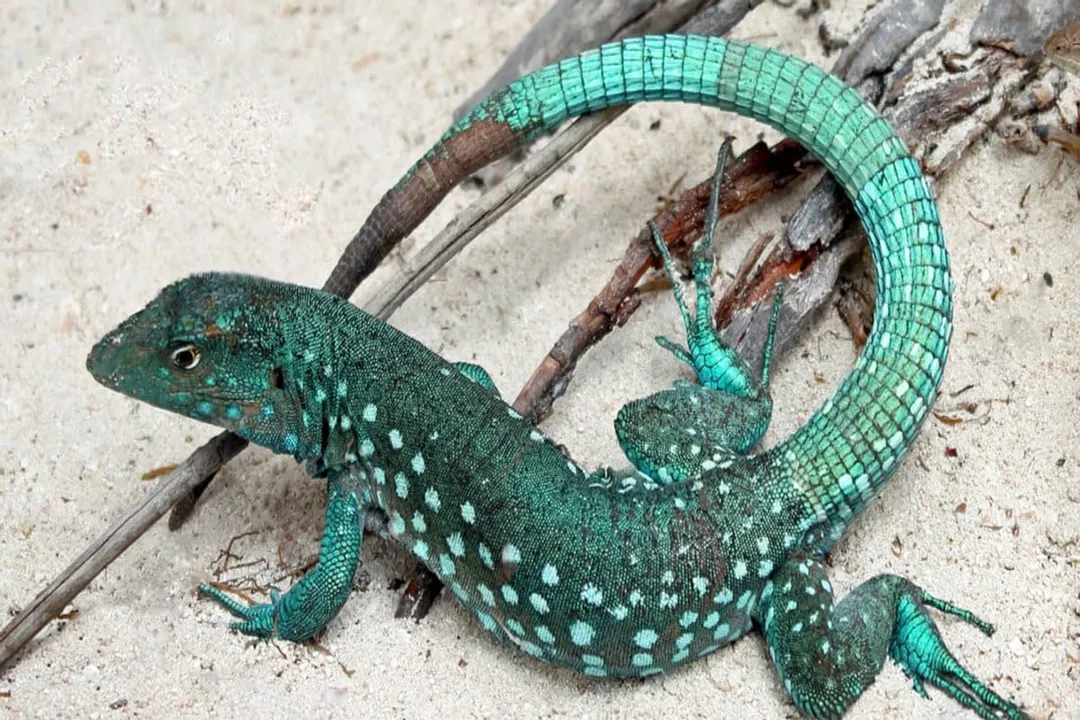
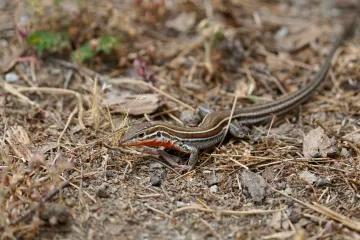
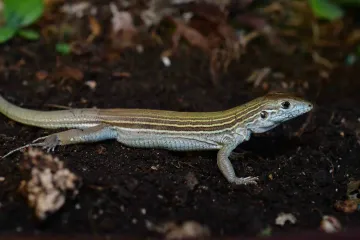
Whiptail lizards display considerable variation in appearance depending on the specific species and habitat, yet a common thread is the linear striping. The Desert Grassland Whiptail (Aspidoscelis uniparens) typically presents an olive-brown to black base coloration, overlaid with six distinct, cream or yellowish longitudinal stripes running from head to tail. Their undersides are generally white, sometimes showing a light blue tint on the throat and chin in adults. When they first hatch, however, a remarkable transformation occurs: their tails are a vibrant, bright blue. This striking azure fades to the olive-brown of adulthood as they mature.
The New Mexico Whiptail (Aspidoscelis neomexicanus) shares this general pattern, though some accounts specify it possesses seven pale yellow stripes, often featuring light-colored spots between them. Like their cousins, their hatchlings sport a blue or blue-green throat and a blue tail. A comparison of juvenile coloration across the group suggests that this temporary bright blue tail might function as a generalized, evolutionarily conserved lure, drawing a predator’s attention away from the vital body, regardless of the specific species' adult camouflage scheme.
The texture of their skin is also a key identifier. Whiptails have small, granular scales covering the upper portion of their bodies, which become progressively larger toward the tail. Conversely, the scales on their bellies are noticeably larger and smoother. Size estimates vary, but the Desert Grassland Whiptail has an average snout-vent length (SVL) around 52.8 mm (about 2.1 inches), with total lengths for the species ranging from about 7.0 to 13.3 cm (2.75 to 5.25 inches). The Giant Spotted Whiptail, conversely, can exceed a foot in total length.
# Genus Splits
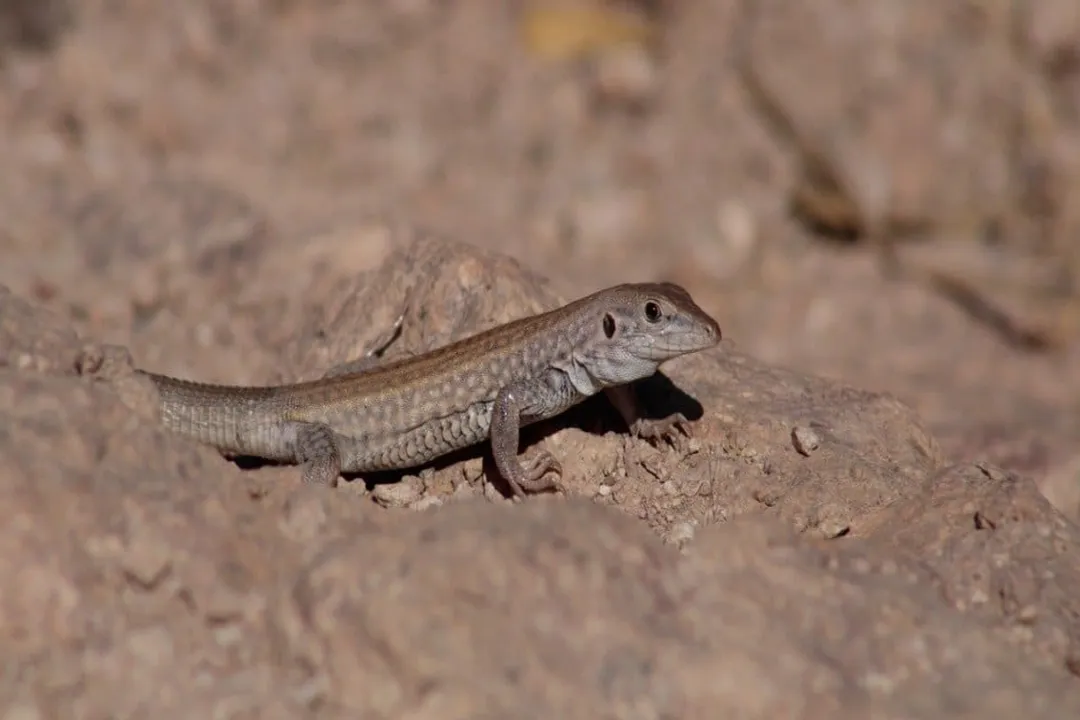
The scientific classification of these reptiles has seen changes, particularly concerning the shift of North American forms into the genus Aspidoscelis from the genus Cnemidophorus. This distinction, proposed by Lowe and Wright, generally separates the North American species, like A. uniparens, into Aspidoscelis, while South American taxa remain under Cnemidophorus. This change reflected a desire to group the North American clade, many of which utilize parthenogenesis, into a monophyletic genus. The family name, Teiidae, applies to all of them, though the etymology of the family name itself is noted as uncertain.
# Habitat Zones
Whiptails occupy a variety of temperate terrestrial biomes, primarily associated with arid and semi-arid regions. The Desert Grassland Whiptail is frequently found in desert or grassland environments, often preferring low valleys, gentle slopes, and areas characterized by sparse vegetation, where they can find refuge under dense shrubbery or rocks. Their elevation range is quite broad, reported between 1120 to 2100 meters.
The New Mexico Whiptail (A. neomexicanus) has a slightly different preference profile, favoring grasslands, riparian zones, and disturbed areas, often requiring loose, sandy soil. This species has managed to establish populations outside its native range, notably in eastern Arizona's Petrified Forest National Park and even in the Salt Lake City area of Utah, demonstrating adaptability to human-altered landscapes. An interesting environmental observation suggests that the range of A. uniparens may be actively expanding in some regions, possibly linked to impacts like overgrazing by livestock. An observer looking for signs of these active lizards in a mixed environment would likely benefit from focusing initial searches near natural drainage features or where sandy substrates are visible, as their need to burrow heavily influences their site selection.
# Prey Preferences

As opportunistic insectivores, whiptails spend their active hours foraging intensely, employing quick, darting movements and frequent pauses to survey their surroundings. Their diet leans heavily toward invertebrates, particularly those found beneath the surface. Termites frequently constitute a major component of the diet, sometimes up to 42.5% in one study, including arid land subterranean types. Beyond termites, they consume ants (including queen ants), beetles, grasshoppers, and butterflies or moths. Some species may occasionally supplement this carnivorous diet with small amounts of fruit or even prey on smaller lizards.
Foraging involves rooting through leaf litter and sand, often using their forked tongues to "smell" the ground and locate hidden prey via their Jacobson's organ. Their intense foraging activity can cease or become significantly less frequent when predators are detected nearby, likely because digging or rapid movement draws unwanted attention. When capturing prey, they generally use their jaws to disable it.
# Clonal Birth
One of the most fascinating aspects of whiptail biology, particularly concerning the Desert Grassland Whiptail (A. uniparens) and the New Mexico Whiptail (A. neomexicanus), is that they are entirely composed of females who reproduce asexually through parthenogenesis. This means eggs develop without fertilization.
These parthenogenetic species are often the result of past hybridization events between two different bisexual species. A. uniparens, for example, is believed to stem from a cross between A. inornata and A. burti, resulting in a diploid unisexual that then backcrossed with A. inornata to produce the triploid uniparens. Being triploid means they possess three sets of homologous chromosomes. The process they use to generate offspring involves a chromosome doubling after meiosis, allowing the resulting lizard to be a genetic clone of the mother, although the specific triplet pairing mechanism maintains a degree of genetic diversity not typically expected in purely asexual lines.
Even without sexual partners, females exhibit complex behaviors that mirror courtship in related sexual species. This pseudocopulation involves mounting, biting, and dominance displays between females. This behavior is critical, as it is thought to be necessary to trigger the hormonal changes required for ovulation and subsequent egg laying. Females are oviparous, laying clutches typically ranging from one to four eggs during the warmer months, usually late spring or early summer. For A. uniparens, clutch size correlates directly with the female's size, with larger lizards potentially laying four eggs versus two for smaller females. Incubation generally takes about two months, after which the young hatch precocial—meaning they are fully mobile and independent immediately upon emergence.
# Daily Habits
Whiptails are typically diurnal, spending their daylight hours active, though their exact schedule is influenced by local temperature extremes. In very hot desert climates, they may restrict activity to early mornings and late afternoons, taking a siesta during the peak heat of the day. They utilize burrows excavated in the soil not only for shelter at night but also to escape harsh weather and to deposit their eggs. They are generally solitary animals, spending their time actively foraging or basking in the sun, often fidgeting even while resting.
When moving, especially under cover or through leaf litter, their locomotion is characteristically jerky and energetic, a "start-stop" motion that can sometimes be heard by experienced observers. Their speed is a primary defense mechanism, with some species capable of reaching speeds up to 17 mph or even 24 mph, and they have been observed running upright on their hind legs to gain speed or visibility. When threatened, they prioritize sprinting toward the nearest cover or burrow. If captured, they possess the common lizard defense of tail autotomy (shedding the tail), which can regenerate later. Known predators across the different species include raptors like hawks, mammals like coyotes and foxes, and other reptiles such as leopard lizards.
# Status View
In terms of conservation, the Desert Grassland Whiptail Lizard (A. uniparens) is generally listed as Least Concern by the IUCN. Sources indicate that no major threats have currently been identified for this species, partly because much of its range overlaps with protected areas. However, the very nature of their asexual reproduction introduces a singular vulnerability: because they are essentially genetic clones, any single biological threat, such as a novel disease or a rapid environmental shift like climate change, could potentially jeopardize the entire all-female population simultaneously. This lack of genetic diversity, while permitting rapid colonization through parthenogenesis, represents a subtle, persistent risk factor not typically faced by sexually reproducing species that generate varied offspring each generation.
Related Questions
#Citations
Whiptail Lizard Animal Facts - A-Z Animals
Whiptails (Aspidoscelis spp.) - Desert Museum
Desert grassland whiptail lizard - Wikipedia
Cnemidophorus uniparens (Desert Grassland Whiptail)
New Mexico Whiptail - Facts, Diet, Habitat & Pictures on Animalia.bio
(species) aspidoscelis neomexicana - Utah Field Guides
Desert grassland whiptail lizard Facts for Kids