Whale Shark Evolution
The evolutionary story of the whale shark (Rhincodon typus) is one defined by successful specialization, rooted deep within the history of cartilaginous fishes. Sharks, as a group, boast an ancestry stretching back over 450 million years, predating the dinosaurs. [6] Yet, the whale shark itself, while clearly part of this ancient lineage, represents a relatively refined adaptation to a specific, massive dietary niche: filtering plankton. [1] Understanding its place requires looking both at the broader shark family tree and the specific, fragmented evidence left behind in the geologic record.
# Shark Lineage
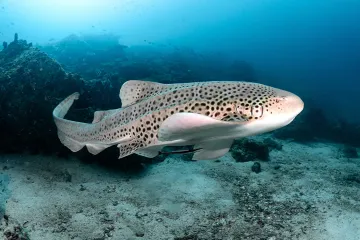
Sharks belong to the Chondrichthyes class, a diverse group characterized by skeletons made of cartilage rather than bone. [6] The whale shark fits into the order Orectolobiformes, commonly known as the carpet sharks, which also includes wobbegongs and zebra sharks. [1][2][10] This places Rhincodon typus alongside several bottom-dwelling or sluggish species, making its pelagic, filter-feeding gigantism even more distinct within the family. [10] The family Rhincodontidae, to which the whale shark belongs, is currently monotypic, meaning R. typus is the only recognized living species in its immediate family group. [1][10]
This placement within the Orectolobiformes is significant. While the order itself is ancient, the specific adaptations that led to the whale shark’s immense size and feeding mechanism must have evolved within this branch. [10] Some comparisons suggest that fossil relatives might have looked more akin to larger, modern-day carpet sharks, leading to difficulties in definitively tracing the evolutionary line through deep time when specimens are incomplete. [2]
# Fossil Evidence
The direct fossil record for the modern whale shark species is surprisingly sparse, which often frustrates paleontologists attempting to pinpoint its exact arrival date. [3] Unlike bony fish or terrestrial reptiles whose bones fossilize readily, the cartilaginous skeleton of sharks leaves behind fewer substantial markers. [6] Most evidence for ancient sharks comes in the form of teeth or vertebral centra. [3]
While some fossil teeth attributed to the genus Rhincodon have been recovered, definitively assigning them to the exact modern species, R. typus, is challenging. [3] Based on the morphological evidence from these remains, it is estimated that the genus Rhincodon has existed for at least 23 million years, dating back to the early Miocene epoch. [1][4] However, some research suggests that the evolutionary branch leading to the whale shark might be older still, possibly extending back 60 million years or more, placing its divergence near the beginning of the Cenozoic era after the extinction of many marine reptiles. [9] The discrepancy between the 23-million-year genus estimate and the 60-million-year potential divergence highlights the incomplete nature of the fossil archive for this specific group. [9]
The Pleistocene epoch, a time often associated with much larger ice ages and the rise of terrestrial megafauna, certainly featured whale sharks, showing that this immense filter feeder successfully navigated significant global climate shifts. [4] Considering the sheer scale of the whale shark, it's fascinating that while many contemporary megafauna (like some giant marine reptiles or large terrestrial mammals of the Cenozoic) succumbed to environmental pressures, the whale shark lineage seems to have perfected a low-energy, high-volume feeding strategy that allowed it to persist across major oceanic changes [integrated analysis].
# Specialized Anatomy
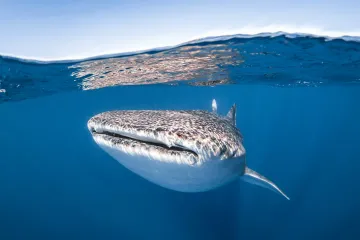
The defining feature of the whale shark’s evolution is its commitment to gigantism combined with a highly efficient, low-risk feeding strategy. Reaching lengths of up to 18 meters or more, it is the largest known fish species alive today. [1][2] This size demands a massive intake of calories, which it achieves not through predation, but through ram filtration. [7]
The anatomy reflects this singular purpose. The mouth of the whale shark is terminal (at the very front of the head) and enormous, capable of opening wide enough to take in several hundred liters of water per gulp. [8][1] This contrasts sharply with other large filter feeders, such as the basking shark, whose mouth is subterminal (located beneath the head). [1] This anatomical difference in mouth placement is a key evolutionary divergence within the group of giant filter-feeding sharks. [10]
Inside the mouth are specialized sieve-like structures called dermal denticles or gill rakers. [7][8] These structures are composed of modified dermal denticles that strain out small prey items like plankton, small crustaceans, and larval fishes from the water passing over the gills. [2][7] The filtering mechanism is extremely efficient, allowing the shark to process vast quantities of water to meet its energy requirements without engaging in high-speed pursuit of large prey. [7]
The evolutionary path toward this filtering capability must have involved a gradual enlargement of the mouth and refinement of the filtering apparatus over millions of years, likely from ancestors that were smaller, generalized bottom feeders within the Orectolobiformes [integrated analysis]. While we often look for the earliest direct fossils, the lack of abundant Rhincodon-specific remains prior to the Miocene might suggest that the transition to the gigantic, planktivorous form was a relatively late, albeit successful, adaptation within the older Orectolobiform order. Early relatives might have looked superficially like larger, modern-day bamboo sharks, making identification difficult in fragmented fossil beds.
# Evolutionary Adaptations
The size itself presents an evolutionary hurdle; maintaining such bulk requires enormous energy. The whale shark’s lifestyle—slow-moving, pelagic, and feeding on microscopic organisms—is a successful trade-off against the intense competition and high energy cost associated with hunting large prey, a path taken by many other extinct marine megafauna. [7]
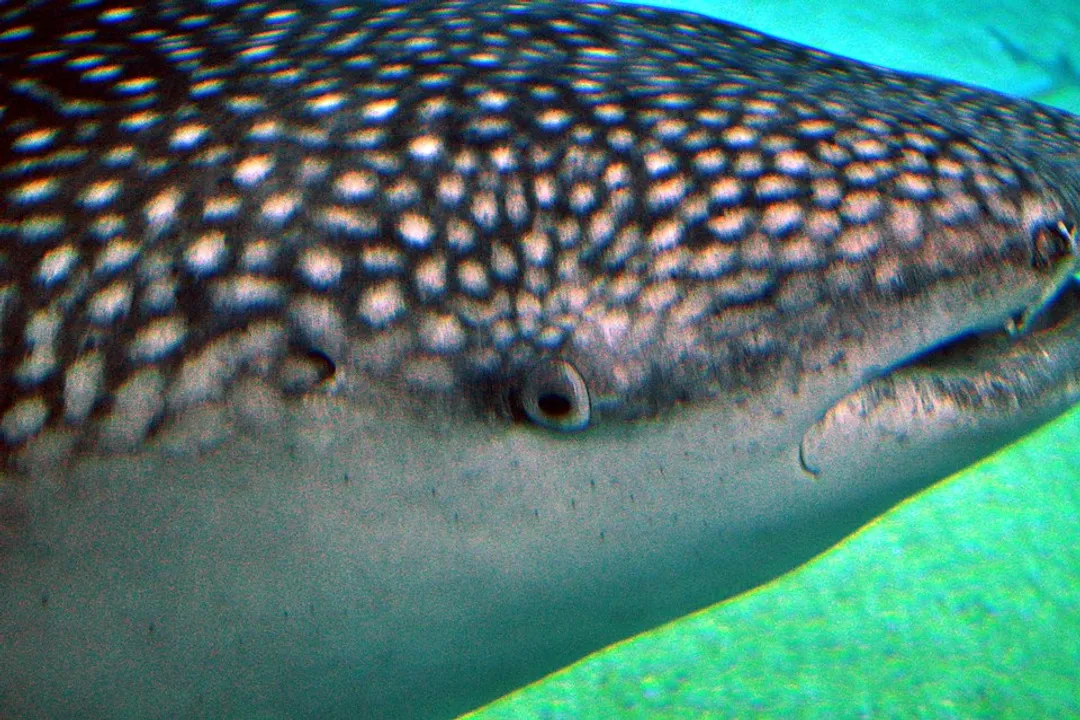
The distinctive pattern of white spots and stripes covering the dark skin is another element of its morphology. This pattern is believed to offer camouflage in the sun-dappled surface waters where it often feeds, confusing predators or prey looking up or down. [5] While this coloration pattern is a hallmark of the modern species, whether the exact configuration evolved concurrently with the giant size or developed later remains a subject of evolutionary study. [5] The sheer size likely provided sufficient protection against most historical predators once the shark reached adulthood, allowing it to focus its evolutionary resources on optimizing intake rather than defense. [1]
The genetic relationship places the whale shark closer to carpet sharks than to other filter feeders like the basking shark, which belongs to the Lamniformes order. [10] This indicates that gigantic filter feeding evolved independently in at least two different shark lineages—a classic example of convergent evolution driven by the availability of planktonic food resources in the open ocean. [10] The Rhincodon lineage settled on a unique path within the carpet sharks to achieve the same ecological role that the basking shark achieved via a different order. [1]
# Modern Persistence
The whale shark today continues to exhibit the traits that have allowed its lineage to endure for millions of years: slow growth, late maturity, large litter sizes, and a broad, warm-water distribution across the globe. [2][5] These traits, while historically successful in navigating ancient oceans, now place the species in a precarious position in the modern era, making it vulnerable to human pressures such as vessel strikes and entanglement, despite its size. [2] The evolution has equipped it for the long haul of geological time, but perhaps not for the sudden, sharp disruptions of the Anthropocene.
Related Questions
#Citations
Whale shark - Wikipedia
Whale Shark – Discover Fishes - Florida Museum of Natural History
Whale Shark Facts and Information: Rhincodon typus - Fossilguy.com
Is it true that the whale shark existed way before the Pleistocene?
Whale Sharks Through Time - ArcGIS StoryMaps
Shark evolution: a 450 million year timeline | Natural History Museum
The whale shark genome reveals patterns of vertebrate gene family ...
Whale Shark Anatomy — Marine Megafauna Foundation
The whale shark genome reveals how genomic and physiological ...
Evolutionary History and Relatives - Weebly