Whiptail Lizard Scientific Classification
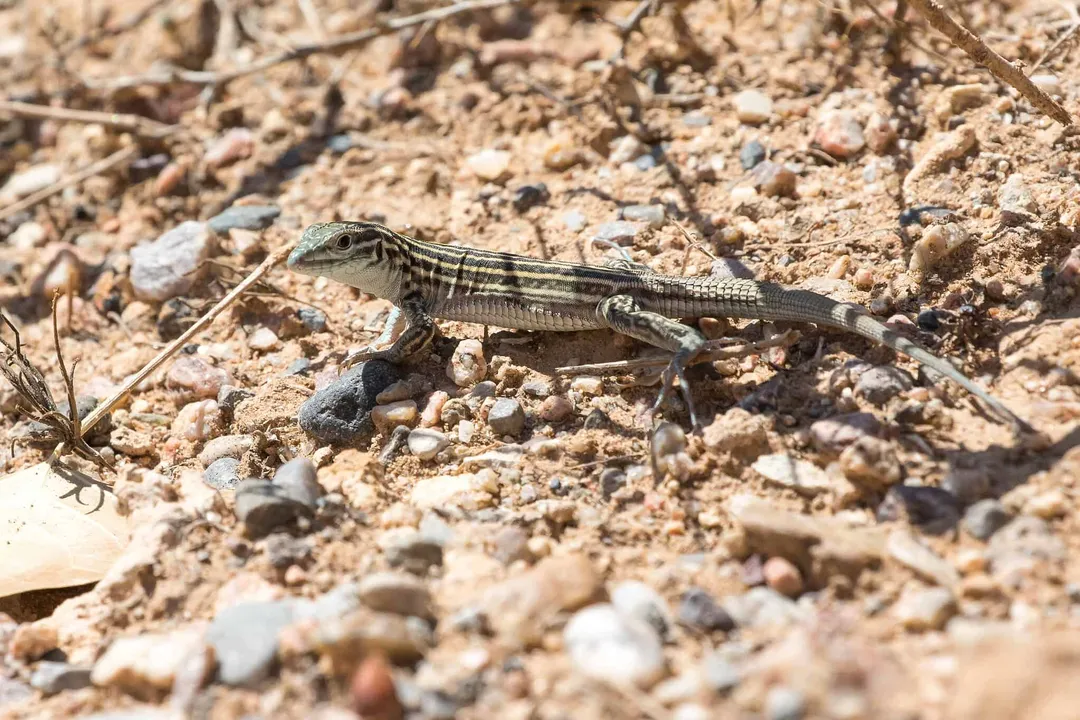
The family tree of the lizard known commonly as the whiptail reveals a fascinating story of scientific reclassification, particularly concerning the splitting of a very large genus. These lizards, celebrated for their speed and long, whip-like tails, belong generally to the family Teiidae. [7] The scientific journey to correctly position these reptiles involves moving down the hierarchy, starting broad and narrowing down to the specific species that captures our attention, like the Desert Grassland Whiptail Lizard. [1][9]
# Kingdom Phylum
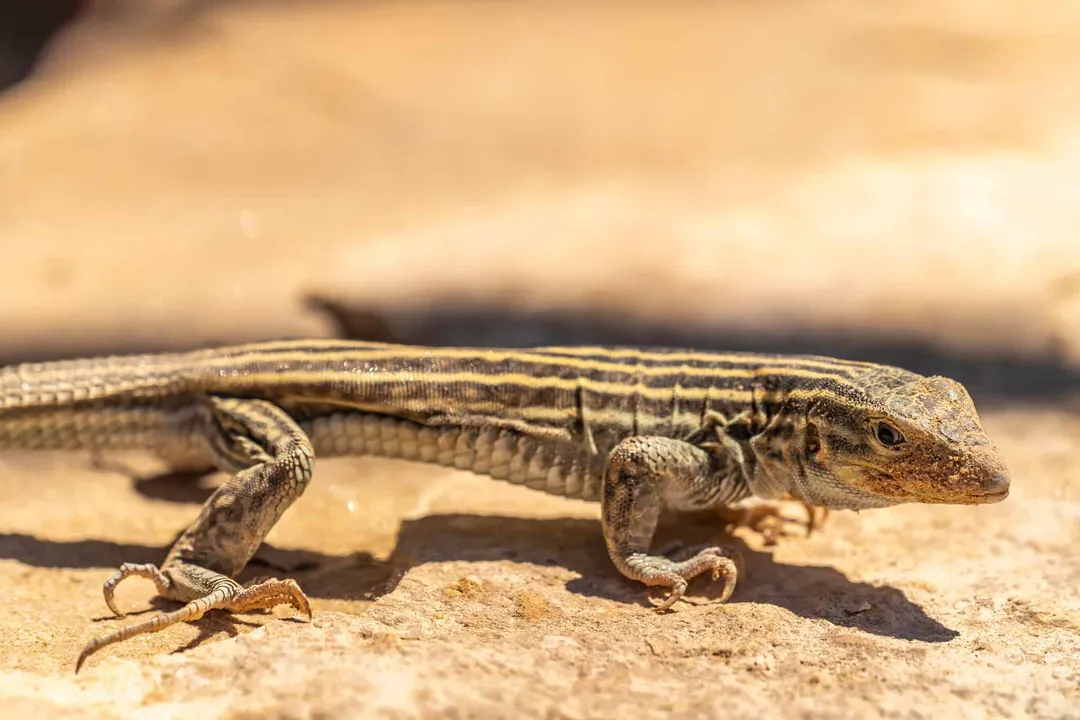
Beginning at the highest level of organization, all whiptails share the fundamental characteristics of animal life. They are classified within the Kingdom Animalia, placing them among multicellular, heterotrophic organisms. [8] Following this, they fall under the Phylum Chordata, which signifies the presence of a notochord at some stage of development, connecting them to vertebrates. [8] The Class is Reptilia, setting them apart as cold-blooded vertebrates that typically possess scales, breathing air through lungs. [8]
# Order Suborder
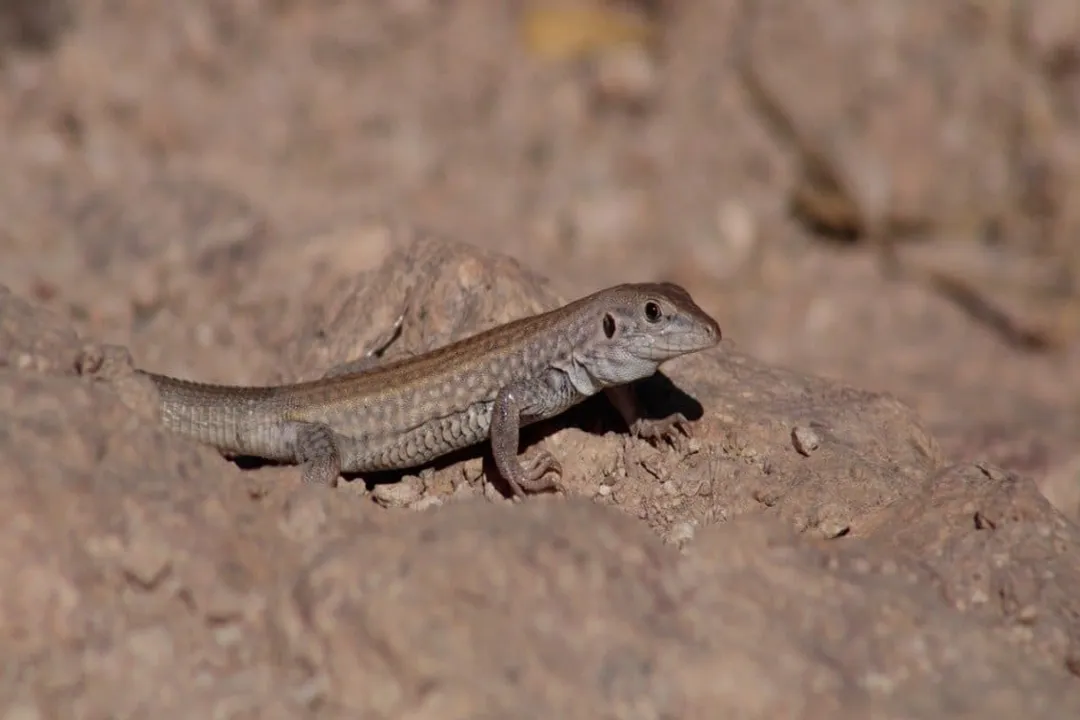
Within the reptiles, whiptails belong to the Order Squamata, which represents the scaled reptiles, encompassing lizards and snakes. [8] This is the largest order of reptiles, highlighting the sheer diversity encompassed within this group. They are further categorized within the Suborder Lacertilia (or Sauria), which includes virtually all lizards, distinguished from snakes primarily by the presence of external ear openings and movable eyelids, characteristics shared by whiptails. [7]
# Family Placement
The defining classification step that groups the various whiptail species together is the Family Teiidae. [7] Lizards in this family are generally characterized by their lizard-like appearance, but their overall morphology is quite diverse. [4] A defining feature often noted for many whiptails, which are members of this family, is their incredibly fast locomotion, a necessity in their often arid and open habitats. [7] Interestingly, within the family Teiidae, there is a notable division that caused significant taxonomic reshuffling for whiptail classification in recent decades: the split between the genera Cnemidophorus and Aspidoscelis. [1][3]
# Taxonomic Shift Insight
The decision to split the former massive genus Cnemidophorus into several smaller genera, most notably Aspidoscelis, was driven by deeper genetic sequencing that revealed non-monophyletic groups within the original classification. [1] For the casual observer or even field herpetologist, this change can be confusing, as older field guides might list a species under the former name while newer literature uses the latter. Consider the Desert Grassland Whiptail Lizard; depending on the source or date of publication, it might be referenced as Cnemidophorus uniparens or Aspidoscelis uniparens. [1][2] Recognizing this historical movement within taxonomy helps in cross-referencing older natural history notes with modern ecological studies, which is a practical necessity for anyone tracking long-term population data.
# Genus Distinctions
The genus level is where the whiptails really start to diverge into distinct evolutionary lines, leading to the split that has already been mentioned. [1] The older classification lumped many species under Cnemidophorus, but modern consensus often places many North American species into the genus Aspidoscelis. [3][5][6]
For example, the Arizona Whiptail is now recognized as Aspidoscelis arizonae, [6] and the New Mexico Whiptail as Aspidoscelis neomexicana. [5] In contrast, some Southern and Mexican species, or those maintaining the older name, remain within Cnemidophorus, such as Cnemidophorus uniparens, the Desert Grassland Whiptail Lizard. [2]
| Species Common Name | Current Genus Placement | Former Genus Placement (often seen) | Geographic Context |
|---|---|---|---|
| Desert Grassland Whiptail | Aspidoscelis (or Cnemidophorus) [1][2] | Cnemidophorus [2] | Southwestern US, Mexico [1] |
| Arizona Whiptail | Aspidoscelis [6] | Cnemidophorus [6] | Arizona [6] |
| New Mexico Whiptail | Aspidoscelis [5] | Cnemidophorus [5] | Utah, New Mexico [5] |
| Texas Spotted Whiptail | Aspidoscelis [3] | Cnemidophorus [3] | Texas (as A. gularis) [3] |
The sheer number of species within the overall whiptail group—sometimes exceeding 50 recognized forms—makes the genus assignment critically important for identification. [7]
# Species Deep Dive
To illustrate the classification in practice, examining a few specific examples provides necessary clarity.
# Aspidoscelis gularis
The classification for the Texas Spotted Whiptail, sometimes referenced as Aspidoscelis gularis, [3] shows a species complex that requires careful placement. NatureServe classifies this taxon globally as G5 (Secure) but notes that its classification within Aspidoscelis is subject to ongoing review. [3] This highlights that even once a genus split occurs, species boundaries themselves can be fluid as new morphological or genetic data emerges. This specific species is part of a group known for having distinct spotting patterns, often used as a key characteristic when direct genetic testing is unavailable. [4]
# Cnemidophorus uniparens
The Desert Grassland Whiptail Lizard, Cnemidophorus uniparens, presents a particularly interesting case study regarding classification. [1][2] This lizard is famous in certain areas for being parthenogenetic, meaning some populations reproduce asexually through cloning, without fertilization. [1][2] While this biological phenomenon doesn't change its scientific classification at the familial or generic level, it is a major biological characteristic often noted alongside its taxonomy. The fact that its genus name is still sometimes listed as Cnemidophorus even when other close relatives moved to Aspidoscelis suggests that the evolutionary history of this specific lineage required a slightly different, or perhaps slower, re-assignment process across the scientific community. [2]
# Aspidoscelis neomexicana
Moving to the Utah Field Guide's example, Aspidoscelis neomexicana is clearly placed within Aspidoscelis. [5] This species, like others in the genus, exhibits the general whiptail body plan: slender build, pointed snout, and a tail that is often longer than the body. [5] Their classification within Aspidoscelis often groups them with other primarily North American, diplosporous (two-spored) species, distinguishing them from the Cnemidophorus group which leans more heavily toward South American distribution, though exceptions always exist in widely distributed groups. [1]
# Original Implication
When comparing the general characteristics of the species placed in Aspidoscelis (like A. arizonae or A. neomexicana) versus those sometimes retained in Cnemidophorus (like C. uniparens), one might observe subtle differences in preferred microhabitat that align with their updated generic grouping. While both inhabit arid lands, the Aspidoscelis group, particularly in the northern ranges like Utah, often favors more sparsely vegetated, rocky slopes or open desert scrub, [5] whereas the Cnemidophorus group might show a slightly broader tolerance for riparian or grassland edges. [2] This correlation between finer habitat niches and updated genetic groupings suggests that the traits driving the genus separation might also influence ecological selection pressures differently across the diverging lineages.
# Taxonomic Hierarchy Summary
For clarity, a specific classification line using the Desert Grassland Whiptail as the primary model, despite the Cnemidophorus/Aspidoscelis ambiguity, helps solidify the structure:
| Rank | Classification |
|---|---|
| Kingdom | Animalia [8] |
| Phylum | Chordata [8] |
| Class | Reptilia [8] |
| Order | Squamata [8] |
| Suborder | Lacertilia [7] |
| Family | Teiidae [7] |
| Genus | Aspidoscelis or Cnemidophorus [1][2] |
| Species | uniparens (for Desert Grassland) [2] |
It is vital to remember that for many species, the most current scientific consensus favors the Aspidoscelis designation for those formerly grouped in the Cnemidophorus complex in the United States. [1][3][5][6]
# Authority and Trust in Classification
The scientific community relies on institutions like NatureServe to maintain current statuses based on the best available taxonomic authority. [3] When a species status is listed, such as the Global Conservation Status Rank (G-Rank), it confirms the accepted nomenclature at that time. [3] In the case of Aspidoscelis gularis, a G5 rating means the species is secure globally, but this status is inherently tied to its classification as Aspidoscelis gularis. [3] Should further evidence push this species back into a revised Cnemidophorus or a new genus, the associated conservation data would need to be carefully cross-referenced with its new designation to maintain scientific trust and continuity in monitoring efforts. This interdependence between taxonomy and conservation status underscores why accurate classification is more than just academic; it affects how we manage and protect these fascinating, fast-moving lizards.
Related Questions
#Citations
Desert grassland whiptail lizard - Wikipedia
Cnemidophorus uniparens (Desert Grassland Whiptail)
Aspidoscelis gularis - NatureServe Explorer
Whiptail Lizard; Reptile; US & Mexico - Animania Daily
(species) aspidoscelis neomexicana - Utah Field Guides
Aspidoscelis arizonae - The Center for North American Herpetology
Whiptail Lizard Animal Facts - A-Z Animals
Aspidoscelis uniparens (Desert grassland whiptail lizard) | Taxonomy
Desert grassland whiptail lizard Facts for Kids