Do monitor lizards eat small dogs?
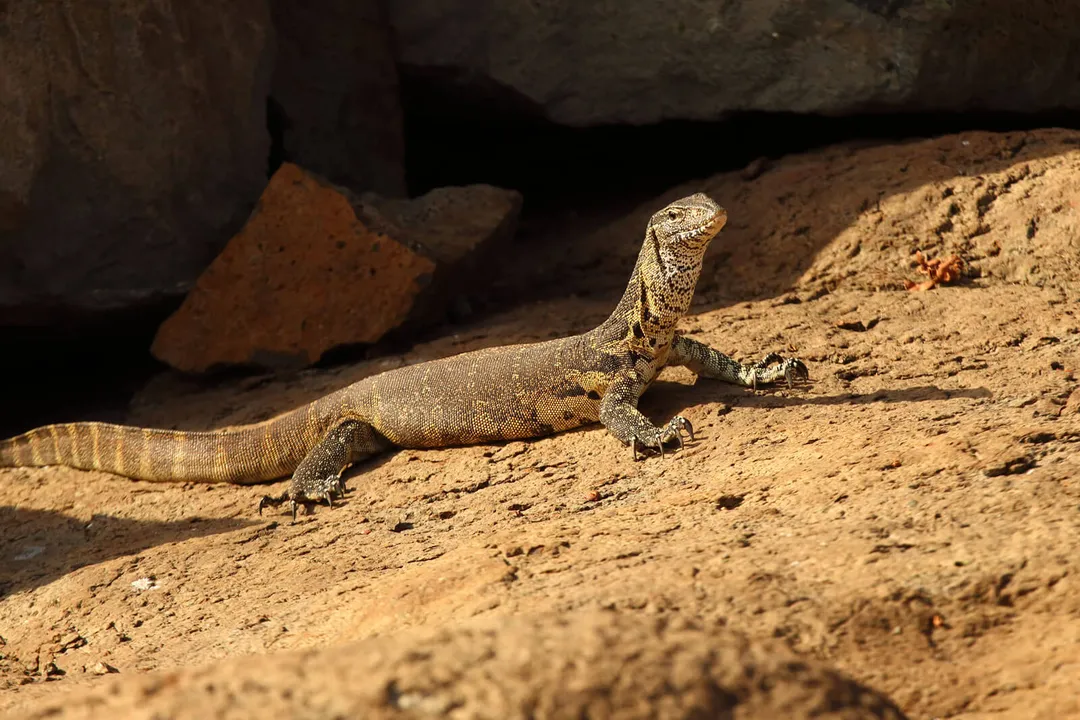
The interaction between domestic canines and large, wild reptiles is a subject that frequently generates concern among pet owners, particularly when species known for powerful predatory instincts, such as monitor lizards, are involved. When examining whether monitor lizards pose a threat to small dogs, the available information strongly suggests that cohabitation is highly inadvisable, especially with larger species. [2] The sheer size differential, combined with the inherent predatory drive of these reptiles, creates a scenario where a dog, especially a small one, is at significant risk of attack, injury, or death. [1]
# Predation Likelihood
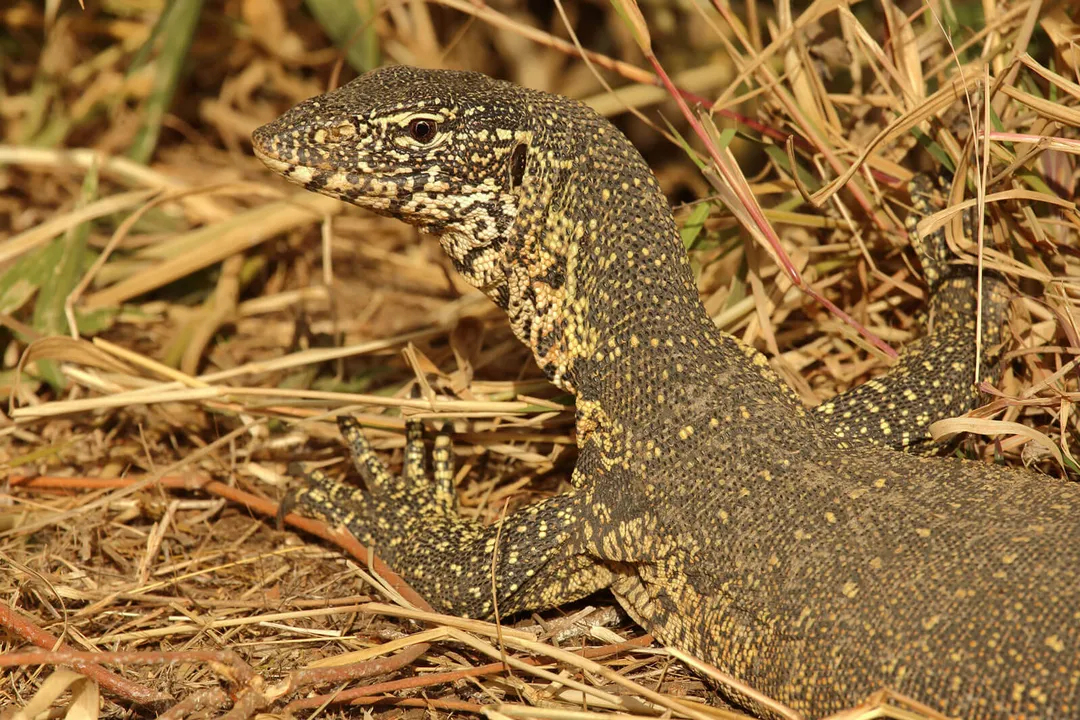
Monitor lizards are carnivores, and their diet in the wild encompasses a wide range of prey items depending on the species, often including eggs, smaller reptiles, birds, and mammals. [4] A small dog or puppy fits squarely within the potential prey spectrum for a mature, large monitor lizard. While direct, documented cases of wild monitors hunting and consuming domestic dogs are difficult to pinpoint in scientific literature, anecdotal evidence from owners and animal handlers dealing with large captive species strongly warns against mixing them with small household pets. [2][3]
Owners who keep very large monitors, such as Nile monitors or large Asian species, consistently emphasize that any unsecured interaction with small animals is a gamble where the reptile holds all the advantage. [3][5] The lizard’s powerful jaws and sharp claws are capable of inflicting severe trauma rapidly. Even if the dog is not intended as food, a defensive or predatory strike from a large monitor can be fatal to a small companion animal. [1]
# Owner Concerns
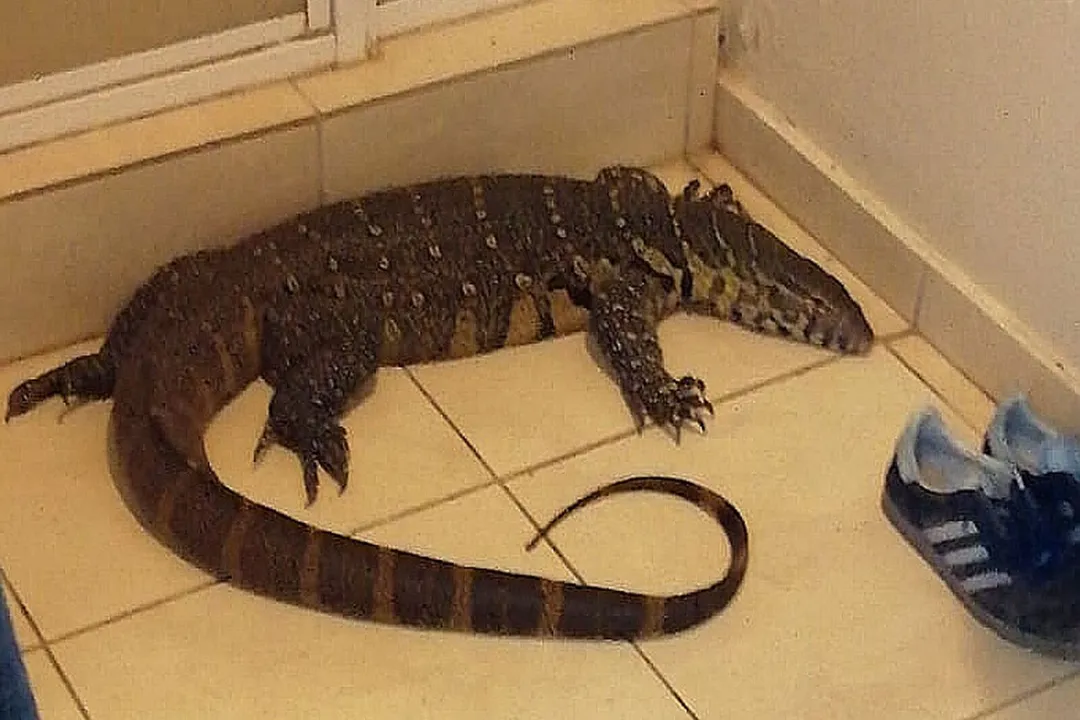
Discussions among reptile enthusiasts and pet owners highlight a clear division based on the size of the lizard being kept. For owners of smaller species, such as Ackie monitors (also known as spiny-tailed monitors), the risk is perceived as much lower, though caution is still advised. [4] However, when large monitors enter the conversation, the consensus shifts dramatically toward absolute separation. [3][5]
One common theme noted in community discussions is that even if a monitor has been raised alongside a dog and seems docile, latent instinct remains a major factor. [2] A sudden movement, a yelp, or even the scent of the dog can trigger a feeding response or territorial aggression in the monitor. It is not necessarily about the lizard being "mean," but rather responding to a primal stimulus. [1] Furthermore, the intelligence often attributed to monitor lizards—noting their ability to learn routines or solve simple puzzles—does not override the hard-wired predatory sequence when presented with appropriate-sized prey. [6] This is a crucial distinction; high intelligence in a predator means it might be better at capturing prey, not that it suppresses the urge to capture it when hungry or startled.

# Species Size Matters
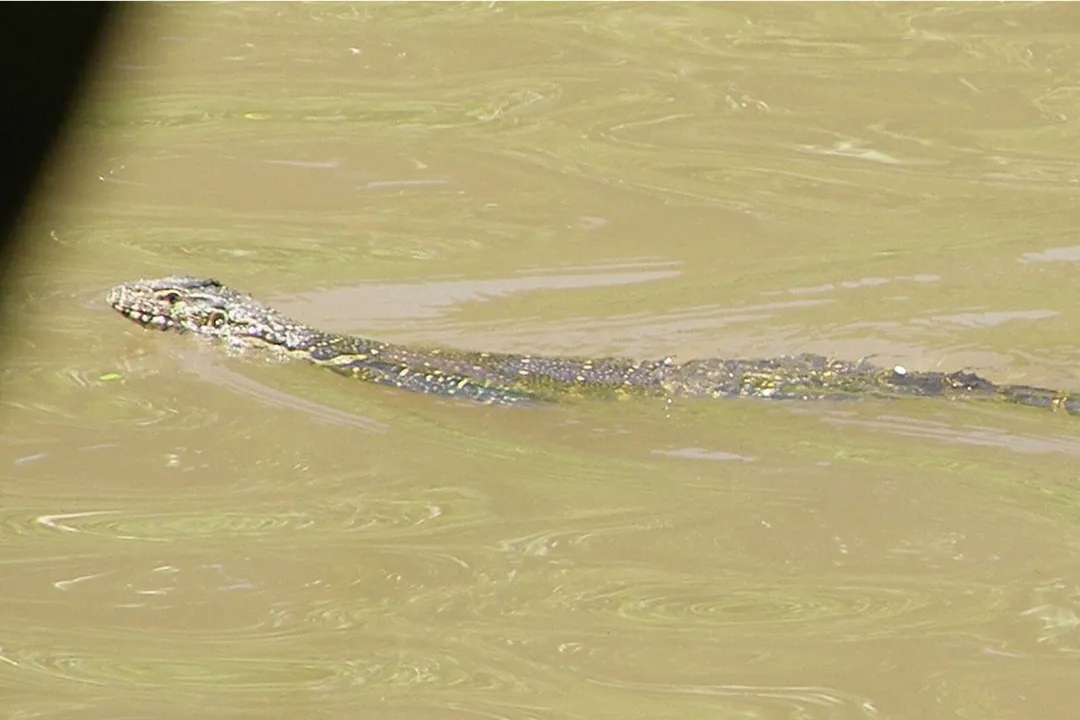
The term "monitor lizard" covers over 80 species, ranging from the tiny Short-tailed Monitor (less than a foot long) to the massive Asian Water Monitor or Crocodile Monitor, which can exceed six feet in length. [4] This drastic size range fundamentally changes the risk assessment.
| Species Type | Approximate Adult Size | Risk to Small Dog | General Management Note |
|---|---|---|---|
| Small (e.g., Ackie) | Under 2 feet | Low, but still a bite risk | Less likely to view as prey; more likely to defend itself. [4] |
| Medium (e.g., Savannah) | 3–4 feet | Moderate to High | Large enough for serious injury if provoked or acting on instinct. |
| Large (e.g., Nile, Water) | 5+ feet | Extreme | Potential predator for even medium-sized dogs; should never be unsupervised with any small pet. [2][5] |
If one were to compare the potential danger of a monitor lizard to other common reptile pets, one source notes that certain lizards, like bearded dragons, are often cited as being much more compatible or manageable around dogs than monitors are. [7] This comparison underscores that not all lizards present the same level of inherent danger; monitors possess a greater natural inclination towards predation that makes them outliers. [7]
# Managing Household Conflict

For those who own both a monitor lizard and a dog, regardless of the dog's size, managing the environment requires meticulous planning that goes beyond simple supervision. Merely being present in the same room while both are secured is not enough to guarantee safety over the long term. [5]
A sound strategy involves strict environmental partitioning. If a large monitor is housed, its enclosure must be virtually impenetrable, perhaps even considering secondary containment measures for the enclosure itself, especially if the dog is prone to persistent investigation or pawing at the glass. [3] When the animals are out for exercise or handling, the other must be securely confined to a separate, completely inaccessible room. Even brief moments of unattended access can lead to tragedy. [5]
One practical consideration for long-term safety involves understanding the lizard's feeding schedule. If a monitor is heavily fed, its immediate predatory drive might be temporarily reduced, but this should never be relied upon as a safety measure; it merely shifts the unpredictability window. [1] The owner must accept that they are managing a powerful predator and must always operate under the assumption that the worst-case scenario is possible if security protocols lapse for even a second.

# Instinct Versus Coexistence
While the general advice points to separation, the notion of "getting along" itself requires definition. If "getting along" means the animals can exist in the same general vicinity without fighting, some owners might report limited success with careful management. [3] If "getting along" means they can be trusted off-leash together, the answer, particularly for small dogs and medium-to-large monitors, is a definitive no.
It is worth noting that a dog's reaction is also a factor. A small dog that barks aggressively, chases, or views the lizard as a toy might provoke a defensive or predatory response from the monitor more quickly than a submissive or uninterested animal. In essence, the interaction becomes a dynamic where the dog's behavior dictates the timing, but the monitor's predatory capability dictates the outcome. [1] The goal should not be to teach them to be friends, but to engineer an environment where they can never physically meet unless by owner design under controlled circumstances. This level of security requires constant vigilance, far exceeding the standard precautions taken for typical multi-pet households. [2]
#Videos
Will my Monitor Lizards EAT Each Other or BREED? - YouTube
Related Questions
#Citations
Do monitor lizards get along with dogs? What dangers does ... - Quora
MONITOR LIZARDS & DOGS Monitor Lizards and dogs do not mix ...
Owning small dogs/ cats with large monitors under the same roof. Is ...
Monitor lizards | Kloof Conservancy The Leopard's Echo
3 Lizards Which Make Great Friends For Dogs
Will my Monitor Lizards EAT Each Other or BREED? - YouTube