How is the diversification of asexual *Aspidoscelis* lineages typically represented phylogenetically?
Answer
An evolutionary network
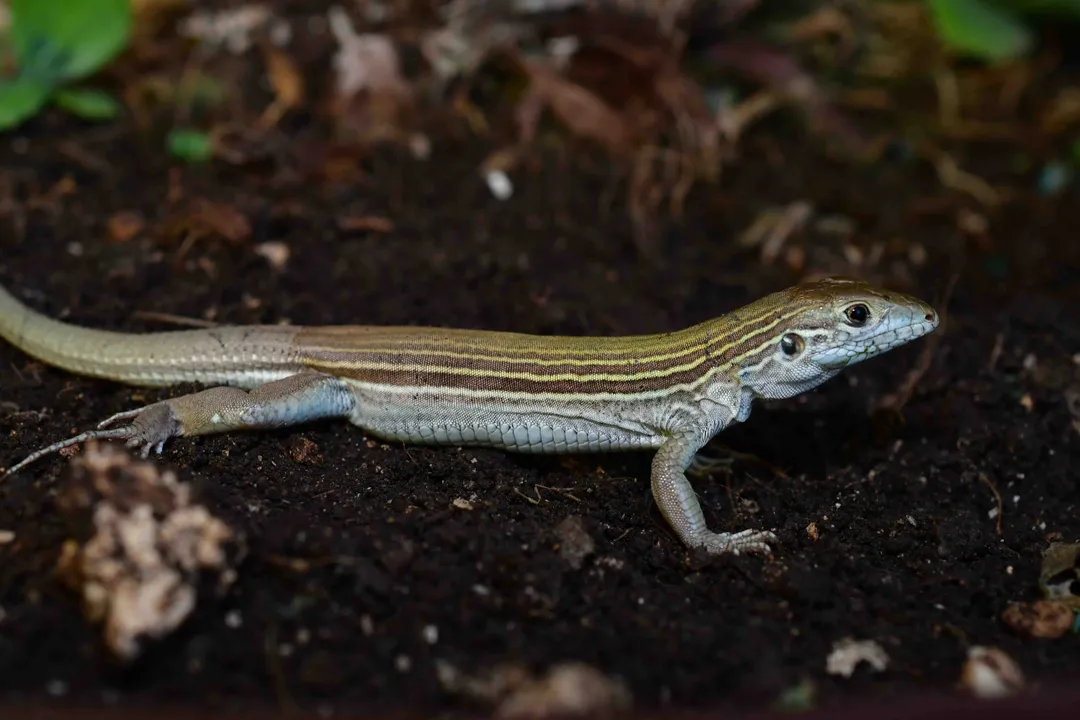
The evolutionary history of *Aspidoscelis* is not accurately depicted by a traditional, neat phylogenetic species tree, which implies divergence through simple branching splits. Because asexual lineages reproduce clonally, their diversification is characterized by the proliferation and persistence of successful clones. Furthermore, asexual lineages can occasionally merge or arise independently from different sexual ancestors multiple times. This complex pattern, which reflects independent origins and the reticulated (net-like) persistence of specific clonal lines, is best visualized and represented as an evolutionary network rather than a simple bifurcating tree structure.
Related Questions
What reproductive strategy defines the *Aspidoscelis* whiptail lizards?What process founded the parthenogenetic lineages of *Aspidoscelis*?What specific mechanism of parthenogenesis is employed by many *Aspidoscelis* species?What structural change results from the cessation of recombination in asexual *Aspidoscelis*?How is the diversification of asexual *Aspidoscelis* lineages typically represented phylogenetically?What ploidy state characterizes the asexual species *Aspidoscelis neomexicanus*?What behavior might asexual *Aspidoscelis* females engage in to stimulate ovulation?What genomic feature may compensate for the lack of recombination in long-term surviving *Aspidoscelis* asexual lineages?From which genus did the genus *Aspidoscelis* originate via splitting?What is the key demographic advantage of asexuality in low-density *Aspidoscelis* populations?What function is suggested for the allopolyploidy events following hybridization in *Aspidoscelis*?