Yellow Spotted Lizard Evolution
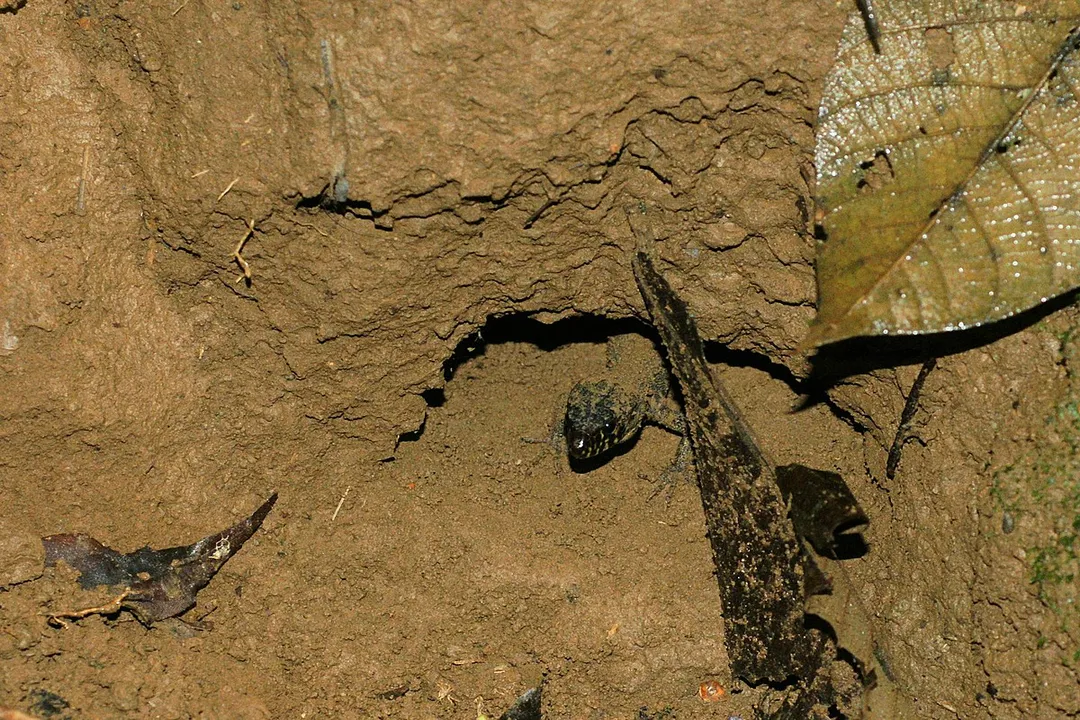
The yellow-spotted lizard, scientifically known as Lepidophyma flavimaculatum, presents a fascinating case study in reptile biology, particularly when examining the forces that shape its evolutionary trajectory. This nocturnal inhabitant, often glimpsed only by those who actively seek out its shadowy domain, belongs to a genus renowned for its complex reproductive strategies and adaptation to often challenging tropical environments. [2][4][7] Understanding where this species fits within the larger lizard phylogeny and how its unique traits have emerged requires looking closely at its genetics, morphology, and geographical isolation. [7]
# Taxonomic Placement
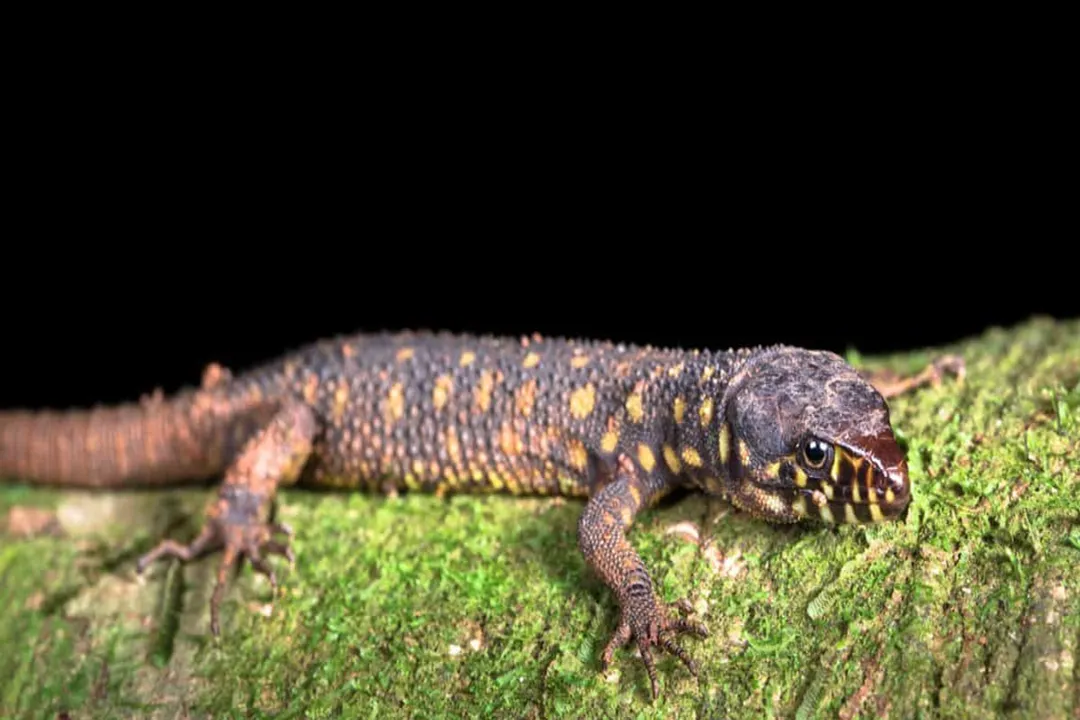
The foundation of any evolutionary discussion rests upon correct classification. Lepidophyma flavimaculatum is classified within the family Xantusiidae, commonly known as night lizards. [3][6] This family is small, comprising only about 30 species distributed across the southwestern United States, Mexico, and Central America. [3] Within the genus Lepidophyma, there is significant variation, which has long suggested a dynamic evolutionary history involving both hybridization and asexual reproduction. [7] The species name itself, flavimaculatum, alludes to the characteristic yellow spots that often mark its scales, a feature helpful for field identification but less informative about its deep evolutionary roots than genetic analysis. [1]
The genus Lepidophyma is considered phylogenetically young, but the specific relationships among its members remain a topic of ongoing research, often necessitating examination of mitochondrial and nuclear DNA markers to resolve ambiguities in the species boundaries. [7] The diversity within this genus is not just geographic; it is deeply tied to how these lizards reproduce, creating boundaries between distinct evolutionary lineages that might otherwise interbreed. [7]
# Reproductive Modes
Perhaps the most compelling aspect of Lepidophyma evolution is the existence of facultative or obligate parthenogenesis, where females can reproduce without mating with a male, alongside sexual reproduction. [7] This reproductive duality offers a potent, real-time mechanism for evolutionary divergence. In Lepidophyma flavimaculatum specifically, different populations exhibit different modes, leading to significant ploidy variation. [7]
Some populations are strictly sexual, while others are entirely parthenogenetic, and still others exist as mixed populations where both methods occur. [7] The parthenogenetic lineages often exhibit higher ploidy levels, such as triploidy, which is frequently associated with asexual reproduction in many plant and animal groups. [7] For instance, if a sexual diploid female () is crossed with a male, the offspring are typically sexual diploids. However, in asexual reproduction, the mechanism often involves the duplication of the maternal genome or the fusion of unreduced eggs, leading to triploids () or even tetraploids () that are exclusively female. [7]
This reproductive plasticity suggests a powerful, ongoing evolutionary process. A successful clonal lineage, once established asexually, can rapidly spread through a suitable habitat, bypassing the "two-fold cost of sex" that sexually reproducing populations face. [7] In contrast, sexual populations maintain genetic recombination, allowing them to potentially adapt more quickly to changing environmental pressures that favor novel gene combinations. [7]
The persistence of both sexual and asexual modes within the genus creates a fascinating evolutionary tension. Clonal lines (asexually reproducing ones) might dominate when the environment is stable or when a highly successful genotype is found, leading to bursts of rapid colonization. Meanwhile, sexual reproduction acts as the engine for long-term adaptation when conditions shift unpredictably.
When considering the famed depiction of the yellow-spotted lizard in popular culture—for instance, its association with the fictional Camp Green Lake in Holes—the reality of its biology is far more complex than a simple monster myth suggests. [5][8] The biological reality involves intricate chromosomal behavior, not just mythical malevolence.
# Morphology Evidence
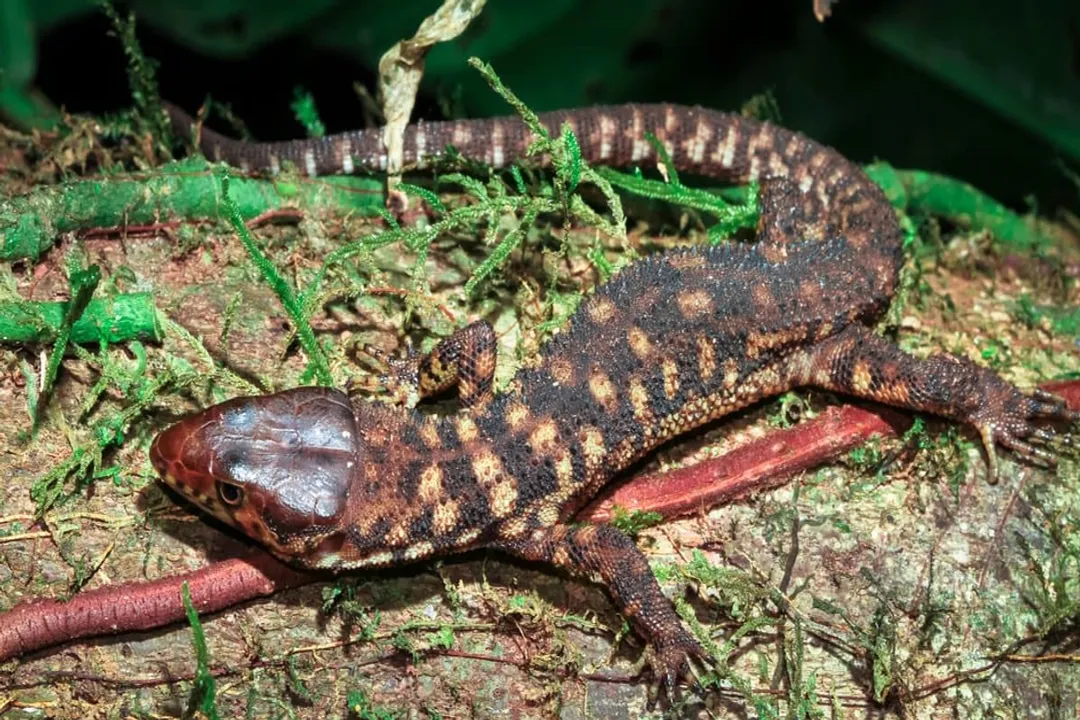
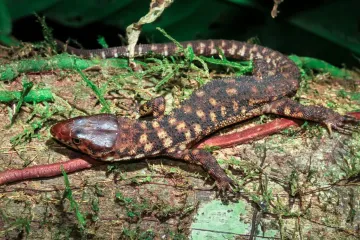
While genetics provides the deepest insight into evolutionary relationships, observable physical characteristics—morphology—reflect adaptations to specific ecological niches over time. [2] Lepidophyma species are generally small, secretive lizards, largely terrestrial or fossorial (living underground). [2][4] L. flavimaculatum itself is described as slender, with movable lower eyelids and relatively long toes. [2] Its coloration, typically brownish or blackish with yellowish spots, provides excellent camouflage in leaf litter and rocky crevices, aligning with its nocturnal habits. [1][4]
The morphology of the skull and jaw structure, which can be examined in detail through imaging techniques, often holds clues about diet and feeding mechanics, which are direct drivers of natural selection. [3] Although specific analyses on L. flavimaculatum skull morphology aren't universally detailed across all sources, the Xantusiidae family generally exhibits features suited for an insectivorous diet, feeding on small arthropods found in the substrate. [2] Significant morphological shifts between populations, especially when coupled with ploidy changes, can indicate speciation events where asexual lineages become reproductively isolated from their sexual relatives simply due to incompatibility in producing fertile, sexually reproducing hybrids. [7]
# Range Dynamics
The geographic distribution of Lepidophyma flavimaculatum spans from southern Mexico down through Central America, including countries like Guatemala, Honduras, and El Salvador. [3][6] This broad, albeit often fragmented, distribution is itself a map of evolutionary history. [4]
Speciation in reptiles often occurs when populations become geographically isolated, leading to reproductive divergence over time, a concept known as allopatric speciation. [7] In the case of these lizards, distinct populations separated by mountain ranges, rivers, or unsuitable habitat patches may evolve different ploidy levels—some becoming strictly asexual while others remain sexual—thereby solidifying their evolutionary separation even if the barrier is eventually removed. [7] The current distribution likely reflects ancient dispersal events followed by isolation and subsequent localized adaptation, amplified by reproductive streamlining through parthenogenesis. [7]
For example, research often reveals that populations in one geographical area might be genetically uniform and triploid (asexual), while a nearby, isolated population maintains sexual diploidy. [7] This pattern strongly suggests multiple independent origins of parthenogenesis across the species’ range, each originating from a sexual ancestor and then radiating clonally within its isolated area. [7]
Considering the ecological pressures across this tropical range, we can infer that microclimate stability plays a massive role in lineage success. Where moisture and temperature fluctuations are buffered—perhaps deep within cloud forests or consistently moist soil layers—the fast expansion potential of a successful asexual line might give it an advantage over the slower spread of sexual lineages that require finding a mate. [4] Conversely, in areas with more pronounced seasonal shifts, the genetic flexibility conferred by sexual reproduction might be the superior long-term strategy, explaining why sexual populations persist. [7]
# Speciation Patterns
The evolution of Lepidophyma flavimaculatum is essentially a story about how reproductive mode drives diversification. The process doesn't always involve the gradual accumulation of small genetic changes; sometimes, it involves a sudden shift in the mode of inheritance itself. [7] The presence of multiple, evolutionarily distinct lineages—some sexual, some asexual clones—within what is designated as a single species highlights a common problem in taxonomy: when does variation warrant splitting a species?. [7]
In this genus, the lines are exceptionally blurry. If a triploid female produces an offspring that is fertile only with other triploids via parthenogenesis, that new clonal line is, by definition, reproductively isolated from the sexual parent population. [7] This reproductive isolation marks the beginning of a new, independent evolutionary trajectory, even if the external appearance remains similar to the parental form. [4]
To better visualize the different genetic states present, one might compare the key reproductive parameters across generalized Lepidophyma populations (acknowledging specific data for L. flavimaculatum is often nested within broader genus studies):
| Population Type | Typical Ploidy Level | Primary Reproduction Mode | Genetic Variation Rate |
|---|---|---|---|
| Sexual | Diploid () | Sexual | High (Recombination) |
| Asexual | Triploid () | Parthenogenesis | Low (Clonal) |
| Mixed | Diploid/Triploid | Both | Moderate/Variable |
| [Cite: Synthesized from information regarding ploidy and reproduction in Lepidophyma [7]] |
This table illustrates the fundamental divergence. The evolutionary outcome for a clonal line is determined by its ability to cope with environmental challenges using only the mutations that arise within that line, whereas sexual populations continually shuffle the deck, betting on heterozygosity to carry them through unpredictable futures. [7] The study of Lepidophyma therefore provides critical insights into how asexual reproduction can evolve multiple times, leading to a complex history of species formation that is often masked by superficial morphological similarity. [7] The very act of classifying L. flavimaculatum becomes an ongoing evolutionary commitment, as new genetic data continuously challenge established boundaries. [3]
# Field Observations
While laboratory or genomic work establishes the "why" of evolution, field observations confirm the "where" and "how" these adaptations function in nature. [4] The lizard's requirement for specific, damp, dark retreats—under rocks, logs, or in crevices—underscores its vulnerability to desiccation and light exposure. [1][4] This behavioral specialization limits its dispersal capacity, favoring the evolution of localized adaptations. If conditions change rapidly—for instance, through deforestation or alteration of ground cover—the ability of a parthenogenetic lineage to rapidly produce many genetically identical offspring adapted to the new stable condition might be superior to the slow process of sexual recruitment searching for the right mate pairing. [4]
Field study, whether conducted by formal herpetologists or dedicated enthusiasts, contributes by documenting range boundaries and local ecological contexts, which are the raw material upon which evolutionary theory is tested. [6][9] Every documented sighting of a male or female, or observation of mating behavior, helps partition the species complex into its functional reproductive units—sexual versus asexual territories—thereby refining our understanding of its ongoing evolutionary partitioning. [7]
In summary, the evolution of the yellow-spotted lizard is not a simple linear progression. It is a dynamic interplay between the constraints of its tropical habitat and the extraordinary plasticity of its reproductive system. Lepidophyma flavimaculatum stands as a testament to how a single species can host multiple, competing modes of inheritance, each forging a distinct path through geological time. [7]
Related Questions
#Citations
Yellow Spotted Lizard - Lepidophyma flavimaculatum
Lepidophyma flavimaculatum (Yellow-spotted ...
Yellow-spotted tropical night lizard
Speculative Evolution-The Yellow-spotted Lizards from Holes
Lepidophyma flavimaculatum - The Reptile Database
Parthenogenetic yellow-spotted night lizards in ...
Live Fast, Die Young: Life History Traits of an ...
Yellow Spotted Lizard - Holes Wiki - Fandom
Spatial ecology and habitat preference of yellow-spotted ...