What behavior might asexual *Aspidoscelis* females engage in to stimulate ovulation?
Answer
Pseudocopulation with other females
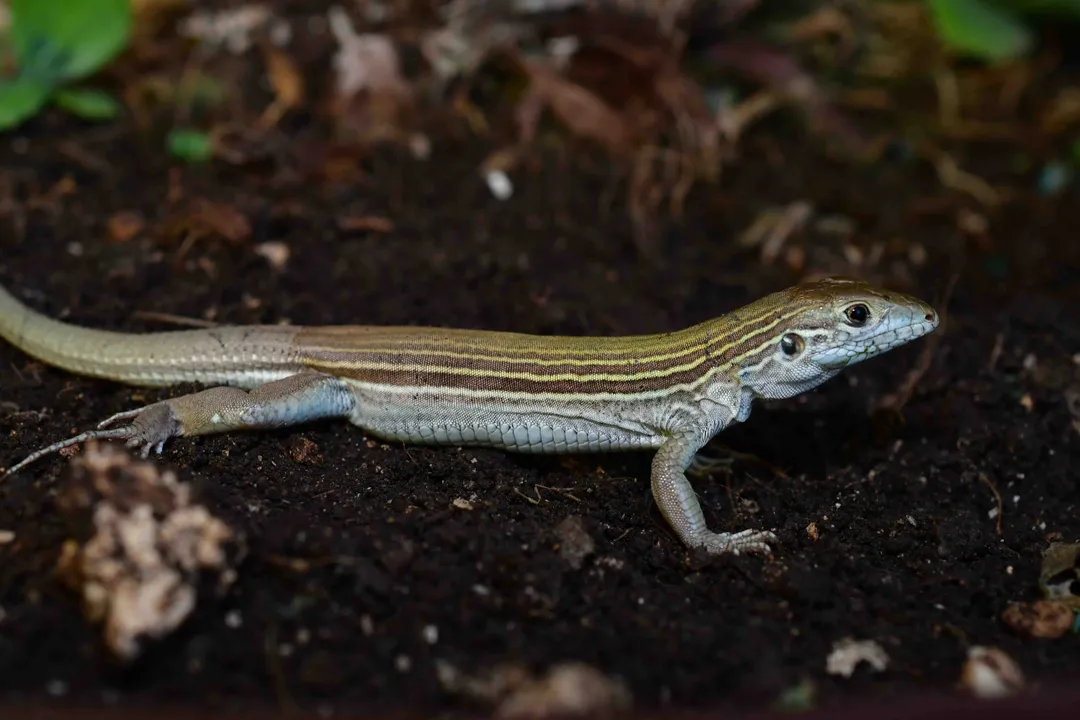
Although asexual whiptail lizards entirely lack males and reproduce clonally, some historical evidence suggests that the females may engage in behaviors traditionally associated with sexual mating. Specifically, they may participate in pseudocopulation, which involves one female mimicking the mating behavior with another female. The function of this action is not for genetic exchange, but rather it is believed to serve as a necessary physical stimulus to induce or trigger ovulation in the participating female. This behavior highlights the retention of ancestral mating instincts despite the complete absence of fertilization being necessary for reproduction.
Related Questions
What reproductive strategy defines the *Aspidoscelis* whiptail lizards?What process founded the parthenogenetic lineages of *Aspidoscelis*?What specific mechanism of parthenogenesis is employed by many *Aspidoscelis* species?What structural change results from the cessation of recombination in asexual *Aspidoscelis*?How is the diversification of asexual *Aspidoscelis* lineages typically represented phylogenetically?What ploidy state characterizes the asexual species *Aspidoscelis neomexicanus*?What behavior might asexual *Aspidoscelis* females engage in to stimulate ovulation?What genomic feature may compensate for the lack of recombination in long-term surviving *Aspidoscelis* asexual lineages?From which genus did the genus *Aspidoscelis* originate via splitting?What is the key demographic advantage of asexuality in low-density *Aspidoscelis* populations?What function is suggested for the allopolyploidy events following hybridization in *Aspidoscelis*?