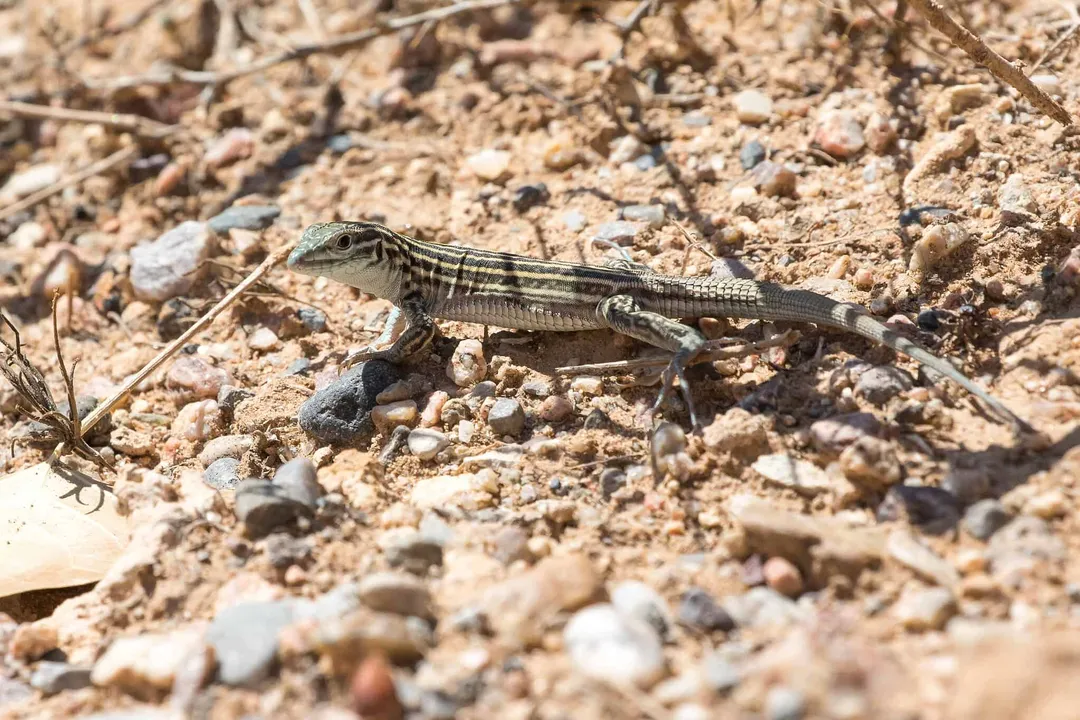
What unique reproductive method characterizes some populations of the Desert Grassland Whiptail Lizard (*Cnemidophorus uniparens*)?
Parthenogenetic reproduction
The Desert Grassland Whiptail Lizard, specifically referenced sometimes as *Cnemidophorus uniparens*, is biologically famous because some of its populations reproduce asexually through a process known as parthenogenesis. This means that certain females are capable of producing viable offspring through cloning, bypassing the need for fertilization by a male. Although this phenomenon is a significant biological characteristic noted alongside its taxonomy, it is important to understand that this reproductive strategy does not, in itself, alter the lizard's established scientific classification at the familial or generic level. The persistence of the *Cnemidophorus* name for this species, even when relatives moved to *Aspidoscelis*, suggests a slightly different or slower reassignment process for this specific lineage.