What is the key demographic advantage of asexuality in low-density *Aspidoscelis* populations?
Answer
Every individual is a potential reproducer
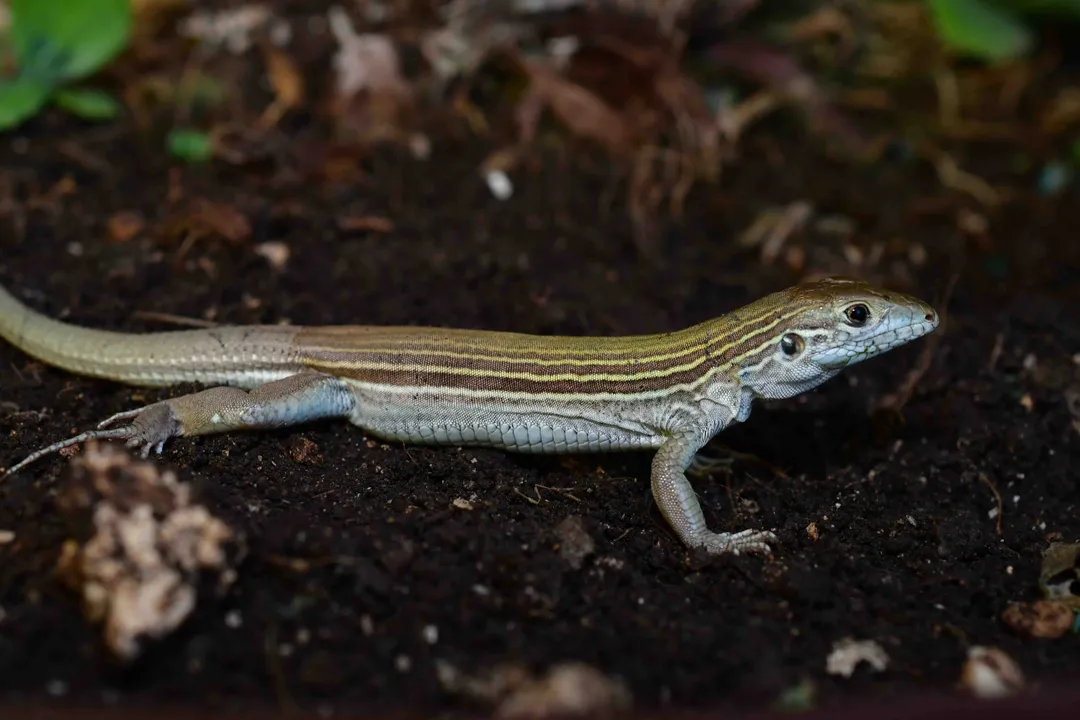
A significant ecological benefit of the all-female, parthenogenetic reproductive strategy, especially for whiptail lizard populations that might be colonizing new areas or existing at low densities, is extreme reproductive efficiency. Because every individual female is capable of producing viable offspring without needing to locate a mate, the entire population is immediately mobilized for reproduction. This eliminates the 'two-fold cost of sex' and the demographic hurdle of finding a compatible partner, allowing for rapid initial proliferation of lineages, which can be highly advantageous in patchy habitats or arid environments where finding mates might be challenging or infrequent.
Related Questions
What reproductive strategy defines the *Aspidoscelis* whiptail lizards?What process founded the parthenogenetic lineages of *Aspidoscelis*?What specific mechanism of parthenogenesis is employed by many *Aspidoscelis* species?What structural change results from the cessation of recombination in asexual *Aspidoscelis*?How is the diversification of asexual *Aspidoscelis* lineages typically represented phylogenetically?What ploidy state characterizes the asexual species *Aspidoscelis neomexicanus*?What behavior might asexual *Aspidoscelis* females engage in to stimulate ovulation?What genomic feature may compensate for the lack of recombination in long-term surviving *Aspidoscelis* asexual lineages?From which genus did the genus *Aspidoscelis* originate via splitting?What is the key demographic advantage of asexuality in low-density *Aspidoscelis* populations?What function is suggested for the allopolyploidy events following hybridization in *Aspidoscelis*?