The species name *flavimaculatum* in *Lepidophyma flavimaculatum* directly refers to which physical characteristic?
Answer
Characteristic yellow spots on scales
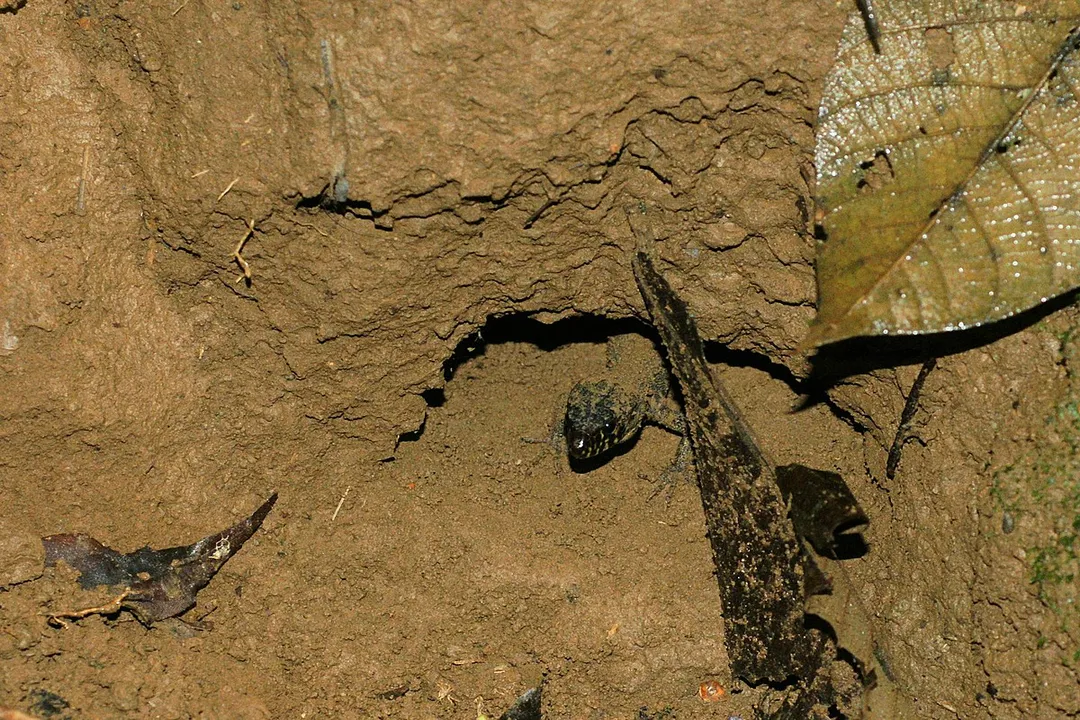
The specific epithet *flavimaculatum* provides a direct morphological descriptor for this species. This term alludes to the presence of distinctive yellow spots that are frequently observed marking the scales of this lizard. While this coloration is useful for field identification purposes, genetic analysis provides a much deeper understanding of its deep evolutionary history compared to this easily visible, superficial trait. This naming convention links its identification to its visual appearance.
Related Questions
Which family classification encompasses *Lepidophyma flavimaculatum*, commonly known as night lizards?If a sexual diploid female ($2n$) of *Lepidophyma flavimaculatum* is crossed with a male, what ploidy level characterizes the typical sexual offspring?The species name *flavimaculatum* in *Lepidophyma flavimaculatum* directly refers to which physical characteristic?What evolutionary advantage does sexual reproduction grant *Lepidophyma* populations compared to purely clonal lines regarding long-term adaptation?The geographic distribution of *Lepidophyma flavimaculatum* spans across which primary countries in Central America?What specialized habitat requirement highlights the vulnerability of *L. flavimaculatum* to desiccation and light exposure?In an environment characterized by stability, which reproductive strategy allows a clonal lineage of *Lepidophyma* to potentially dominate rapidly?What process, often involving geographic barriers like mountain ranges, leads to reproductive divergence, such as populations evolving different ploidy levels in *Lepidophyma*?What complex reproductive strategy is characteristic of the genus *Lepidophyma*, creating boundaries between distinct evolutionary lineages?While genetics offers deep insight, what observable morphological feature of *L. flavimaculatum* often holds clues about its diet and feeding mechanics?