Whiptail Lizard Evolution
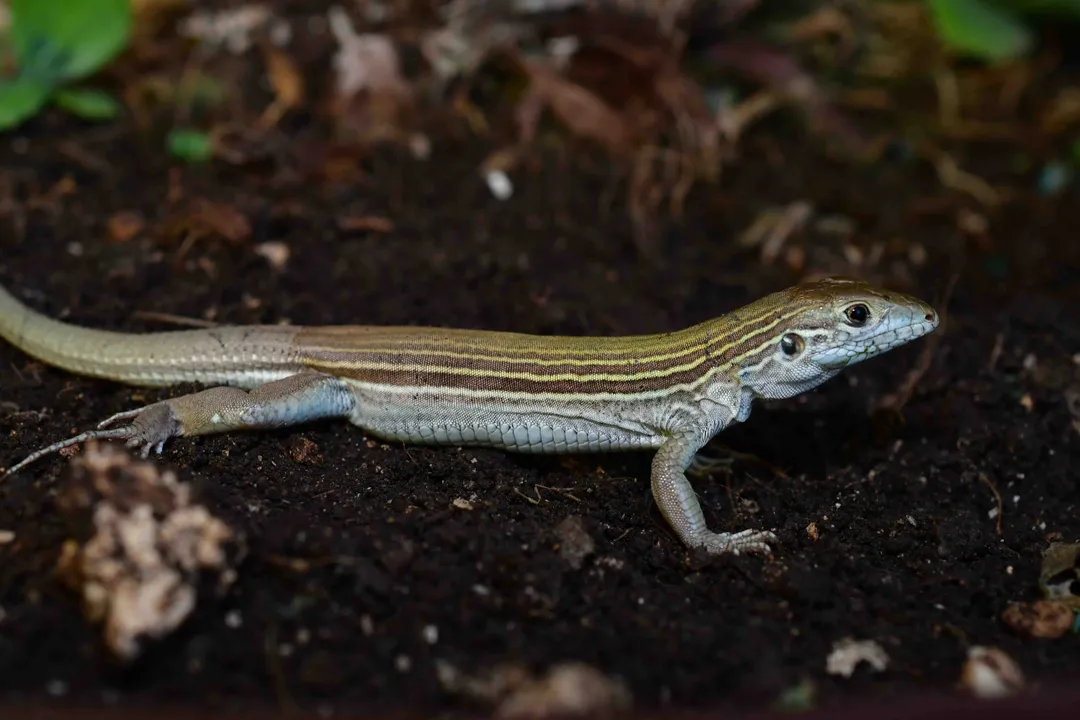
The whiptail lizards, members of the genus Aspidoscelis, present one of nature’s most compelling case studies in evolutionary innovation, primarily due to their widespread adoption of all-female, asexual reproduction. [4][5] These reptiles, commonly found in North America, offer a unique window into how organisms abandon sexual reproduction—the biological standard for vertebrates—and persist for millions of years. [2][9] Understanding their evolution requires delving into hybridization, massive genomic reorganization, and the complex web of relationships that define their current diversity. [1][5] The story of Aspidoscelis is not a simple linear progression but a branching, intricate network shaped by reproductive mode shifts. [5]
# Hybrid Origins
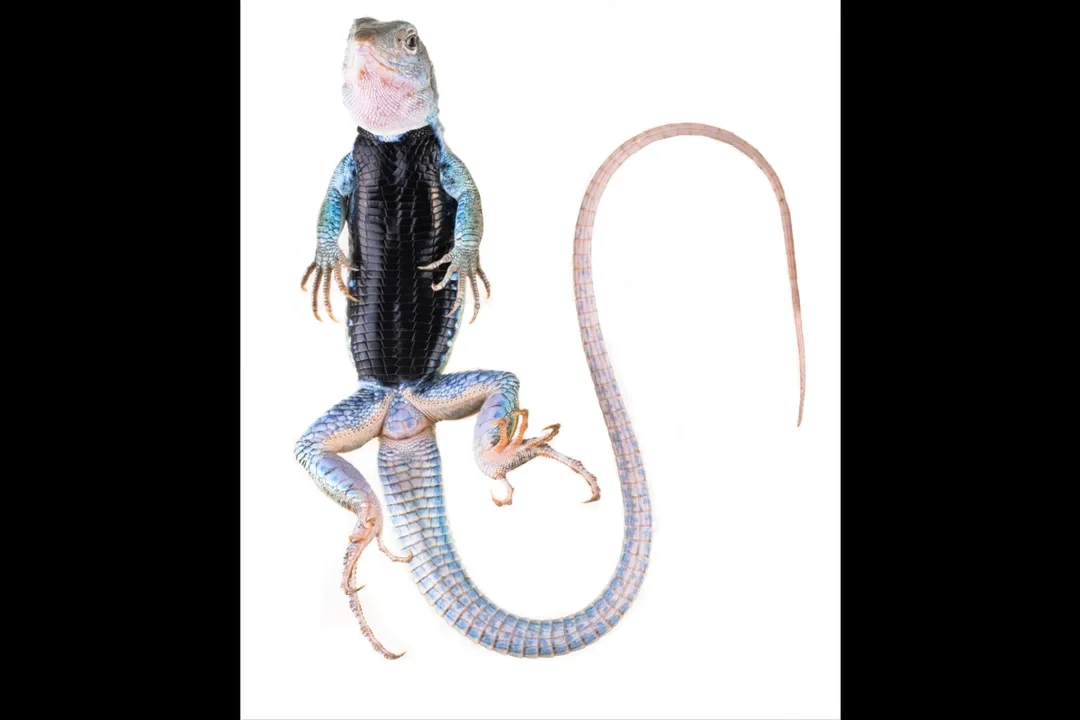
The foundation of asexuality in whiptail lizards stems from a history of sexual reproduction and subsequent hybridization. [4] The genus Aspidoscelis itself arose from the splitting of the genus Cnemidophorus. [4] The lineages that became entirely parthenogenetic—meaning they reproduce without fertilization, developing embryos from unfertilized eggs—originated from crosses between two distinct sexual species. [4][9] These initial hybrid females were fertile, and critically, they possessed the mechanism to bypass meiosis and fertilization to produce viable, female offspring. [2][6]
This transition, often termed an "evolutionary novelty," is not instantaneous. In many Aspidoscelis groups, the asexual lineages are relatively young, having evolved within the last few hundred thousand years. [4] However, the original hybridization events that created the first asexual forms occurred over a longer timescale, allowing time for the genomic consequences of this reproductive shift to manifest. [4] It is crucial to remember that these all-female species did not spontaneously appear; they are the direct descendants of sexual ancestors, inheriting the necessary genetic building blocks that were then co-opted for parthenogenesis. [6]
# Parthenogenesis Mechanism
In sexually reproducing vertebrates, an egg is produced via meiosis, resulting in a haploid cell that requires fertilization by sperm to restore the diploid state necessary for development. [6] Whiptail lizards bypass this entirely through parthenogenesis. [2] Specifically, many Aspidoscelis species employ a form of reproduction known as automictic parthenogenesis. [9] This process, in some cases, involves the fusion of two haploid products of meiosis, effectively restoring the diploid state without paternal input. [6]
The result of this process is clonal reproduction; the offspring are virtually identical copies of the mother. [2] This reproductive strategy means that every female in a given parthenogenetic lineage is effectively her own founder, producing identical daughters indefinitely, provided environmental conditions are suitable. [9] The absence of males in these populations dramatically simplifies mating systems, though some historical evidence suggests that even now, asexual females may engage in pseudocopulation—mimicking mating behavior with other females—which might serve to stimulate ovulation. [9]
# Genomic Rewiring
Abandoning sexual reproduction, with its constant shuffling of genes through recombination, imposes profound structural changes on an organism's genome. [1][7] For the whiptail lizards, this meant the loss of genetic variation introduced by sex, but it also meant the cessation of recombination, which is essential for purging deleterious mutations in sexual lineages. [1]
Research utilizing whole-genome sequencing has illuminated the extent of this genomic restructuring in parthenogenetic Aspidoscelis species. [1][7][8] One striking finding is the prevalence of allopolyploidy or genome duplication events, often following the initial hybridization that created the asexual line. [7] The asexual species Aspidoscelis neomexicanus, for example, is an allotetraploid, meaning it carries two full sets of chromosomes derived from two different ancestral species. [4] This doubling of the entire genetic complement likely provided the genomic redundancy needed to accommodate the rapid, disruptive changes associated with asexual reproduction. [7]
Furthermore, the loss of recombination has a measurable impact on the genome's structure. In sexual species, recombination breaks down associations between linked genes, allowing beneficial combinations to persist and deleterious ones to be exposed and removed. [1] In asexual lineages, segments of the genome that were inherited together from the original hybrid parents remain linked, creating vast stretches of linkage disequilibrium across the chromosomes. [1][8] This genetic linkage persists over deep evolutionary time, tracing the history of the clonal lineage much more clearly than would be possible in sexually reproducing relatives where recombination constantly scrambles the parental contributions. [8] The genomes of these lizards function less like a constantly shuffled deck of cards and more like a collection of preserved ancestral packages. [1]
# Phylogeny Network
Mapping the evolutionary relationships among Aspidoscelis reveals a picture far more complex than a simple species tree. [5] Because asexual lineages reproduce clonally, their diversification is not represented by branching splits in the traditional sense but by the proliferation of successful clones, which can occasionally merge or arise independently from different sexual ancestors. [5][7] This results in an evolutionary network rather than a neat tree structure. [5]
For instance, phylogenetic analyses often show that geographically separated asexual lineages may be genetically distinct, yet they occupy the same species name because they all share the same derived parthenogenetic trait. [5] Researchers have constructed detailed evolutionary networks that illustrate how many different asexual species arose multiple times from the same pool of sexual ancestors. [5][8] A comparison between sexual and asexual species highlights this divergence in evolutionary pattern: sexual species show patterns of shared ancestry driven by gene flow across a range, whereas asexual species show discrete, often reticulated (net-like) patterns reflecting independent origins and persistence of specific clonal lines. [5]
Considering the sheer number of independent origins, it prompts a question about the underlying genetic architecture. While hybridization provided the initial spark, the consistency with which asexuality re-evolves suggests that the necessary genetic pre-conditions—perhaps specific combinations of genes inherited from the sexual parents—are not exceedingly rare in this group. [4] The network model, therefore, emphasizes that evolution is not always a single event but often a repeated solution to an environmental or demographic challenge. [5]
| Feature | Sexual Aspidoscelis | Asexual Aspidoscelis |
|---|---|---|
| Reproduction | Requires fertilization | Parthenogenetic (clonal) |
| Genetic Variation Source | Recombination, mutation | Mutation only (within a clone) |
| Chromosomal Structure | Low Linkage Disequilibrium | Extensive Linkage Disequilibrium |
| Phylogenetic Pattern | Tree-like branching | Complex evolutionary network |
| Ploidy Level | Typically diploid | Often polyploid (tetraploid common) |
If we were to chart the rate of speciation in this genus, the asexual species would likely show a higher initial rate of lineage proliferation immediately following their origin, as every successful female immediately establishes a new, reproductively isolated line. [2] However, this initial burst might be offset in the long term by a lower rate of overall adaptation to changing novel environments, as they lack the capacity to generate novel gene combinations rapidly through sex. [1] The data supports that these asexual lines have managed to persist across broad geographic ranges, suggesting they are not merely temporary evolutionary dead-ends. [9]
# Evolutionary Persistence
The long-term success of asexual whiptails highlights an important evolutionary trade-off. Sexual reproduction is often favored because it rapidly generates novel combinations of genes, aiding adaptation in fluctuating or pathogen-rich environments. [1] Asexual reproduction, by contrast, locks in successful gene complexes, making the entire clone vulnerable if environmental conditions shift outside the established niche. [2]
Yet, Aspidoscelis lineages have persisted for millions of years. [4] This suggests that the genomic stability provided by polyploidy (genome doubling) may compensate for the lack of recombination, offering a buffer against the immediate accumulation of harmful mutations that plagues asexual organisms lacking genome duplication. [7] Furthermore, the repeated, independent origins of asexuality suggest that for certain ecological niches occupied by whiptails—often arid or patchy habitats—clonality offers an immediate demographic advantage: every individual is a potential reproducer, eliminating the need to find a mate. [9] For a colonizing or low-density population, this reproductive efficiency can outweigh the long-term genetic inflexibility. [2]
This frequent evolutionary origin is a key insight into evolutionary potential. Rather than one grand, singular event that defined the genus, the ability to switch to asexuality appears to be a recurrent evolutionary opportunity within the Aspidoscelis group, arising multiple times from different sexual parents when the circumstances were right. [5][7] The study of these various origins, which can be traced through the distinct, linked genomic segments, provides concrete molecular evidence for this pattern of repeated evolutionary experimentation within a single group of vertebrates. [1][8] The sheer number of distinct asexual species found across the Southwest United States and Mexico confirms that this reproductive strategy is not an anomaly but a successful, repeatable strategy under specific ecological pressures. [9]
Related Questions
#Citations
The evolutionary network of whiptail lizards reveals predictable ...
Evolutionary insights into sexual behavior from whiptail lizards - PMC
Genomic Data Support Reticulate Evolution in Whiptail Lizards
[PDF] The evolutionary network of whiptail lizards reveals predictable ...
Evolutionary network of whiptail lizards reveals predictable ...
How did asexual reproduction evolve from sexual ... - Reddit
Post-meiotic mechanism of facultative parthenogenesis in ... - eLife
[PDF] The evolutionary network of whiptail lizards reveals predictable ...
For the love of lizards: ASU researcher studies evolution of these ...