What process replaces natural selection when fish are bred in controlled aquaculture systems?
Answer
Artificial selection.
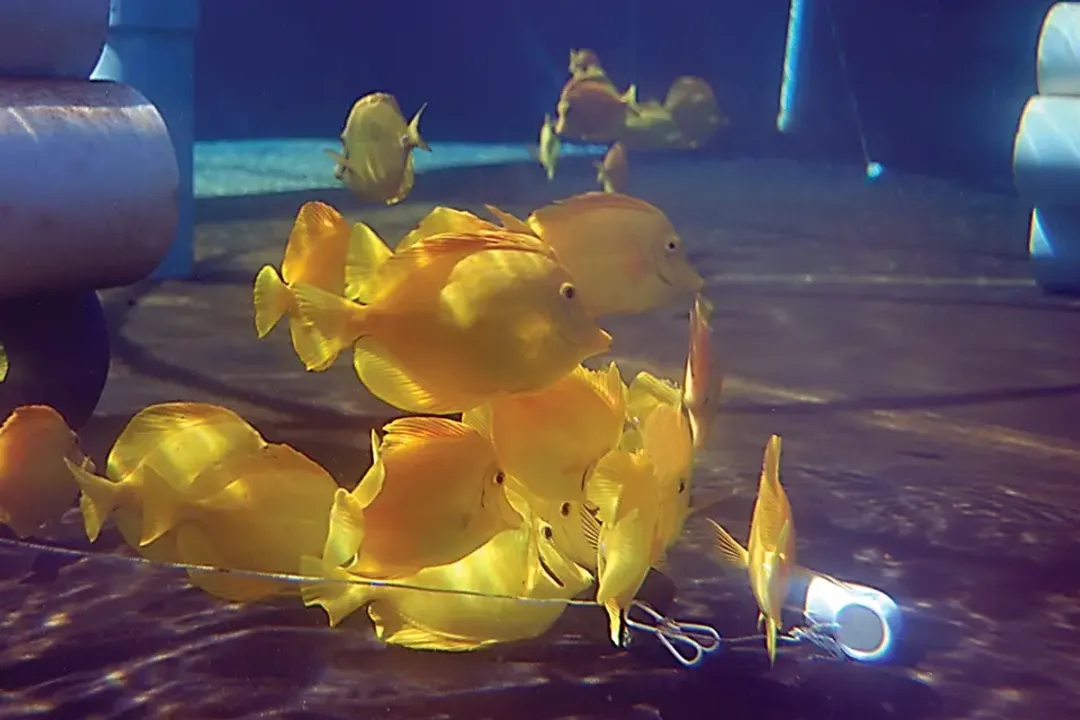
When Yellow Tangs transition from their wild habitat to a controlled hatchery environment for captive breeding programs, the mechanism driving evolutionary change shifts dramatically. In the wild, selection pressures include predation risk, resource competition, and environmental variability. In contrast, captive breeding subjects the population to artificial selection, a process where human intervention dictates which traits are passed on. Breeders intentionally favor characteristics that maximize efficiency and survival within the hatchery setting, rather than traits optimizing survival on a complex, predator-filled reef.
Related Questions
What structures give the family Acanthuridae the common name surgeonfishes?How does the morphology of the *Zebrasoma* genus contrast with the *Acanthurus* genus?What specific dietary niche defines the evolutionary success of the Yellow Tang?Which location is specifically listed as part of the natural range of *Z. flavescens*?What primary requirement made keeping wild-caught Yellow Tangs difficult in early captive settings?What process replaces natural selection when fish are bred in controlled aquaculture systems?What traits are prioritized by breeders when applying artificial selection to captive Yellow Tangs?What is the consequence of the geographic separation among *Z. flavescens* island populations?How do traits advantageous in a busy reef setting contrast with those favored in aquaculture for *Z. flavescens*?What is the relationship between the *Zebrasoma* genus and the common palette surgeonfish?