Yellow-Bellied Sea Snake Evolution
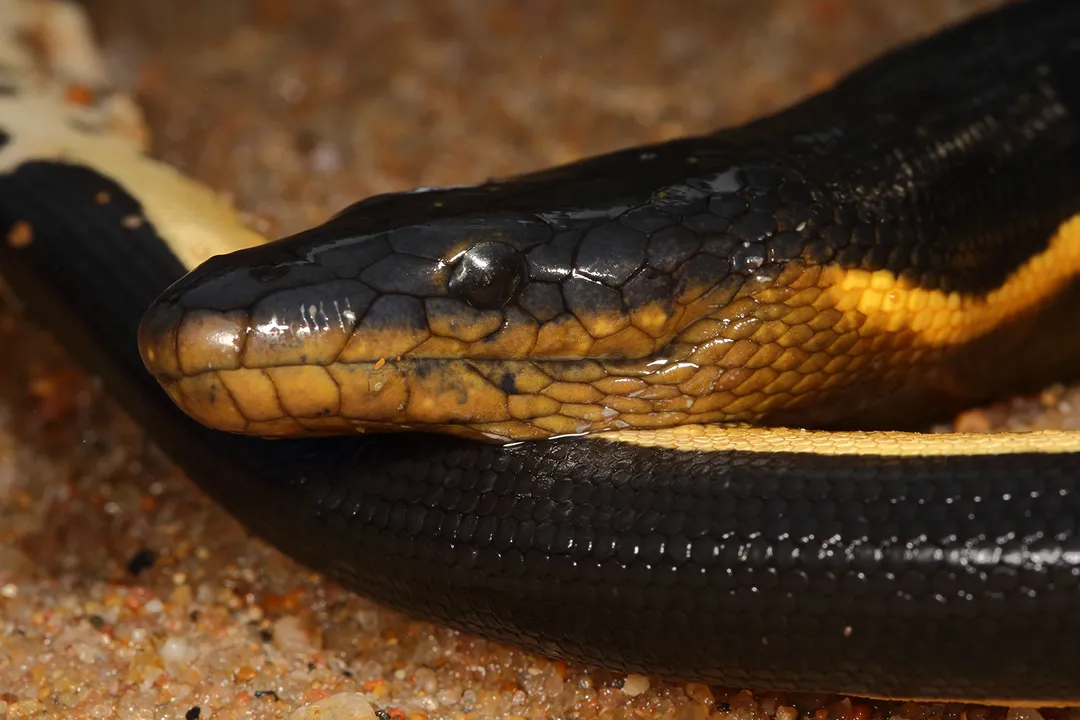
The yellow-bellied sea snake, scientifically known sometimes as Pelamis platurus or more currently Hydrophis platurus, represents a remarkable chapter in reptilian evolution—a commitment to a fully oceanic existence. [1][3][6] Unlike its coastal cousins, this reptile spends its entire life adrift on the surface waters of the tropical and subtropical Pacific and Indian Oceans, a feat that demands a radical physiological and morphological departure from its terrestrial ancestors. [2][9] Its wide distribution across these massive water bodies speaks to an evolutionary success story defined by unparalleled adaptation to the open sea. [1][4]
# Naming Shifts
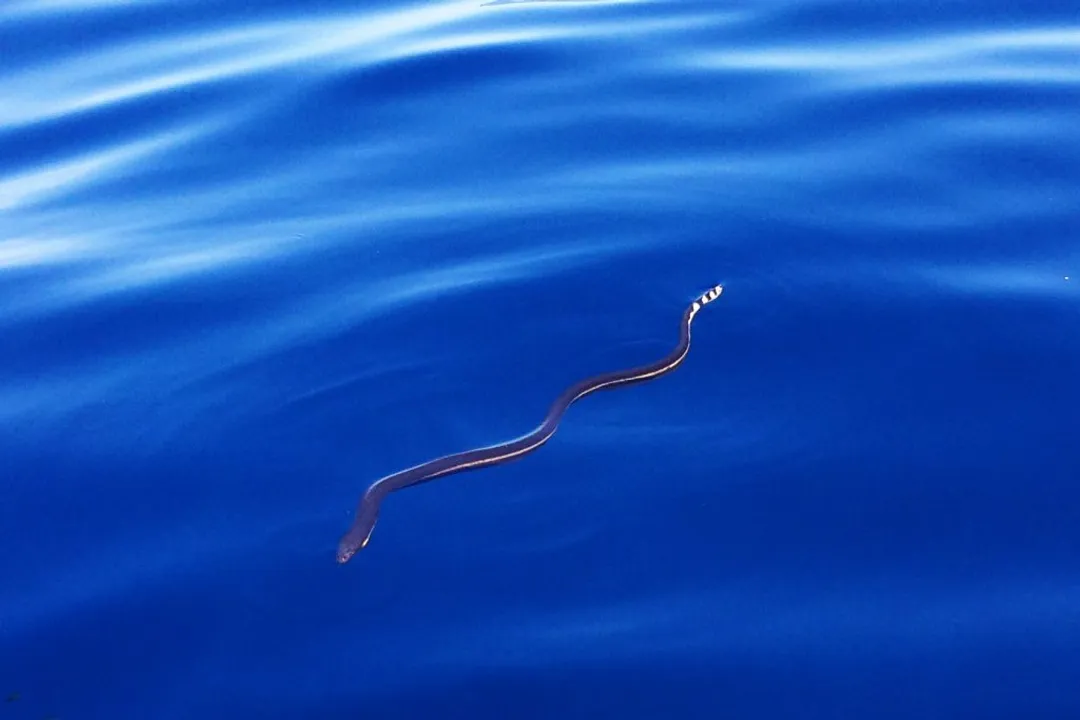
Taxonomic classification, like any area of ongoing scientific study, sees refinement over time, which can sometimes cause confusion regarding this species. [3] While historically recognized under the genus Pelamis, contemporary genetic evidence often places it within the Hydrophis genus, a broader group encompassing many sea snakes. [6] Regardless of the genus label, its unique lifestyle—being one of the few sea snakes that is truly pelagic, meaning it lives permanently in the open ocean rather than near the coast—sets it apart. [9]
# Oceanic Forms
The evolutionary trajectory of the yellow-bellied sea snake placed it on a path distinct from sea kraits or many other sea snakes, which often retain strong ties to land for reproduction or basking. [9] This species, however, has perfected the art of being water-bound. It is one of the most widely distributed marine reptiles globally, capable of long-distance dispersal across major ocean basins, relying on prevailing currents to carry it across vast feeding grounds. [1][4] This dependence on surface currents for travel, rather than sustained directional swimming across entire oceans, suggests its dispersal capability is heavily influenced by the stability and patterns of the ocean’s major gyres, a factor that dictates where populations aggregate and interbreed. [4]
# Physical Shifts
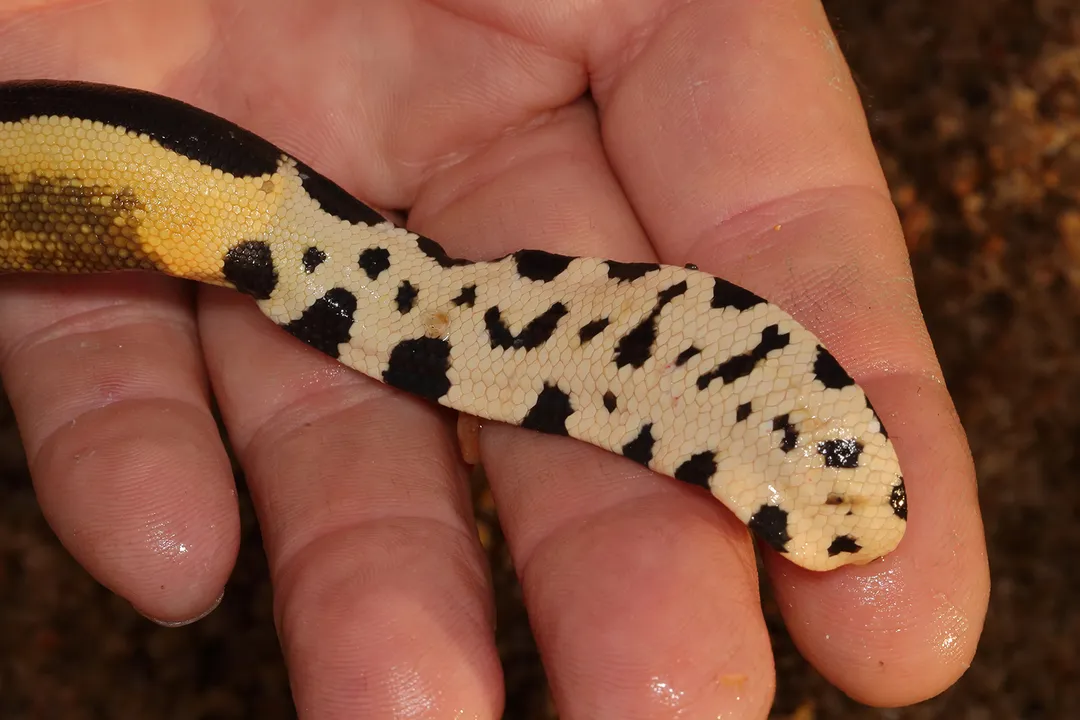
The adaptations required to transition from crawling on land to navigating the water column are profound. [9] The most obvious structural change is the modification of the tail. Instead of the tapering tail found on land snakes, the yellow-bellied sea snake possesses a laterally flattened, paddle-shaped tail. [1][9] This structure functions as the primary propeller, allowing for efficient movement through the water.
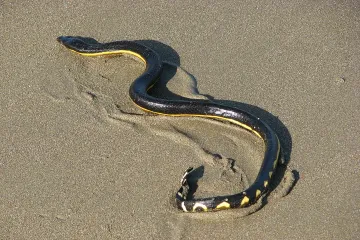
Concurrently, the ventral (belly) scales, which are large and used by terrestrial snakes for gripping the ground during locomotion, have become greatly reduced. [1][9] This reduction is a functional trade-off: while it makes movement on land almost impossible—effectively stranding the snake if it washes ashore—it minimizes drag while swimming. [9] This evolutionary commitment to the marine environment is so complete that terrestrial locomotion is sacrificed entirely for aquatic efficiency. [1] Furthermore, while most sea snakes bear live young, this species exhibits adaptations that allow for a fully aquatic reproductive cycle, a major evolutionary step away from its land-dwelling ancestry. [9]
# Salt Management
Surviving in saltwater requires rigorous management of internal salt levels, a biological hurdle that land reptiles cannot easily overcome. [9] The yellow-bellied sea snake evolved specialized glands, located near its mouth, that actively excrete excess salt ingested through food and seawater. [9] This physiological mechanism ensures that the snake maintains the necessary osmotic balance to keep its internal systems functioning correctly in a hypertonic (salty) environment. This development is a non-negotiable requirement for long-term marine habitation and represents a significant divergence from the osmoregulatory strategies of terrestrial snakes. [9]
# Color Pattern
The coloration of the yellow-bellied sea snake is an excellent example of camouflage evolved for the open ocean environment. [1] The dorsal (top) surface is typically dark—often black or dark brown—while the ventral (bottom) surface is a striking bright yellow or whitish. [2][4] This pattern is known as countershading. [1] When viewed from above by a predator (perhaps a large bird), the dark back blends with the deep blue or black of the water below. Conversely, when viewed from below (by a fish, for instance), the light yellow belly blends against the bright, sunlit surface of the water. [1] This dual-purpose camouflage is highly effective in the featureless expanse of the pelagic zone where hiding places are scarce. [2]
# Venom Potency
In the evolutionary arms race between predator and prey, the yellow-bellied sea snake possesses a formidable defense and offensive weapon: its venom. [1][4] It is recognized as one of the most venomous snakes in the world. [1] The neurotoxic venom is highly potent, designed to quickly subdue small fish and eels, which are its primary food sources. [4] The evolutionary pressure driving this extreme toxicity might be related to the challenges of subduing fast-moving prey in a three-dimensional water environment where a prolonged struggle could leave the snake vulnerable to larger marine predators. [4] The speed of action afforded by this venom is a clear advantage in its specialized niche. [1]
# Atlantic Absence
One fascinating aspect of the yellow-bellied sea snake's evolutionary history involves its geographical limitations, specifically its complete absence from the Atlantic Ocean. [7] Despite its ability to traverse major oceanic barriers, no breeding populations of P. platurus are found in the Atlantic basin. [7] Scientific consensus points toward geological events, primarily the closure of the Isthmus of Panama, which occurred millions of years ago, as the barrier. [7] This event effectively isolated the ancestral populations, trapping the lineage in the Pacific and Indian Oceans while preventing migration into the Atlantic, even as other marine organisms successfully made the transition later. [7] This absence highlights how tectonic history shapes the evolutionary geography of species over deep time. [7]
# Comparison Points
Understanding the yellow-bellied snake’s evolution is aided by comparing it to nearshore species, such as sea kraits (Laticauda species). [9] Sea kraits are amphibious; they must return to land to digest food, bask, and lay their hard-shelled eggs. [9] The yellow-bellied snake’s complete divergence means it has shed all these terrestrial requirements, making it an obligate pelagic resident. [9] This divergence suggests that the evolutionary pressures favoring full aquatic adaptation were stronger or acted earlier in the lineage leading to H. platurus compared to the kraits, resulting in a more specialized, yet potentially more fragile, existence dependent solely on the ocean's surface conditions. [9]
Related Questions
#Citations
Yellow-bellied Sea Snake - The Australian Museum
Yellow-Bellied Sea Snake - Hydrophis platurus - A-Z Animals
Pelamis platura (Yellowbelly Sea Snake ... - Animal Diversity Web
Fact File: Yellow-bellied sea snake - Australian Geographic
The Yellow-bellied Sea Snake Slithers in the Open Ocean
Yellow-bellied sea snake facts, distribution & population - BioDB
Why are there no sea snakes in the Atlantic?
Yellow-bellied Sea-Snake (Hydrophis platurus) - Reptiles of Ecuador
A deep dive into sea snakes, sea kraits and their aquatic adaptations