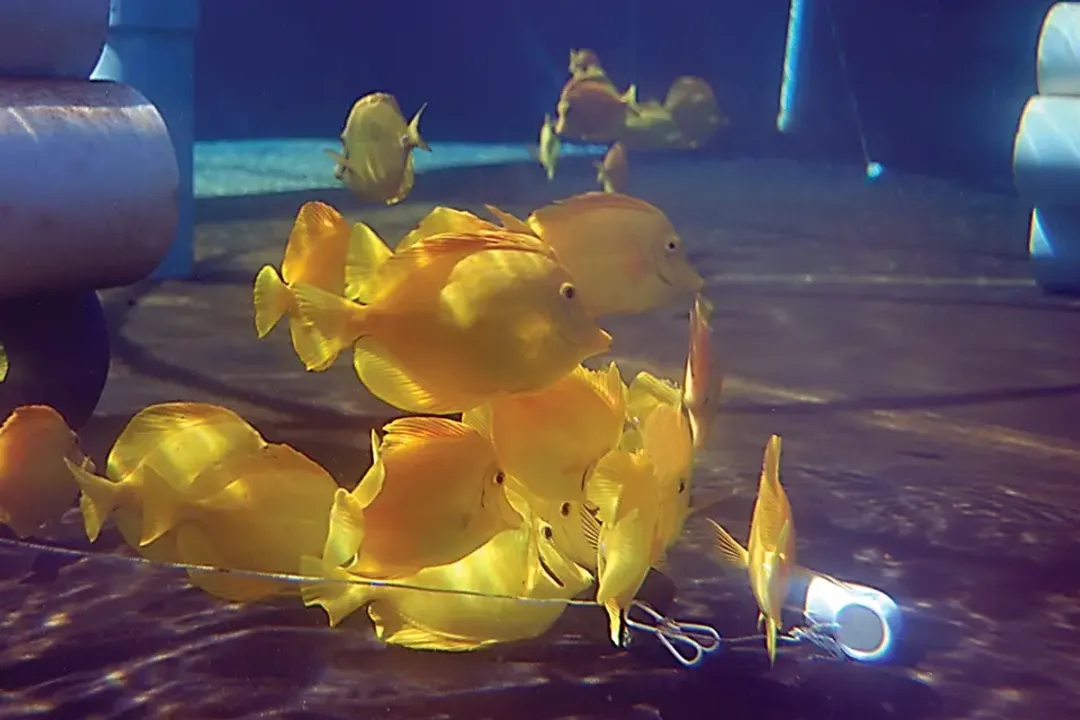
What is the consequence of the geographic separation among *Z. flavescens* island populations?
It implies a history shaped by oceanic currents and historical landmass configurations, driving speciation.
The native range of the Yellow Tang spans the tropical Indo-Pacific, encompassing island populations that are separated by extensive tracts of open ocean, such as the distance between the Hawaiian Islands and the Marquesas Islands. This vast geographic isolation is a classic driver of speciation over long geological time scales. The separation suggests that the current distribution patterns are deeply rooted in historical configurations of landmasses and the persistent influence of major oceanic currents that transport larvae or juvenile fish between these distant areas. While the species is considered widespread, these separations can lead to subtle, localized genetic differences due to microevolutionary processes specific to individual reef systems.